Best Chair Leg Floor Protectors
Updated November 20, 2026

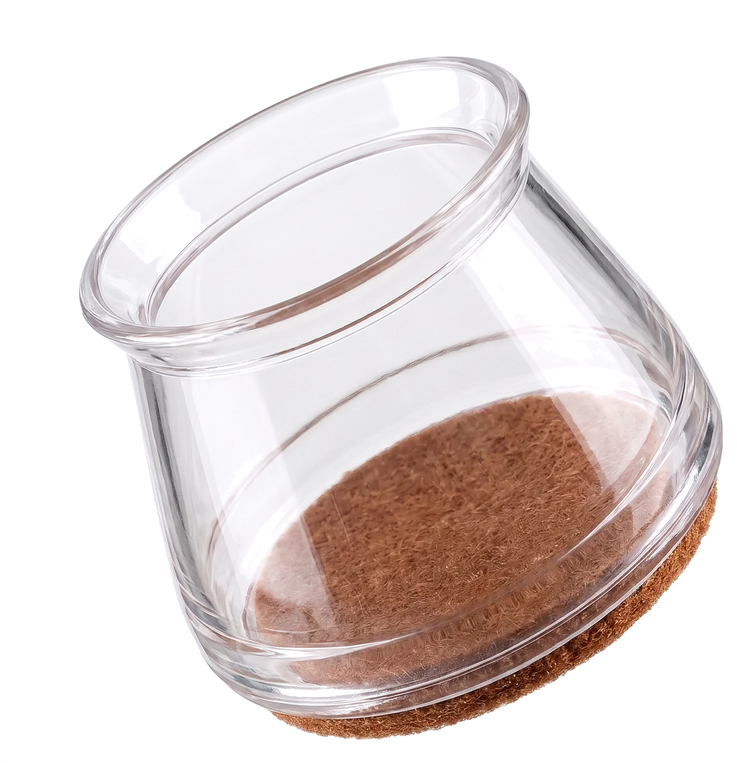
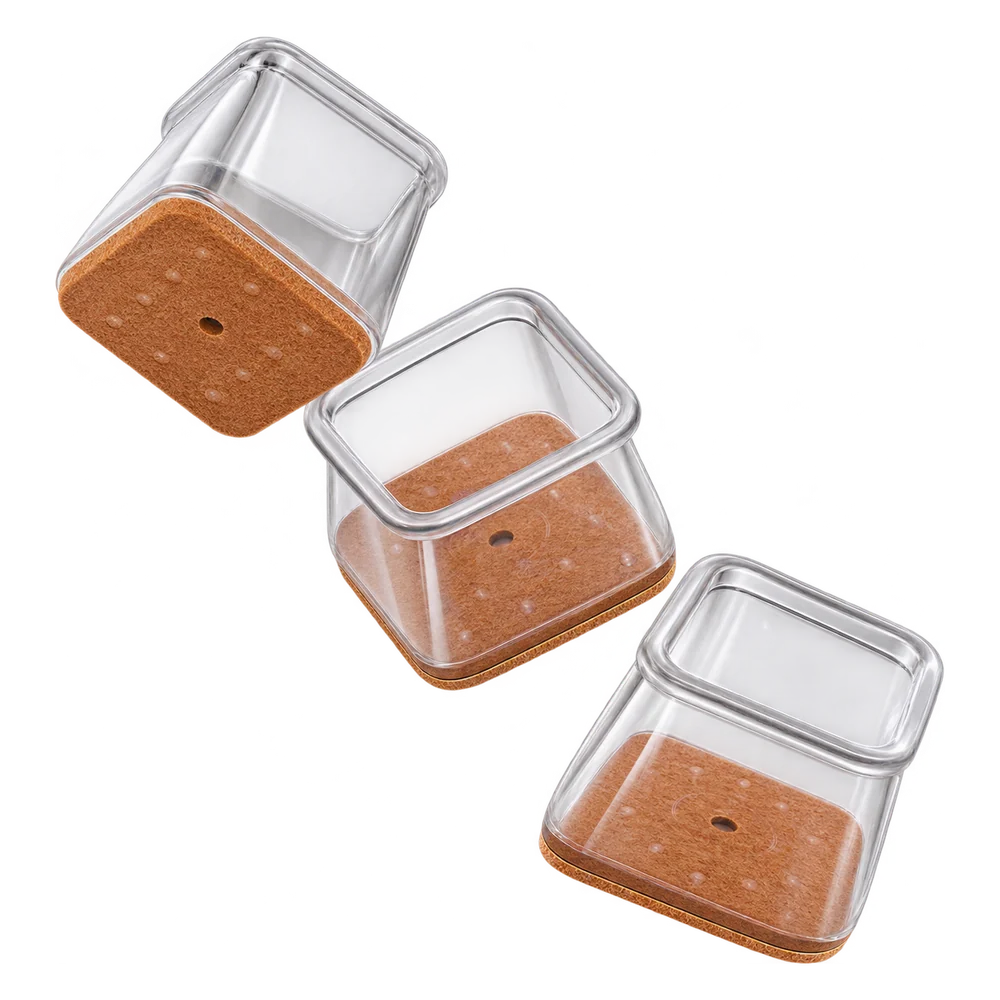
Best chair leg floor protectors are slip-on caps with a felt base, sized to the leg, for most wooden chairs on hardwood, laminate, vinyl and tile: they slide like felt pads but stay on when the chair is dragged every day. Legs that lean outward need an angled cap, metal tube legs need caps or plugs sized to the tube, and stick-on felt pads suit furniture that is rarely moved.
The right pick depends on two things: the shape and size of the leg where it meets the floor, and the floor itself. This guide matches each common chair to the protector that works on it, then explains why. To shop as you read, start with our slip-on chair leg floor protectors for round and square legs, compare chair leg caps by leg shape, or browse felt chair pads for the stick-on and nail-on options.
The short list: the best protector for each chair
Find your chair in the left column. Most picks below have a felt face, which slides on hard floors; the plugs have smooth plastic faces.
| Your chair leg | Best pick | Why |
|---|---|---|
| Round wooden leg, 10 to 40 mm (0.4 to 1.6 in) across | Slip-on felt-base cap: round felt chair leg caps (10 to 30 mm), or Chair Shoes felt chair leg protectors (16 to 40 mm) | Grips the leg by stretch, so it does not peel or slide off |
| Square wooden leg | Square cap with a base pad that slides, such as wear resistant chair leg caps in square 19 to 25 or 35 to 45 mm | A round cap on a square leg splits or leaves gaps |
| Leg that leans outward (stools, mid-century chairs) | angled chair leg floor protectors with a 15 degree sole | A flat cap rocks on one edge; the angled sole sits flat |
| Metal tube leg with a closed or capped end | felt lined metal chair leg caps, sized to the tube | A snug clear cup puts felt under the bare metal |
| Metal tube leg with an open end (old glide fell out) | Push-in chair leg plugs, sized to the tube | Covers the sharp cut edge of the tube |
| Solid wooden leg end, 20 mm (about 3/4 in) or wider | Nail-on felt chair glides | Cannot peel off; sits flush under the leg end |
| Furniture that is rarely moved | Stick-on self adhesive furniture pads | Quick to fit; fine where nothing drags |
What makes a chair leg protector the best one
A protector usually fails in one of five ways. A good protector passes all five.
- It stays on. A dining chair is pulled out and pushed in several times a day. Every drag pushes the edge of a stick-on pad sideways, and once one edge lifts, the pad peels away. Caps, nails and screws do not rely on glue.
- It fits the leg. A stretch cap works inside its size range. Too big and it slips off; too small and it will not go on, or it splits.
- The face suits the floor. Felt slides on hard floors. Rubber and silicone grip. Pick sliding for chairs, gripping for furniture you want to stay put.
- It sits flat. On a splayed leg a flat protector touches the floor with one edge, so the felt wears through there first and the hard rim can reach the floor.
- It is easy to clean or replace. Felt collects grit, and grit is what scratches. A protector you can brush off or swap cheaply keeps working.
Caps, pads, glides and socks compared
| Type | Stays on by | Good at | Weak spot |
|---|---|---|---|
| Slip-on felt-base caps | Stretch grip around the leg | Daily dining chairs; no tools | Must match the leg size; no fit on sled bases |
| Stick-on felt pads | Adhesive | Light furniture, flat bases | Can peel off under daily dragging |
| Nail-on felt glides | A center nail in the wood | Solid wooden legs | Wood only; leaves a small nail hole |
| Screw-in glides | A threaded stud | Leveling a wobbly leg | Thread must match the hole; metric and inch threads do not swap |
| Tube plugs | Push fit inside the tube | Open metal tube ends | Plastic face; must match the tube |
| Socks and booties | Elastic knit | Tapered or odd legs, soft look | Can twist or slide down; collect dust |
If you are looking for the best felt pads for chair legs, the felt matters less than how it is attached. The same felt that peels off as a stick-on pad stays put on a cap or a nail-on glide.
If you like the soft look of fabric, chair leg socks pull over the foot of the leg, so a layer of soft knit, or on some styles a sewn-on felt pad, sits between the leg and the floor. They suit legs that no cap fits well, such as tapered or carved feet, but they need straightening now and then.
Best protectors by floor type
- Hardwood and engineered wood: the best chair pads for hardwood floors are felt, on a cap or glide. Keep the felt clean, because grit trapped in felt scratches the finish. If you are protecting tables, beds and sofas too, see our guide to the best furniture pads for hardwood floors.
- Laminate, vinyl and LVP: felt works the same way as on hardwood. Avoid plain black rubber feet, which can leave yellow or brown marks on vinyl.
- Tile and stone: felt works, but it catches on grout lines and wears faster than on wood. Check it more often.
- Carpet: felt does little. Hard plastic or PTFE glides slide on carpet; felt-base caps are not made for it.
How to measure so the protector fits
- Turn the chair over and measure straight across the bottom of one leg, where it touches the floor, in millimeters if you can (1 inch is 25.4 mm). Tapered legs are narrower there than higher up.
- On a square leg, measure side to side, not corner to corner.
- On a metal tube leg, measure the outside of the tube. Tube caps are made for one exact size each, so a 22 mm tube needs a 22 mm cap.
- Look at the chair from the front. If the legs lean out, use angled caps.
- Pick the size range your leg falls inside. If it sits on the line between two ranges, the smaller size grips tighter.
Our size guide on how to measure chair legs for protectors shows where to hold the ruler on each leg shape. For square legs, browse all square chair leg caps; for counter and bar height seats, see bar stool leg caps.
Honest limits
- Felt slides. It will not stop a chair from moving on a smooth floor.
- No protector makes a floor scratch-proof. Grit under the felt, or a protector worn through to its hard rim, will still mark the floor.
- Caps do not fit sled bases or runners, where the tube lies along the floor, or legs with a glide already fixed in the end.
- Angled caps suit legs splayed by about 15 degrees. The further a leg is from that angle, the more the felt rides on one edge.
- Nail-on glides need solid wood. In hard wood such as oak, a small pilot hole stops the leg end from splitting.
- Replace any protector once the felt is flattened, worn through or holding grit you cannot brush out.
For a step-by-step fix for a chair that is already scraping, read how to stop chairs from scratching floors. If you are unsure whether a chair should slide or grip, our guide to felt vs rubber chair leg caps explains the trade-off, and the full range of chair glides covers nail-on, slip-on and angled options.
Questions
What is the best protector for chairs on hardwood?
A felt-base cap sized to the leg. It slides like a felt pad but grips the leg, so it stays on when the chair is dragged every day. Measure the leg first and pick the size range it falls inside.
What are the best felt pads for chairs?
Felt that is held on by a cap or a nail, not by glue alone. Stick-on pads work on furniture that is rarely moved, but they can peel off under daily dragging. For dining chairs, a felt-base cap sized to the leg or a nail-on felt glide stays put.
What is best for metal chair legs?
Caps or tips sized to the outside of the tube, such as felt lined metal chair leg caps. If the tube end is open because the old glide fell out, push-in plugs sized to the tube close it.
What do I put on chair legs to protect the floor?
A cap, glide or pad with a felt face on hard floors such as hardwood, laminate, vinyl and tile. On carpet, felt does little; PTFE or hard plastic glides slide better there. For a step-by-step fix, see how to stop chairs from scratching floors.
Do chair leg floor protectors stop chairs from sliding?
Felt ones do not. Felt is made to slide. To keep a piece of furniture in place, use a rubber or silicone grip pad such as non slip furniture grippers instead.