What to Put Under Furniture on Hardwood Floors
Updated November 20, 2026
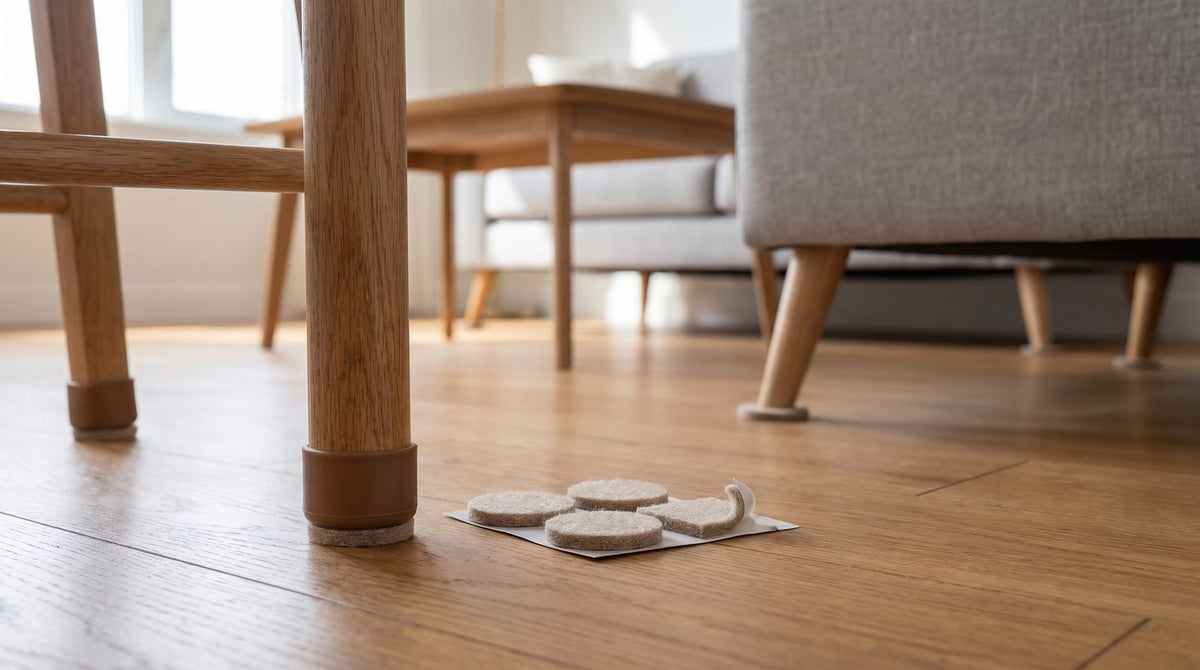
What to put under furniture on hardwood floors depends on two things: how often the piece moves, and what the bottom of its leg looks like. Felt is for anything that slides; silicone grippers or furniture cups are for anything that should stay put.
Short answer: put slip-on caps or nail-on felt glides under chairs, because they are dragged every day. Put stick-on felt pads under sofas, beds, tables and cabinets that rarely move. Put clear silicone grippers or furniture cups under anything you want to stop sliding, and stand heavy pieces on small feet in furniture cups so the weight is spread out.
Shop stick-on felt and grippers in furniture pads, the felt pads, caps and glides picked for wood in furniture pads for hardwood floors, and caps that slip over chair legs in chair leg floor protectors. The chart below shows which type each piece of furniture needs.
Quick chart: what goes under each piece
| Furniture | How often it moves | Put under it | Why |
|---|---|---|---|
| Dining and kitchen chairs | Many times a day | Slip-on felt caps, or nail-on felt glides on wooden legs | Stick-on pads tend to peel off under daily dragging |
| Bar stools | Many times a day | Slip-on felt caps | Thin legs and heavy use; a cap grips the leg |
| Coffee and side tables | Now and then | Stick-on felt pads | Flat leg ends take a pad well |
| Dining tables | Rarely | Large felt caps or stick-on pads | Heavy, but nudged when chairs hit it |
| Sofas and armchairs | Rarely | Felt pads to slide, or silicone grippers to hold | Decide first whether it should move |
| Beds | Almost never | Silicone grippers, or felt roll under a platform base | Stops the bed creeping when you sit down |
| Dressers, bookcases, cabinets | Almost never | Furniture cups under small feet; felt pads or felt roll under wide ones | Heavy weight on small feet dents wood |
| Area rug under a dining set | Chairs move many times a day | A rug pad under the rug, plus caps on the chair legs | Stops the rug sliding and protects the wood at its edge |
| Office chairs on casters | All day | A chair mat, not pads | Wheels roll; felt cannot go under them |
Two questions that decide it
1. Should it slide or stay put?
Felt lets a leg glide across the finish. That is what you want on chairs, and on tables you move to clean. It is the wrong choice for a bed that creeps when you sit on it, or a sofa that slides back when you lean on it. For those, use silicone grippers or furniture cups, which hold the piece in place.
2. What does the leg end look like?
Turn the piece over and look at the bottom of one leg.
- Flat and wide, wood or metal: a stick-on felt pad sticks well.
- Round or square, under 1-3/4 in across: a slip-on cap stays on better than an adhesive pad.
- Solid wood with a flat end: a nail-on glide is the most permanent option.
- A long base or plinth instead of legs: cut strips of felt from a roll.
- Splayed legs that meet the floor at an angle: if the leg end is cut flat to the floor, a stick-on pad works. A straight slip-on cap tilts with the leg, so its felt rides on one edge and wears through fast. Use angled chair leg floor protectors, which have a 15 degree sole.
Measure across the very bottom of the leg, where it touches the floor. Many legs taper, so the top tells you nothing. Our size guide shows how to measure chair legs for protectors, including square and splayed legs.
The options, one by one
Stick-on felt pads
The simplest fix for tables, sofas, cabinets and beds. Our self adhesive furniture pads come as 101 pieces: round, square and rectangle pads from 22 to 47 mm, and one 150 x 97 mm (5.9 x 3.8 in) sheet to cut. Pick a pad the same size as the leg end or slightly smaller, so no felt hangs over the edge and catches.
Felt roll for odd shapes
Bed rails, cabinet plinths and sofa bases do not fit a round pad. Felt for bottom of furniture comes on a 39.4 in (100 cm) roll, 1.6 to 3.9 in (4 to 10 cm) wide, and cuts with scissors.
Slip-on felt caps
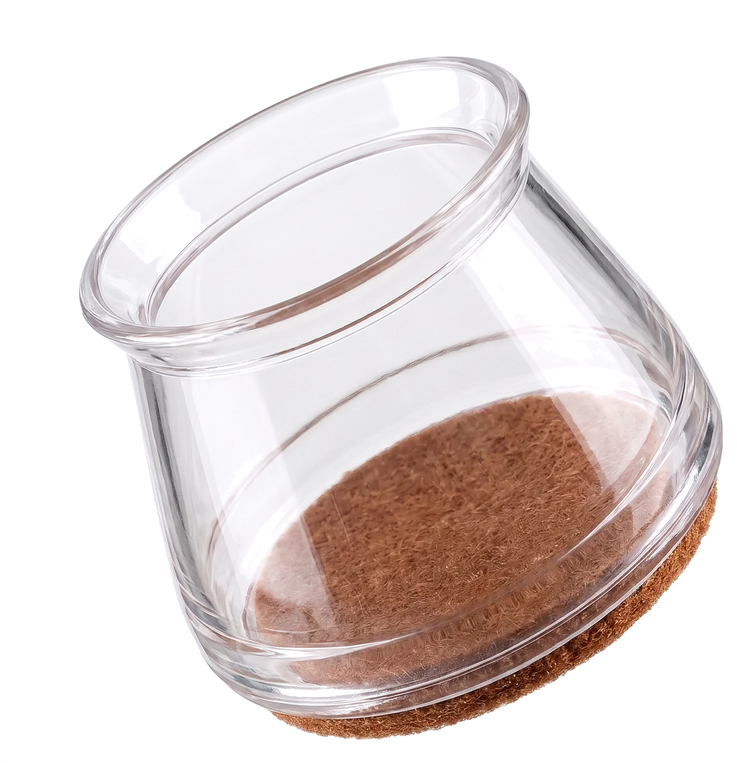
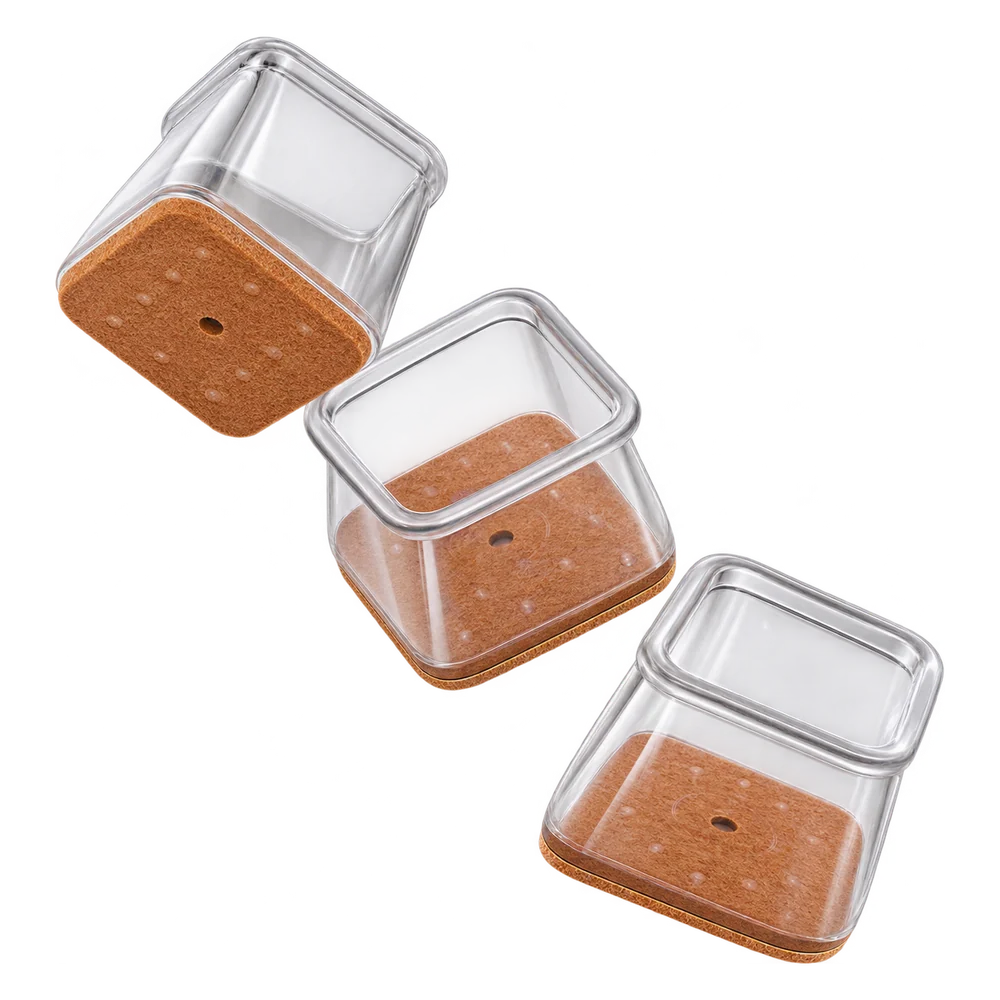
A cap fits over the leg end like a shoe, with felt on the base. It stays on through daily dragging, which is why it is the usual answer for chairs. Our round felt chair leg caps fit round legs from 10 to 30 mm. Wear resistant chair leg caps, which stand on a tan base pad, fit round legs of 19 to 25 or 30 to 40 mm, and square legs of 19 to 25 mm (brown only) or 35 to 45 mm. For thicker table and sofa legs, large furniture leg caps fit round legs of 38, 50 or 60 mm and square legs of 38, 40, 50 or 60 mm.
Nail-on felt glides
For solid wooden legs only. Felt chair glides are 20 mm (3/4 in) discs with a center nail you tap into the leg end. They will not come unstuck, but they need wood to grip and a leg end at least 20 mm across.
Silicone grippers
Non slip furniture grippers are 3 mm clear silicone discs or squares, 60 or 80 mm wide. They hold a sofa or bed in place on a hard floor and are hard to see once fitted.
Furniture cups
Furniture cups sit under the foot of a heavy cabinet, desk or appliance. Ours are blue-gray plastic cups with an 85 mm (3.35 in) black base ring, and rings of 63 and 50 mm that hold the foot. The cups are 44 mm (1.73 in) tall and the foot sits down inside the well, so the piece rises by less than that. Check that a door or drawer still clears.
Heavy furniture: spread the weight
Hardwood can dent under weight as well as scratch. A 200 lb cabinet on four round legs 1 in across presses about 64 pounds per square inch on the floor. Stand it in four furniture cups with an 85 mm (3.35 in) base and, with the full base on the floor, that drops to about 6 pounds per square inch, roughly a tenth. Soft felt does not spread weight past the edge of the leg, so for bookcases, dressers, pianos and loaded cabinets on small feet, a cup does more than thicker felt. Wide, flat feet need only a felt pad the size of the foot.
What not to put under furniture on wood
- Bare hard plastic or metal glides. Grit gets trapped under them and drags across the finish. Pick glides and caps with a felt face for wood.
- Nothing at all on chairs. Dining chairs move more than anything else in the house, and a bare wooden or metal leg dragged over grit scratches the finish fast.
- Tape, cardboard or folded cloth. They shift, trap dirt and can leave adhesive on the finish.
- Rubber, if your floor maker warns against it. Some flooring care guides warn that certain rubber can mark a finish over time. Read yours before leaving any rubber foot in one spot for months.
How to fit pads so they stay on
- Clean the bottom of each leg and let it dry. Dust and old glue are the main reason pads fall off.
- Peel the pad without touching the adhesive and press it onto the center of the leg for 30 seconds.
- Leave the piece in place for a few hours before you drag it.
- For caps, push each one fully onto the leg so the felt sits flat on the floor.
- Check every leg. Front and back legs on one chair are often different sizes.
Moving furniture is a different job
Pads and caps are for everyday sliding. To push a full dresser or sofa across a room, slip furniture sliders under the legs for the move, then take them out. Sweep the floor first, because grit under a slider scratches as it goes.
Upkeep
Felt collects grit, and dirty felt scratches. Every few months, tip chairs over and check the felt. Pick out embedded grit, and replace any pad or cap that is worn flat, torn or hard to the touch. Chairs need checking most often; a sofa pad can last years.
Honest limits
- Stick-on pads can peel off chairs that are dragged many times a day. Use caps or nail-on glides there.
- The felt caps above skip square legs between 26 and 34 mm. On a straight wooden leg that size, cut a square pad from the sheet in the 101 piece pack.
- Nail-on glides do not go on metal or plastic legs.
- No pad helps an office chair on casters. Those need a chair mat; see our guide to the best chair mat for hardwood floor.
More on the same subject: how to protect hardwood floors room by room, how to pick the best furniture pads for hardwood floors, and how to stop chairs from scratching floors.
Questions
What are furniture pads?
Furniture pads are small pieces of felt, usually with an adhesive back, that stick under furniture legs. The felt takes the friction instead of the floor, so the piece slides without scratching. Silicone pads do the opposite job and hold furniture still.
What goes under chairs on hardwood floors?
Slip-on caps with a felt base, or nail-on felt glides on solid wooden legs. Chairs are dragged many times a day, and stick-on pads tend to peel off under that use.
What goes under a sofa?
Felt pads if you want it to slide when you clean, or clear silicone grippers if it keeps creeping back when you sit down. Choose one; do not stack felt and silicone.
What goes under a heavy cabinet or dresser?
Furniture cups under small feet, because the cup base spreads the weight over a larger area: on four 85 mm cups a 200 lb cabinet presses about a tenth as hard on the floor as on bare 1 in legs. Wide, flat feet need only a felt pad the size of the foot.
Can I put felt pads under an office chair with wheels?
No. Casters roll, so there is nothing for a pad to sit under. Put a chair mat under the desk area instead.
How often should I replace felt pads?
Check chair pads every few months and replace any that are worn flat, torn or full of grit. Pads under sofas, beds and cabinets that rarely move can last years.