How to Keep Felt Pads on Chair Legs
Updated November 21, 2026
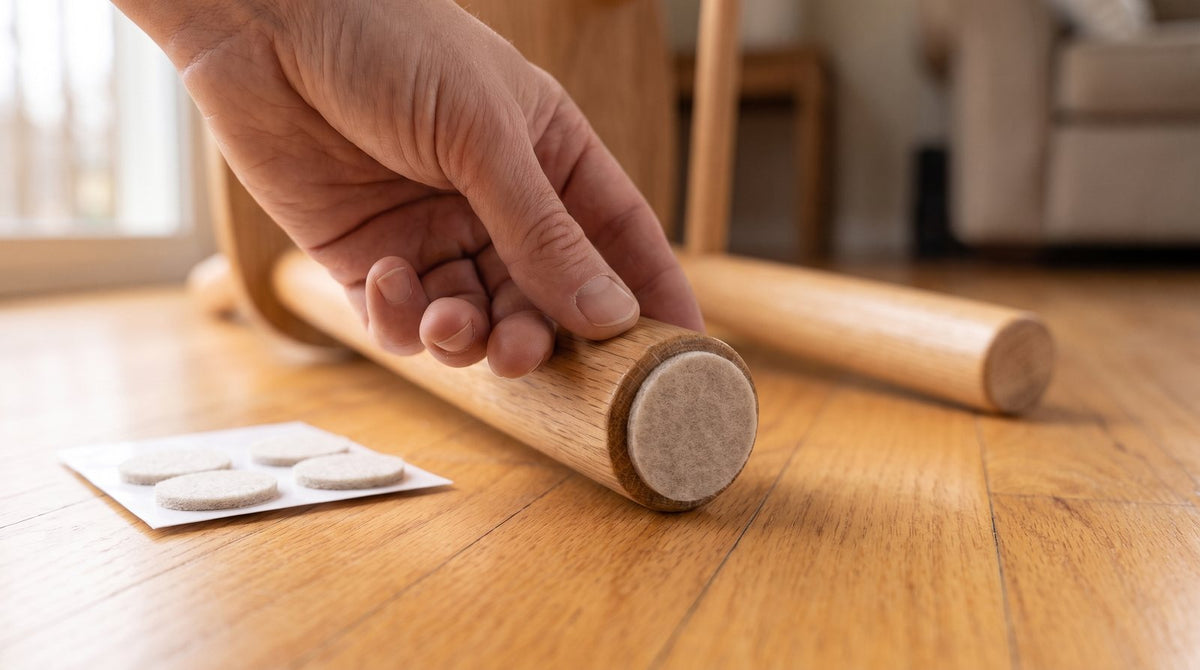
How to keep felt pads on chair legs: clean the leg end until it is bare and dry, use a pad no wider than the leg, press it on hard for 30 seconds and leave the chair for a few hours before you drag it.
If the pads still fall off a chair that moves every day, adhesive is the wrong fixing for that chair. A nail-on felt glide or a slip-on cap with a felt base is held by a nail or by its grip on the leg, so it cannot peel.
Felt pads falling off is rarely the felt's fault. A stick-on pad usually lets go for one of a few fixable reasons: dirt or polish on the leg, a pad that hangs over the edge, or a chair that is dragged sideways many times a day. This guide covers why felt pads keep falling off chair legs, how to make them stay on, and what to use when they never will.
Why felt pads keep falling off chair legs
A stick-on pad is held by a thin layer of pressure-sensitive adhesive. That kind of adhesive resists a straight pull well but is weak against peeling, where one edge lifts and the rest follows. Every time a chair is dragged, the floor pushes the leading edge of the pad sideways, and that starts a peel.
- Dust, wax or polish on the leg end. The adhesive sticks to the dirt instead of the wood, and the dirt lets go.
- Old glue left behind. A new pad on top of old residue sits on a lumpy layer that has already failed once.
- A pad wider than the leg. The overhang catches on rug edges, floor seams and grout lines, and each catch lifts the edge a little more.
- A leg end that is not flat. Rough end grain, a rounded end or a leg that leans outward leaves part of the pad touching nothing.
- No time to set. The adhesive needs firm pressure and a few hours to grip. A chair dragged a minute after fitting can shove a pad straight off.
- Daily dragging. Dining and kitchen chairs move many times a day, so even a well-fitted stick-on pad wears and peels faster there than under a sofa.
How to make felt pads stay on chairs
If your felt pads are not sticking, the leg end is usually the problem. On chairs and tables that move now and then, a stick-on pad stays put if it goes onto a clean, flat surface.
- Take off the old pad. Peel it away and scrape off any leftover glue with a plastic scraper or a thumbnail. Pull out old tacks or nails too. Do all four legs of a chair at the same time.
- Clean the leg end. Wipe it with rubbing alcohol on a cloth to lift dust and polish, then let it dry. On a waxed leg, rub the wax off with a dry cloth first. On a painted or lacquered leg, try the alcohol on a hidden spot first.
- Check that it is flat. If a wooden leg end is rough or slightly domed, rub it a few times on fine sandpaper laid flat on a table. Wipe off the dust afterward.
- Size the pad to the leg. Pick a pad the same size as the leg end or a little smaller; our chart shows what size felt pads you need for each leg width. If none matches, stand the leg on the pad's backing sheet, trace around it and trim the felt with sharp scissors before you peel it.
- Peel and press. Peel the pad off without touching the sticky side, center it on the leg and press firmly for about 30 seconds at room temperature, since cold adhesive is stiffer and grips less. Then stand the chair upright and lean on the seat so its weight presses all four pads.
- Wait before you drag it. Leave the chair standing for a few hours so the adhesive can settle.
Use the same pad on every leg. Pads of different thickness make a chair rock, and a rocking chair scuffs one pad every time it moves.
Our round and square felt pads come one size per pack, as 27 or 40 mm (1.1 or 1.6 in) rounds, two rectangles or an 85 mm (3.3 in) square, so you can match the pad to the leg. For a mix of furniture, our self adhesive furniture pads pack holds 101 felt pieces in eight sizes, including a large sheet you can cut to shape.
Can you glue felt pads back on?
You can, but it rarely fixes the real problem. Glue holds the back of the pad, while the felt face still wears thin under a chair that is dragged every day.
Super glue soaks into felt and dries hard, and if it reaches the face, that spot is no longer soft. Hot glue leaves a lump that tilts the pad. If you do glue one, spread a thin layer of wood glue on the leg end only, keep it back from the edge and leave the chair upright overnight.
Chair protectors that stay on: nail-on glides and caps
If a chair goes through a set of pads every few weeks, the fixing is wrong for the job. Two kinds of felt protector hold without adhesive.
| Fixing | Holds by | Best for | Limit |
|---|---|---|---|
| Stick-on felt pad | Adhesive | Tables, sofas and chairs moved now and then | Peels under daily dragging |
| Nail-on felt glide | A center nail in the wood | Solid wooden legs with a flat end | Wood only; leaves a small nail hole |
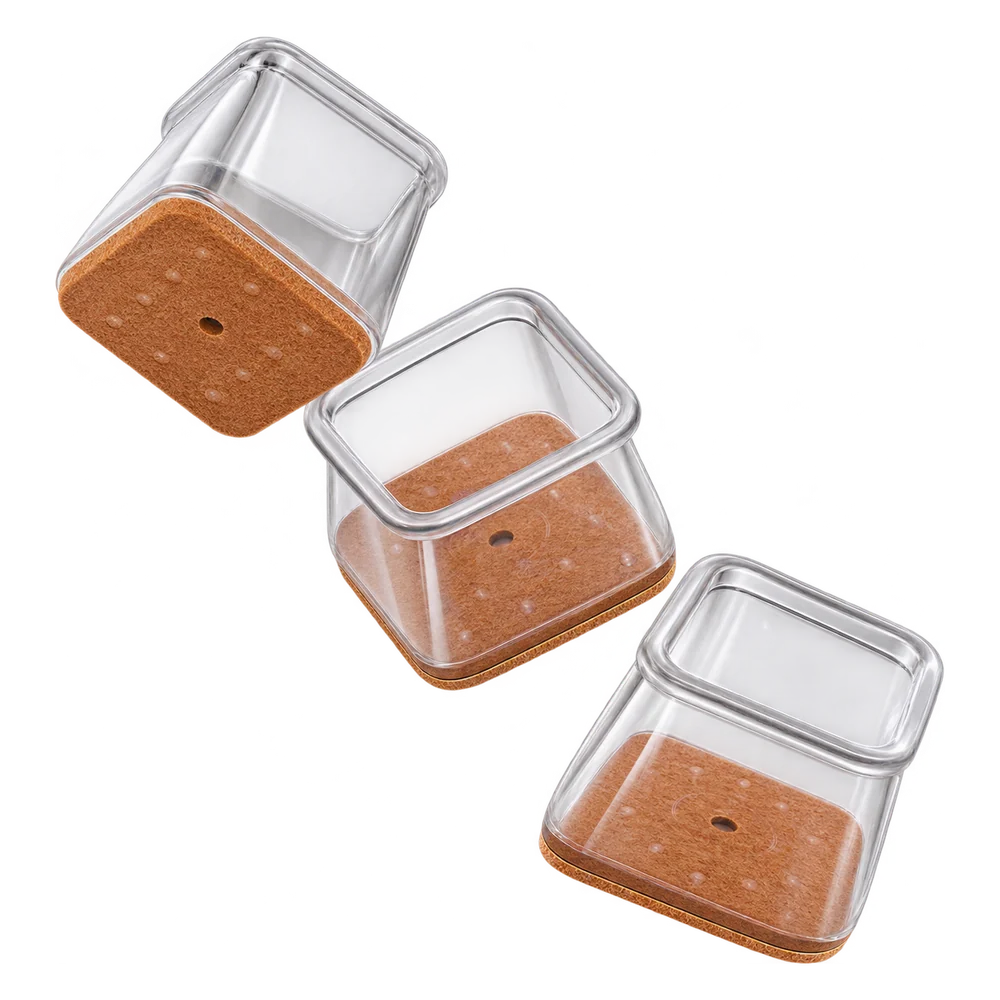
| Slip-on cap with a felt base | Stretch grip around the leg | Round legs of a known size | Must match the leg size |
On solid wooden legs, nail-on felt chair glides tap into the leg end with a hammer. Each one is a 20 mm (0.79 in) disc with a gray felt face, and a pack of 100 covers 25 chairs. On oak or another hard wood, drill a small pilot hole first so the leg does not split.
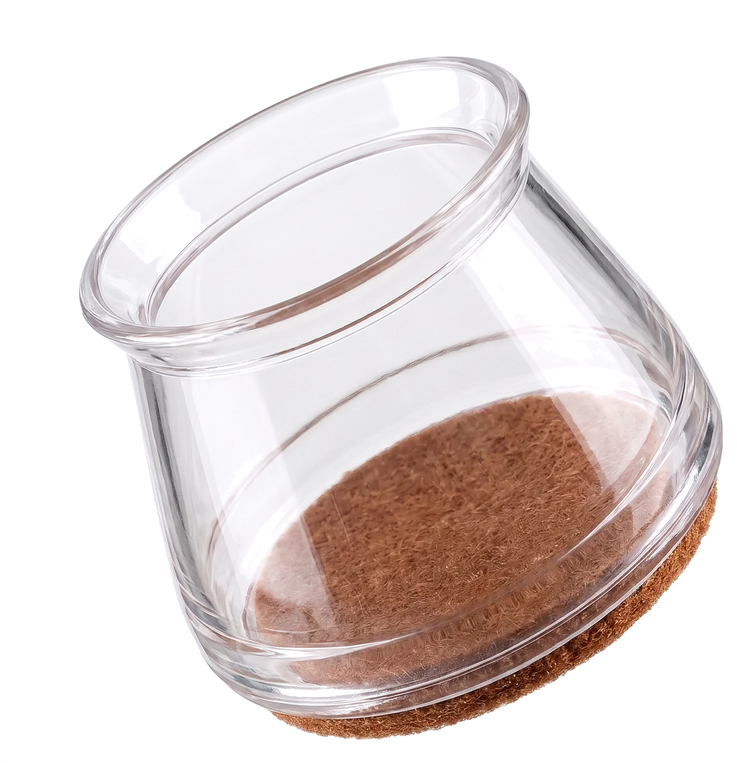
Caps go on without tools. Our round felt chair leg caps come in four sizes for round legs 10 to 30 mm (0.4 to 1.2 in) across, 16 to a pack, and grip the leg so dragging cannot peel them off. Read how to measure chair legs for protectors first, because a cap that is too big can twist off.
For square legs, browse all chair leg caps and check each one's base, since not every cap has felt underneath.
Legs that lean outward meet the floor on one edge, so a flat pad peels from that edge first. Our angled chair leg floor protectors have a sole set at 15 degrees, so the felt sits flat under legs that splay about 15 degrees and measure 20 to 35 mm (0.8 to 1.4 in) across.
How often to replace felt pads
Felt wears even when it stays on. Tip a dining chair over every month or two and look at the pads; furniture that rarely moves needs a check once or twice a year.
- Replace a pad that is flat and hard, dark with grit, or worn through to its backing or nail.
- Replace a pad that is lifting at one edge. Grit collects under the lifted part, so sticking it back down rarely lasts.
- Sweep under the table often. Gritty felt drags instead of gliding, which pulls harder on the pad and can scratch the floor.
Honest limits
- No adhesive pad stays on forever under a chair that is dragged many times a day.
- Stick-on pads need a flat, closed end. An open metal tube has nothing for them to stick to and needs a cap or plug sized to the tube.
- Nail-on glides need solid wood at least about 20 mm (3/4 in) across the leg end.
- Caps must match the leg size, and they do not fit sled bases or runners.
- Felt slides. It will not stop a chair from moving, and it does little on carpet.
If your floor already has marks, our guide on how to stop chairs from scratching floors walks through every leg type, from bare wood to metal tubes.
Questions
Why do my felt pads keep falling off?
Usually dust or polish on the leg end, a pad wider than the leg, or a chair that is dragged many times a day. Each drag pushes the edge of the pad sideways, and once an edge lifts, the pad peels away.
Why are my felt pads not sticking to chair legs?
New pads that will not stick at all are usually going onto dust, wax, polish or old glue, or onto a cold or rough leg end. Rub off any wax with a dry cloth, wipe the end with rubbing alcohol and let it dry, then press the pad on at room temperature for 30 seconds and leave the chair for a few hours.
How do I make felt pads stay on chairs?
Clean and dry the leg end, use a pad no wider than the leg, press it on for 30 seconds and wait a few hours before moving the chair. For chairs dragged every day, nail-on glides or chair leg caps that grip the leg stay on longer than any stick-on pad.
Can I use super glue on felt pads?
It is not a good fix. Super glue soaks into felt and dries hard, and a hard spot on the face no longer protects the floor. If you glue a pad, use a thin layer of wood glue on the leg end only and let it set overnight.
Do felt pads stick to metal chair legs?
On a clean, flat, closed metal base, yes. An open tube end has nothing for the pad to stick to, so use caps sized to the tube.
How often should felt pads be replaced?
Check dining chairs every month or two and replace any pad that is flat, gritty, worn through or lifting at an edge. Furniture that rarely moves needs a check once or twice a year.
Why does my chair wobble after new felt pads?
One pad is thicker than the others, sits on an angle, or has come off. Replace all four at once with the same type so the chair sits level.