Best Furniture Pads for Hardwood Floors
Updated November 20, 2026
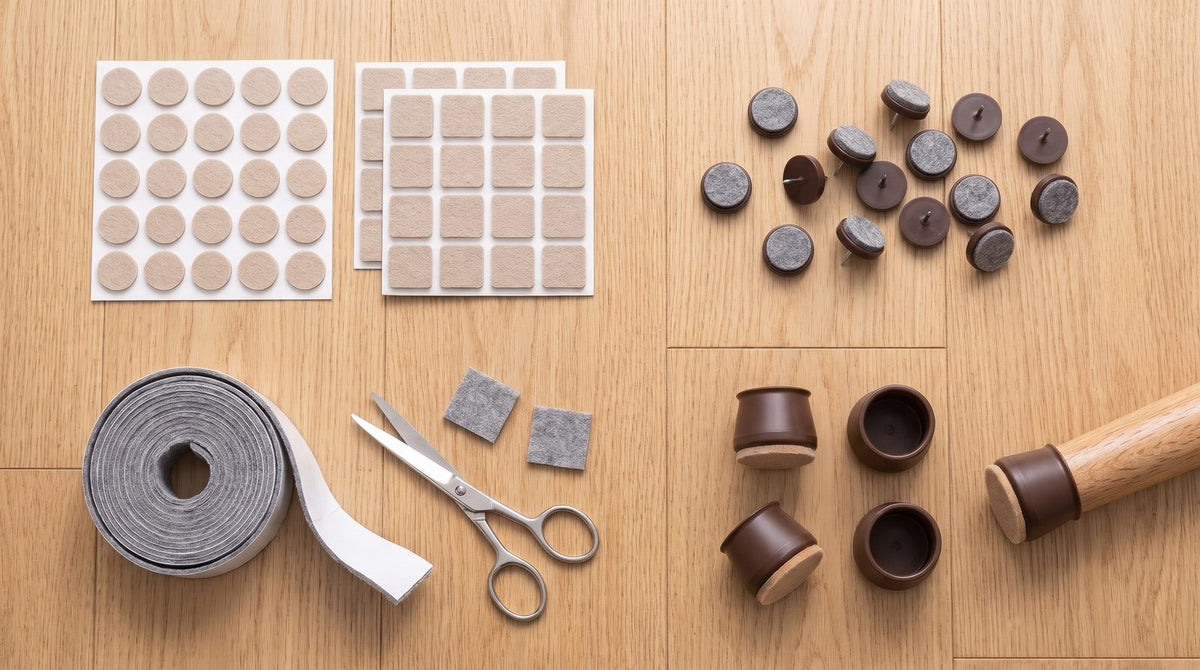
Best furniture pads for hardwood floors have a felt face and a way of staying on that suits how often the piece moves. Use slip-on felt-base caps or nail-on felt glides on chairs that are dragged every day, stick-on felt pads on sofas, beds and cabinets that move now and then, and a felt roll for long or odd-shaped bases.
Felt is the right material for wood because it is soft and slides, so the leg glides over the finish instead of digging into it. Where most pads fail is not the felt but the fixing: a stick-on pad under a dining chair is often gone within weeks. Below is how to match the pad to the furniture, measure the leg and keep the felt doing its job.
To shop by type, see our furniture pads for hardwood floors, all furniture pads, or start with a mixed pack of self adhesive furniture pads that covers most flat leg ends in one box.
The best pad for each piece of furniture
Start with the furniture, not the pad. How often it moves, and what the bottom of the leg looks like, decide the type.
| Furniture | Best pad | Why |
|---|---|---|
| Dining and kitchen chairs, round legs | Slip-on caps with a felt base | The cap grips the leg, so daily dragging cannot peel it off |
| Wooden chairs with a flat leg end | Nail-on felt glides | The nail holds the glide in the wood, so it cannot peel off |
| Sofas, beds, cabinets, side tables | Stick-on felt pads | Quick, hidden under the leg, and they rarely see sideways force |
| Sofa plinths, cabinet runners, odd feet | Felt roll cut to shape | Ready-made pads do not fit long or unusual bases |
| Thick table and sofa legs | Large caps with a felt pad | Covers the whole leg end on heavy pieces you pull out to clean |
| A sofa or bed that creeps | Silicone grippers, not felt | Felt is made to slide; silicone grips, so the piece is much less likely to creep |
Most homes need two types: caps or glides for the chairs, and stick-on pads for everything else.
What high quality furniture pads have in common
Price and pack size say little. These five points decide whether a pad protects the floor or just sits there.
- Felt on the floor side. Felt slides on wood. Bare plastic, metal and hard rubber feet scrape, and rubber also grips and drags, which can leave scuff marks on a finish.
- A fixing that matches the use. Adhesive is fine on furniture that is lifted or nudged now and then. A chair pulled in and out ten times a day needs a cap that grips the leg or a glide nailed into it.
- The right size. A pad should be the same size as the leg end or a little smaller. Felt that overhangs the edge catches, curls and peels.
- Dense felt. Thin, loose felt flattens and wears through fast under chairs. Denser felt keeps its face longer.
- A color that disappears. Beige suits light floors and legs, brown suits darker wood, and clear caps let the leg show through.
Stick-on, nail-on or slip-on: how each one holds
| Fixing | Good for | Main limit |
|---|---|---|
| Stick-on felt pad | Flat leg ends on furniture that moves now and then | Peels on chairs dragged every day |
| Nail-on felt glide | Solid wooden legs with a flat end | No use on metal, plastic or hollow legs |
| Slip-on cap with felt base | Round or square chair legs of a known size | Must match the leg size closely |
| Felt roll | Plinths, runners and odd shapes | Adhesive, so not for dragged chairs |
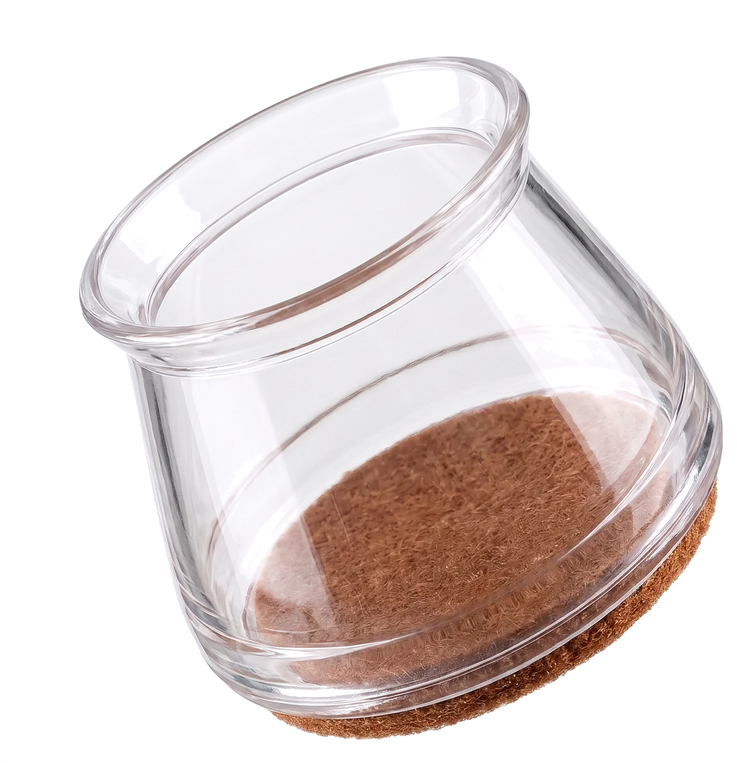
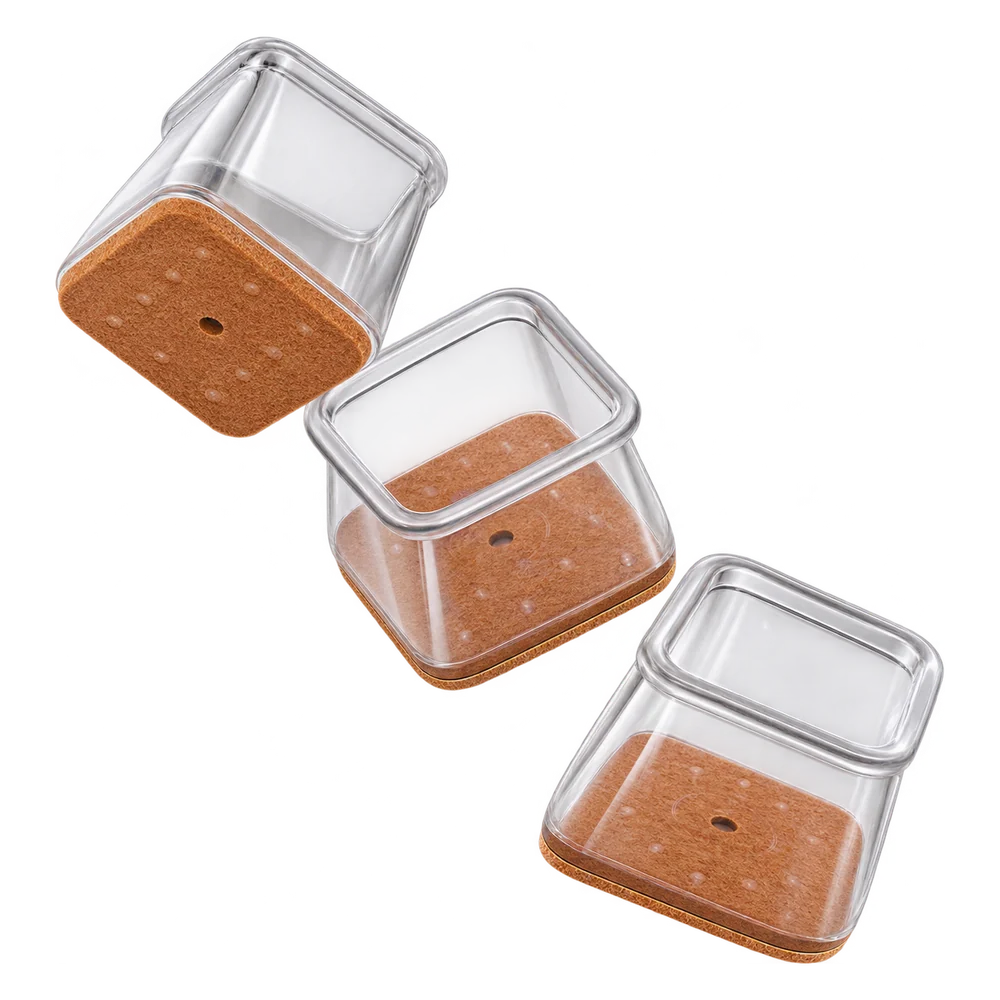
For chairs, the slip-on route is usually the least work. Our round felt chair leg caps fit round legs from 10 to 30 mm in four sizes, and the wear resistant chair leg caps come in round and square sizes with a tan base pad on every cap. For wooden chairs with a flat end about 20 mm (3/4 in) across, nail-on felt chair glides are the most permanent fix. For thick table and sofa legs of 38 to 60 mm, use large furniture leg caps.
For long or oddly shaped bases, cut felt for bottom of furniture from a roll. Stand the leg on the liner, trace around it and cut before you peel.
How to measure and fit furniture pads
- Turn the piece over or tip it onto a soft rug. Ask for help with anything heavy.
- Measure across the very bottom of the leg, where it touches the floor. Many legs taper, so measuring higher up gives the wrong size.
- Round leg: measure straight across the center. Square leg: measure one flat side, edge to edge.
- Check every leg. Front and back legs on one chair are often different sizes.
- For stick-on pads, wipe the leg end clean and dry, press the pad on for about 30 seconds, and wait a few hours before sliding the furniture.
- For caps, push each one straight on until the leg reaches the bottom, then stand the piece up and check that every base sits flat.
Not sure where to measure? Our size guide, how to measure chair legs for protectors, shows where to put the ruler on round, square and tapered legs.
The honest limits of felt
- Dirty felt scratches. Sand and grit caught in the felt act like sandpaper. Sweep under chairs, and replace pads that are worn flat or gritty. Check chair pads every few months; they wear far faster than pads under a sofa.
- Felt does nothing for casters. Office chairs on wheels need a mat. See our guide to the best chair mat for hardwood floor.
- Felt is made to slide. If a sofa or bed creeps across the floor, felt makes it worse. Use non slip furniture grippers instead.
- Felt does not help on carpet. It is for hard floors only.
- Angled legs need angled caps. A flat pad on a splayed leg touches the floor on its edge and wears through. Use angled chair leg floor protectors instead.
Laminate and vinyl plank
The same felt pads suit engineered wood, laminate and luxury vinyl plank. Vinyl is softer than most wood finishes, so a narrow leg can dent it under weight; a cap or pad that covers the whole leg end spreads the load. See furniture pads for lvp flooring for vinyl.
Not looking for floor pads?
"Furniture pads" also means the quilted moving blankets used to wrap furniture in a truck. Those are a different product and we do not sell them. To slide a heavy dresser across a room without lifting it, use furniture sliders instead.
For chairs only, our guide to the best chair leg floor protectors compares caps, glides and socks by leg shape. For a whole-room plan, read how to protect hardwood floors from furniture.
Questions
Which furniture pads are best for hardwood?
Felt pads, held on in a way that suits the furniture. Slip-on felt-base caps or nail-on felt glides suit chairs that are dragged every day. Stick-on felt pads suit sofas, beds and cabinets that move now and then.
Are thicker pads better?
Thicker, denser felt takes longer to wear flat, so it lasts longer under chairs. A very tall stick-on pad can tip and peel when a chair is dragged, though, so on chairs the fixing matters as much as the thickness.
Do furniture pads work on laminate?
Yes. The same felt pads suit laminate, engineered wood and luxury vinyl plank. Keep the felt clean, because grit in the felt can scratch any hard floor.
Why do felt pads keep falling off my chairs?
Dragging a chair pushes the pad sideways and peels the adhesive. Clean the leg before fitting, or switch to slip-on chair leg caps or nail-on glides, which have no adhesive to peel.
How often should I replace furniture pads?
When the felt is worn flat, torn or gritty. Check chair pads every few months, because they wear far faster than pads under a sofa or cabinet.
What about moving pads?
Moving blankets protect furniture in transit and are a different product. We do not sell them. To slide heavy furniture across a room, use furniture sliders.