Protect Hardwood Floors from Furniture
Updated November 20, 2026
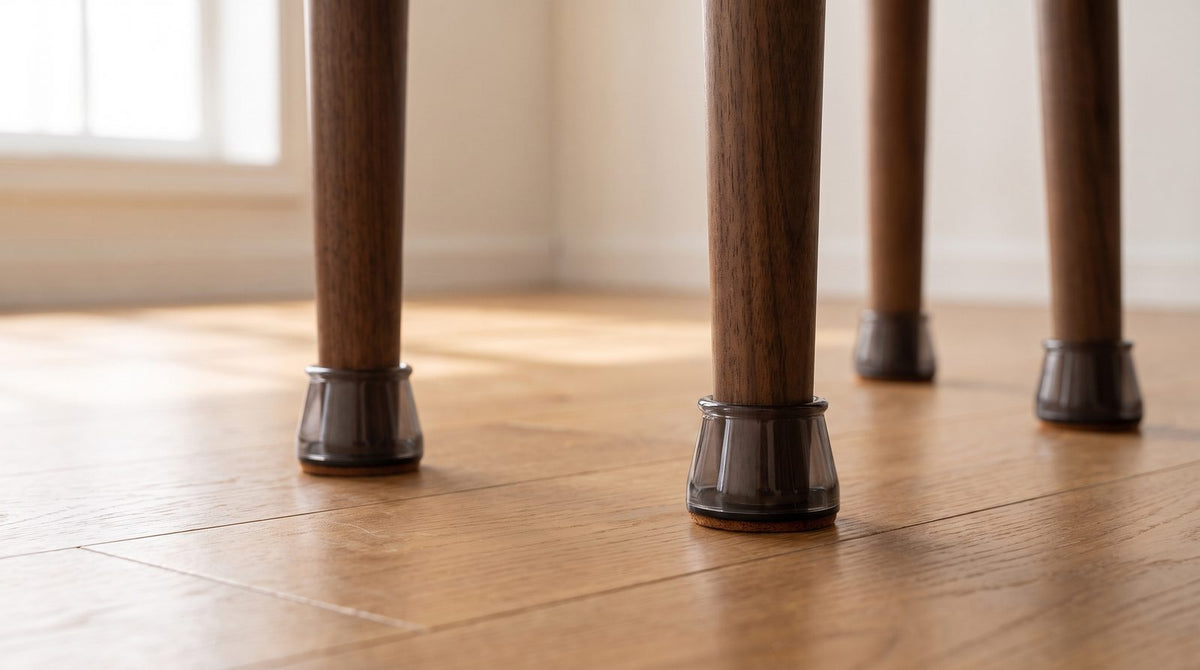
Protect hardwood floors from furniture by putting a protector between every leg and the wood, chosen by how the piece is used. Chairs that are dragged every day need slip-on felt base caps or nail-on felt glides, which cannot peel off. Tables and dressers that rarely move are fine with stick-on felt pads. Heavy pieces need furniture cups that spread their weight, or silicone grippers if they creep. Then check the felt every few months, because a worn pad full of grit scratches like sandpaper.
This guide covers what actually damages a wood floor, which protector suits each kind of furniture, how to fit it so it stays on, and how to keep it working. If you already know what you need, our furniture pads for hardwood floors all put felt against the wood, and the chair leg floor protectors collection covers dining and kitchen chairs. For other floor types, see the full range of furniture pads.
Before you buy anything that slips over a leg, read how to measure chair legs for protectors. A cap in the wrong size is the most common reason floor protection fails.
What damages hardwood floors under furniture
Grit causes most scratches. Sand and dirt from shoes are harder than the finish on a wood floor. When a bare leg, a worn pad or a hard plastic glide drags a grain of sand across the boards, it cuts a fine line. Chairs do most of this damage because they move many times a day.
Weight causes dents. A leg end presses the whole load of the piece into a small spot. Pressure falls quickly as the contact patch grows: a rigid base twice as wide covers four times the area, so the boards take about a quarter of the pressure. That is why heavy pieces stand in furniture cups rather than on small felt pads. Softer woods such as pine, cherry and walnut dent more easily than oak, maple or hickory.
Hard edges cause gouges. Unfinished leg ends, metal legs, staples under sofas and the nail or plastic of a glide whose felt has worn through all cut into the finish when the piece moves.
Wheels grind. Hard plastic casters on office chairs roll over the same strip of floor all day and wear a dull track into it. Felt cannot go on a wheel, so a rolling chair needs a mat or softer casters instead; our guide to the best chair mat for hardwood floor covers that case.
Match the protector to the furniture
The right protector depends less on the floor and more on how often the piece moves and what its legs look like.
| Furniture | How it moves | What to use | Why |
|---|---|---|---|
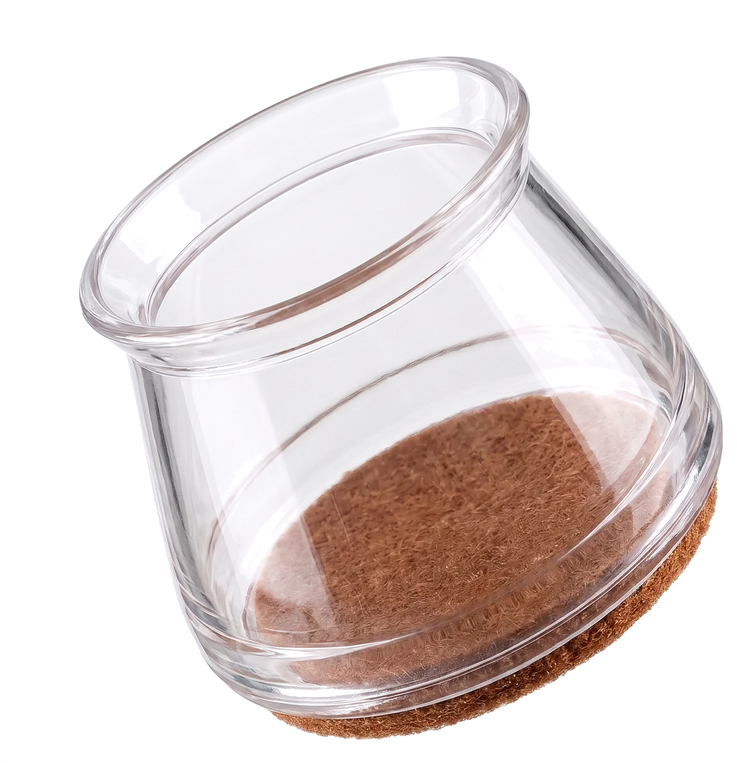
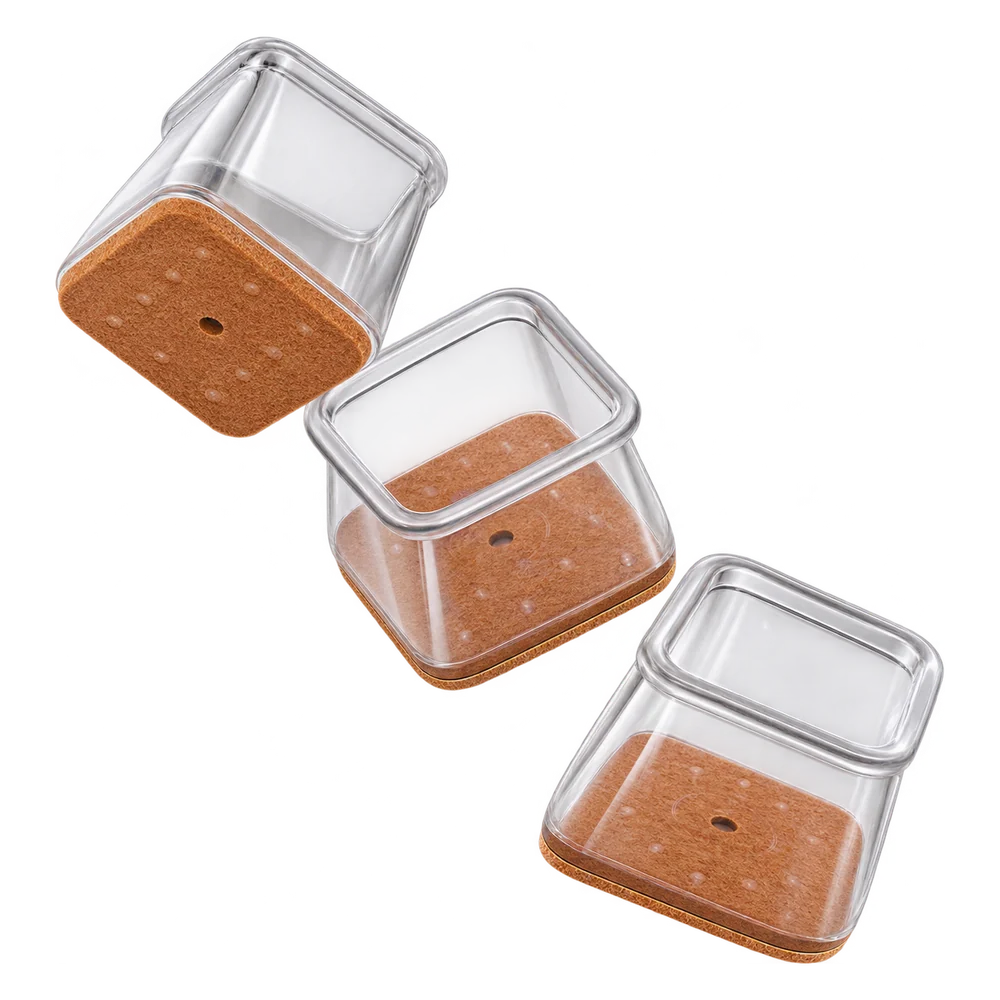
| Dining and kitchen chairs | Dragged many times a day | Felt base caps such as round felt chair leg caps, or nail-on felt chair glides on wooden legs | Stick-on pads peel off when a chair is dragged sideways |
| Chairs and stools with splayed legs | Dragged daily | Angled chair leg floor protectors | A flat cap on a slanted leg touches the floor only at its edge |
| Coffee tables, side tables, dressers | Moved now and then | Self adhesive furniture pads | Quick to fit, and they stay on when nothing drags them |
| Sofas, beds and cabinets with plinths or runners | Rarely moved | Felt for bottom of furniture, cut from a roll | Covers long or odd-shaped bases that round pads do not fit |
| Thick table and sofa legs | Shifted when you clean | Large furniture leg caps with felt | Holds the felt flat under a wide leg |
| Heavy cabinets, loaded shelves, appliance feet | Almost never | Wide furniture cups under each foot | Spreads the load over an 85 mm (3.35 in) base, so the boards dent less. Fits feet up to 50 mm (1.97 in) across |
| Sofas or beds that creep | Should not move at all | Non slip furniture grippers | Silicone holds the piece in place instead of sliding |
For a wider comparison of pad types, read our ranking of the best furniture pads for hardwood floors. If your question is about one room or one piece, the guide on what to put under furniture on hardwood floors goes piece by piece. For table and sofa legs wider than a chair leg, browse furniture leg protectors.
How to fit floor protectors so they stay on
- Clean the leg ends. Tip the piece onto a blanket. Pull off old pads, scrape away dried adhesive and wipe each end with rubbing alcohol. Let it dry fully.
- Measure where the leg meets the floor. Many legs taper, so the bottom is narrower than the middle. Measure the bottom face, and note whether it is round or square.
- Stick-on pads: pick a pad about the same size as the leg end. A pad that hangs over the edge catches and peels. Press it hard for about 30 seconds and avoid dragging the piece for the rest of the day.
- Slip-on caps: the cap should need a firm push to go on and sit with its felt flat on the floor. A loose cap twists and slides off; a cap that is too small will not go on.
- Nail-on glides: use them only on solid wood legs with a flat end at least as wide as the glide. On hard wood legs, drill a small pilot hole first so the leg does not split, then tap the nail straight until the glide sits flat.
- Check for wobble. Stand the piece up and rock it. If it rocks, one pad is thicker or sits crooked; fix it now, because a rocking leg grinds the floor every time someone sits down.
Do rugs protect hardwood floors?
A rug under a dining table helps, but chairs are pulled back past its edge every meal, and the edge is where scratches gather. Fit the chair legs as well. Put a pad under the rug that is sold as safe for finished wood floors: some rubber and vinyl backings can stick to or discolor a finish over time. Sunlight also changes the color of many woods, so a rug left in one place for years can leave an outline; shift it now and then.
Moving heavy furniture without scratching
Never drag a heavy piece on its bare legs or on worn felt. Lift it with two people, or slide it on furniture sliders. Sweep the floor first, because a grain of sand caught under a slider scratches just like one under a leg. Felt pads are made for everyday sliding, not for a full bookcase across a room.
Keep the protection working
- Check chair felt every few months and other furniture once or twice a year. Turn a chair over and look for felt that is flat, thin, torn, off center or packed with grit and hair.
- Clean or replace. Brush grit and hair out of the felt. If it will not come out, or the felt is worn through, replace the pad or cap.
- Keep grit off the floor. Put mats at outside doors and sweep or vacuum with a hard floor setting (no beater bar) at least weekly in rooms with chairs.
- Wipe spills under legs. Wet felt picks up dirt fast and can leave a mark on the finish.
Chairs need the most care because they move the most. Our step-by-step guide on how to stop chairs from scratching floors goes deeper on chairs alone.
What floor protectors cannot do
- They do not hide or repair scratches already in the floor. Fix those first, then protect the legs.
- Felt makes furniture slide more easily. On a piece that should stay put, use grippers instead.
- Caps fit only legs of the right shape and size. A leg wider than the cap will not go in, and one much narrower sits loose.
- No pad prevents dents from dropped objects, pet claws or narrow heels.
Questions
What causes most furniture scratches?
Grit trapped under bare or worn chair legs that are dragged across the floor. Sand is harder than the floor finish, so a leg that drags it cuts a line. Chairs do most of the damage because they move the most.
Are rugs enough?
Rugs help under tables, but chairs still slide off them. Protect the legs too, and use a rug pad sold as safe for finished wood floors.
How often should felt be replaced?
When it is flattened, worn through or holding grit you cannot brush out. Check dining chairs every few months and furniture that rarely moves once or twice a year.
How do I stop dents from heavy furniture?
Stand each foot in a furniture cup, so the load sits on a wide, rigid base instead of a small leg end. A base twice as wide covers four times the area, so the boards take about a quarter of the pressure.
Should I use felt or silicone grippers on hardwood?
Use felt on anything you move, such as chairs and tables. Use clear silicone grippers on pieces that should stay put, such as a sofa or bed that creeps across the floor.
Do felt pads work on engineered hardwood and laminate?
Yes. Felt slides the same way on engineered hardwood and laminate as on solid wood. Keep it clean, because grit in the felt scratches any of them.