Do Felt Pads Scratch Hardwood Floors?
Updated November 21, 2026

Do felt pads scratch hardwood floors? Clean felt pads do not: the soft fibers slide over the floor finish without cutting it, and they keep the hard end of the leg off the wood. Felt pads scratch only when something goes wrong, most often when sand and grit get pressed into the felt or the felt wears through to the hard base underneath, so keep them clean, sized to the leg and replaced when worn.
So the useful question is whether your pads are still clean and whole. This guide covers the five ways felt pads can damage floors, how to check yours in a minute, and how to clean or replace them before they leave marks. If yours are past saving, see our furniture pads for hardwood floors.
Why clean felt does not scratch hardwood
Felt is a mat of soft fibers pressed together. The finish on a hardwood floor is much harder than those fibers, so clean felt slides over it without cutting it.
Felt also covers the hard parts of the leg. A bare wooden leg has a sharp edge, and a metal leg is harder than the finish, so either can scrape the floor when a chair is pulled out. With felt in between, nothing hard touches the wood.
How felt pads can damage floors
Felt pads cause scratches when something hard ends up between the pad and the floor, or when the pad stops covering the leg. These are the five ways it happens, most common first.
- Dirt and grit in the felt. Sand and dirt from shoes are harder than the floor finish. Felt catches the grains and holds them, and every drag pulls them across the boards like fine sandpaper. This is the usual cause of the faint arcs around a dining chair.
- Felt worn through. Felt on a busy chair gets thinner and flatter. Once it wears through, the plastic cup or nail head of a glide, or the hard rim of a cap, reaches the floor.
- A pad that peeled or slid. Stick-on pads can peel when a chair is dragged sideways every day. A pad half off the leg rides on its edge, and a pad that falls off leaves the bare leg on the floor.
- The wrong size. A pad much smaller than the leg end lets the edge of the leg reach the floor as the felt flattens or the chair tips back. A pad much bigger than the leg end overhangs, catches as it moves and peels sooner.
- Sticky spills. Soda, juice and syrup dry into the felt and set dirt into it like glue. A stiff, crusty pad no longer cushions, and it drags whatever is stuck in it.
Are felt pads bad for hardwood?
No. Felt is the usual choice for wood floors because it slides without marking. The problems above come from dirt and wear, not from felt itself, as this comparison shows.
| Under the leg | Scratch risk on hardwood | Why |
|---|---|---|
| Clean felt that covers the leg end | Low | Soft fibers slide; nothing hard touches the finish |
| Felt holding grit | High | Trapped sand cuts fine lines as the chair moves |
| Felt worn through | High | The hard base, rim or nail head touches the floor |
| Bare wooden leg | High | The sharp edge scrapes and drags grit |
| Bare metal leg or tube end | High | Metal and a cut tube edge are harder than the finish |
| Rubber or silicone | Low, but it grips | Suits furniture that should stay put, not chairs you slide |
How to tell if your felt pads are scratching the floor
- Turn one chair over in good light. Clean felt looks even and soft. A problem pad looks gray or dark, flat and shiny, or has specks in it.
- Run a fingertip across the felt. If it feels gritty or hard, it is carrying sand.
- Look at the face and edge of the pad. If you can see a plastic rim, a nail head or bare wood on the floor side, the felt is worn through or has slipped.
- Shine a flashlight low across the floor where the chair moves. Fine arcs or a dull patch there mean the scratching has already started.
- Check every leg, not just one. A single worn pad can also make the chair rock.
Felt pads and dirt: how to clean them
A pad that is gritty but still thick can be cleaned. Pick out any visible grains, then brush the felt firmly with a stiff brush or an old toothbrush. A strip of packing tape pressed on and peeled off lifts the fine dust that brushing leaves.
Sweep or vacuum the floor before you set the chair back down, or the felt picks up the same grit again. Under dining chairs, sweep every few days so grit does not build up in the felt. If a pad stays dark and hard after brushing, the dirt is set in: replace it.
After you mop, let the floor dry before chairs slide over it, so the felt does not soak up dirty water.
When to replace felt pads
- The felt has flattened so far that you can see or feel the base under it.
- Grit stays in the felt after brushing.
- A stick-on pad has peeled at one edge more than once.
- A sticky spill has dried into it.
Check busy dining and kitchen chairs every few months, and furniture that rarely moves once or twice a year. Replace all the pads on a chair at once, so the legs stay the same height and the chair does not rock.
Choose felt pads that stay on and fit
Most felt problems start with a pad that has peeled or does not fit. Match the type to how the furniture is used.
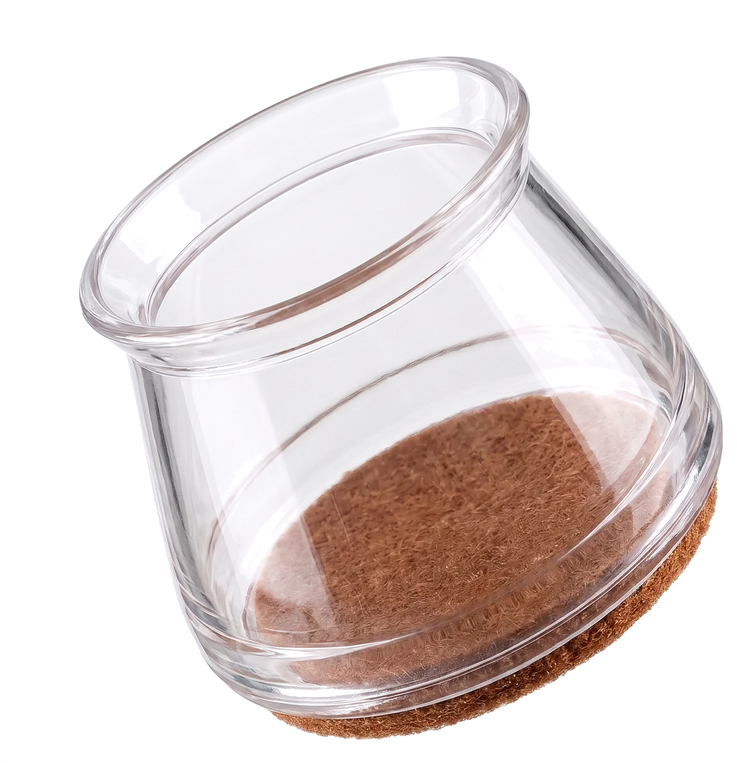
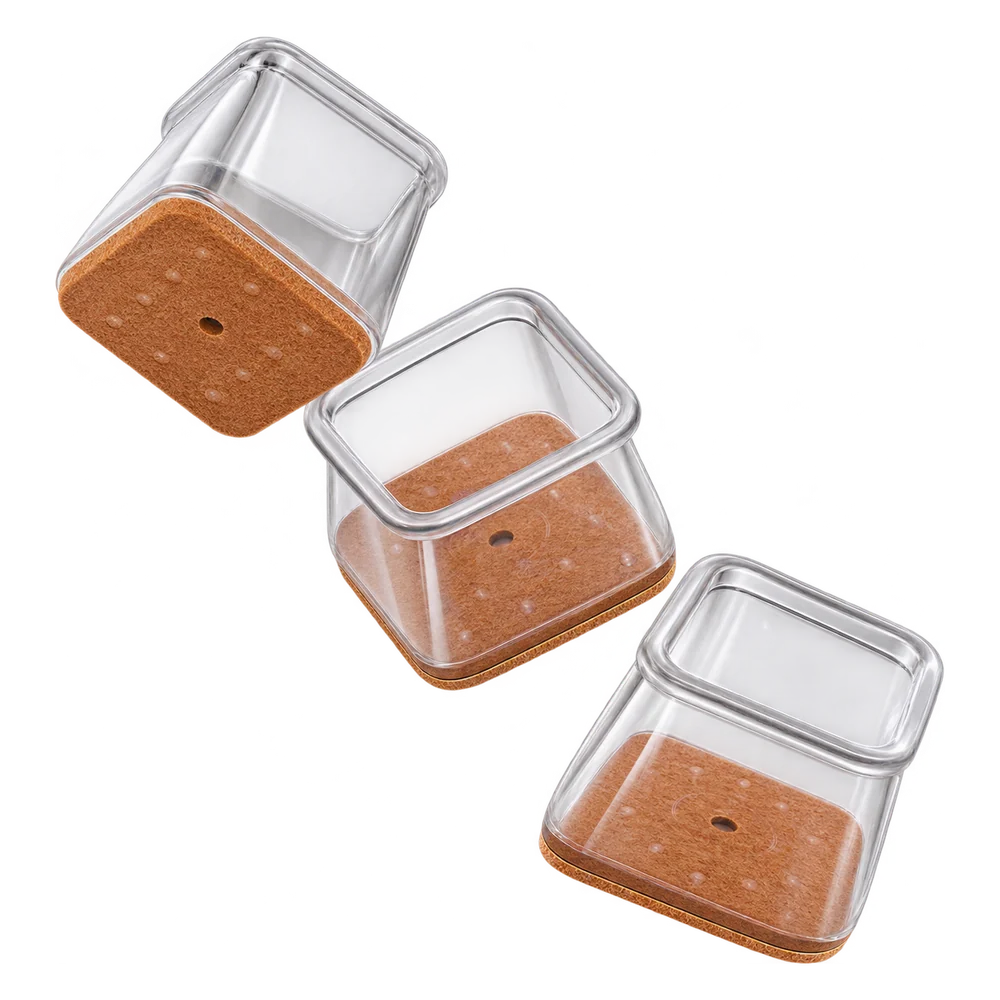
- Dining and kitchen chairs: slip-on caps with a felt base, such as our round felt chair leg caps for round legs 10 to 30 mm across, grip the leg instead of relying on glue, so they do not peel when the chair is dragged.
- Solid wooden legs: nail-on felt chair glides are held by a center nail, so they cannot peel off. They are 20 mm (3/4 in) discs, so they suit flat wooden leg ends about that size; on a much wider leg end, the edge of the leg can reach the floor. Replace them before the felt wears down to the plastic.
- Tables, dressers and furniture that rarely moves: peel-and-stick round and square felt pads come in five sizes, one size per pack, so you can match the pad to the flat end of each leg.
Before you buy, read how to measure chair legs for protectors. Pick a stick-on pad, or nail-on glide, the same size as the flat leg end or a little smaller, and pick a cap by the size range your leg falls inside. Our chart of felt pad sizes for chair legs matches each leg width to a pad.
Fit new pads so they stay clean longer
- Wipe the leg end free of dust, grit and old glue, and let it dry.
- Center the pad, felt side down, so no leg edge sticks out past it.
- Press a stick-on pad firmly for half a minute.
- Sweep the floor before you stand the chair back up.
Honest limits
- No felt pad makes a floor scratch-proof. Grit from shoes still finds its way under it.
- Felt slides. It will not stop a chair or sofa from moving.
- Felt does not repair scratches already in the finish.
- Felt cannot go on wheels. A rolling office chair needs a chair mat instead.
For a step-by-step plan for every chair in the house, read how to stop chairs from scratching floors.
Questions
Can felt pads damage floors?
Yes, but only when they go wrong: when grit is pressed into the felt, when the felt wears through to its hard base, or when a pad peels and leaves the bare leg on the floor. Clean felt that covers the leg end does not scratch hardwood.
Are felt pads bad for hardwood?
No. Felt is the usual choice for wood floors because it slides without marking the finish. Keep the pads clean and replace them when they wear thin.
Why are my felt pads leaving scratches?
Grit trapped in the felt is the most likely cause, and felt worn through to its base is the next. Brush the felt, sweep the floor, and replace any pad where you can see or feel the base.
Do felt pads leave marks on hardwood?
Clean felt does not. Dirty felt can leave gray smudges from the dirt it carries, and a pad soaked in a sticky spill can leave residue. Wipe the floor, then clean or replace the pad.
How often should I replace felt pads on chairs?
Check dining and kitchen chairs every few months and replace pads that are flattened, worn through or holding grit you cannot brush out. Furniture that rarely moves needs a check once or twice a year.
How do I keep felt pads from falling off?
On chairs that are dragged every day, use felt that does not rely on glue: slip-on round felt chair leg caps, or nail-on felt chair glides on wooden legs. Stick-on pads stay on best on furniture that rarely moves. For stick-on pads, our guide to keeping felt pads on chair legs gives six steps that help them hold.