What Are Chair Glides?
Updated November 20, 2026

What are chair glides? They are small pads, discs or caps fixed to the bottom of each chair leg, so the chair slides over the floor on a smooth face instead of scraping it with bare wood or metal. Every glide has two parts: a face that touches the floor (felt, PTFE, nylon or hard plastic) and an attachment that holds it to the leg (a nail, a threaded stud, adhesive, a push-in plug or a slip-on cap). Choose the attachment to fit the end of your chair leg, then the face to suit your floor.
Ready to shop? See all chair glides sorted by how they attach, or go straight to nail-on felt chair glides for wooden legs.
What chair glides do
A bare chair leg ends in a hard edge: sawn wood, a metal tube rim or a plastic foot. Each time the chair is pulled out, that edge drags across the floor, along with any grit stuck under it. That is what leaves the fine arcs of scratches around a dining table.
A glide puts a softer or slicker surface between the leg and the floor. It does three jobs:
- It slides, so the chair moves with less push and less noise.
- It spreads the weight over a flat face instead of a sharp rim.
- It lifts the leg itself a few millimeters, so wood or metal never touches the floor.
A glide does not make a floor scratch-proof. Grit can still bed into felt or ride under a hard face, so glides work best on a floor that gets swept.
Types of chair glides by how they attach
The attachment decides whether a glide will fit your chair at all, so start there.
| Type | Fits | How it attaches | Watch for |
|---|---|---|---|
| Nail-on | Solid wooden legs with a flat end | A center nail tapped in with a hammer | Needs solid wood; drill a pilot hole in hard or thin legs |
| Screw in | Legs with a threaded hole, T-nut or insert | A threaded stud turns into the hole | Thread must match: M6, M8, 1/4-20 and 5/16-18 do not swap |
| Self-adhesive | Flat leg ends at least as wide as the pad | Peel off the liner and press on | Can work loose on chairs dragged every day |
| Slip-on cap | Round, square or splayed legs | A cup stretches over the leg end | Must be sized to the leg |
| Push-in plug | Open, hollow metal tube legs | A ribbed stem pushes into the tube | Sized by the outside width of the tube; the wall must be thin enough for the stem to fit inside |
Nail-on glides are the classic choice for wooden dining and kitchen chairs. They cannot peel off, and a worn one pries out with a flat screwdriver. Ours are 20 mm discs with a gray felt face, 100 to a pack.
Screw in glides are common on tables, metal chairs and ready-to-assemble furniture with threaded inserts. Because the stud winds in and out, they double as leveling feet. If a chair rocks, our guide on how to fix a wobbly chair covers that and other fixes. Match the thread before you fit one: M6, M8 and inch threads do not swap.
Self-adhesive glides need no tools. They hold best on flat-bottomed legs and on chairs that are lifted more than dragged. On a chair pulled out at every meal, the sideways force can work the adhesive loose, so check them every few weeks. Stick-on chair sliders with a hard resin face attach this way, and so do the felt pieces in our self adhesive furniture pads assortment.
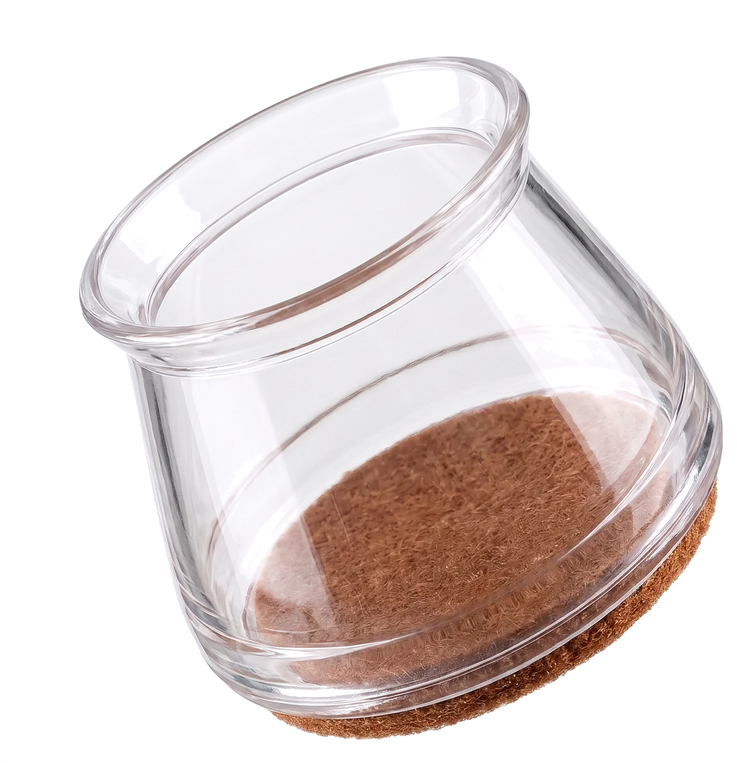
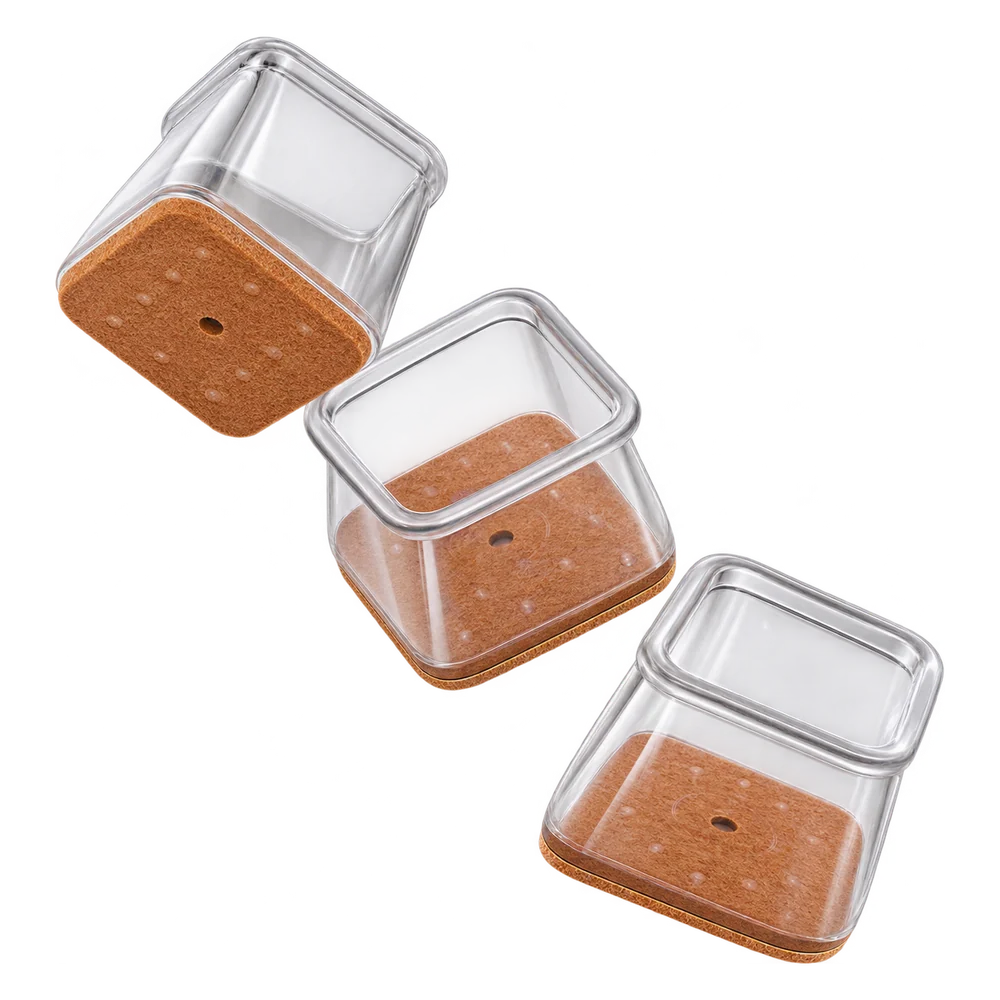
Slip-on caps cover the whole leg end, which also hides a chipped finish. Felt-base caps such as our round felt chair leg caps fit round legs from 10 to 30 mm. Legs that splay outward need angled chair leg floor protectors, whose 15 degree felt sole sits flat instead of riding on one edge.
Push-in plugs close the open end of a steel or aluminum tube on folding, stacking and school chairs. Our plastic chair glides for metal legs fit round tube from 16 to 38 mm and 1.5 in square tube. If the tube end is closed or squashed, a plug cannot go in; use metal chair leg caps that fit over the outside instead.
You may also meet swivel glides, whose face tilts to sit flat under a leaning leg, and clip-on glides for the bent tube runners of cantilever chairs.
Glide faces: which material for which floor
| Face | Best on | Less suited to | Notes |
|---|---|---|---|
| Felt | Hardwood, laminate, vinyl and LVP | Carpet, where it drags | Quiet; collects grit and flattens, so replace it when worn |
| PTFE | Carpet, tile and stone | Rooms where chairs should stay put | Slides with the least effort of any face |
| Nylon or hard plastic | Tile, stone, sealed concrete, low-pile carpet | Soft-finish hardwood, where trapped grit can mark it | Hard wearing, a little louder than felt |
| Rubber or silicone | Any floor where the chair should not move | Floors you want chairs to slide on | Grips instead of gliding: a different job |
The rule of thumb: a soft face for floors that scratch, a hard face for floors that wear felt out. Wood, laminate and vinyl mark easily, so felt is the safe choice. Tile, stone and carpet resist scratches but wear felt down or snag it, so a hard, slick face lasts longer. Felt still works on smooth, sealed tile; grout lines just wear it faster. Our current glides use felt or hard plastic faces, not PTFE.
For tile, read how to protect tile floors from chairs. Deciding between grip and slide? See felt vs rubber chair leg caps.
How to choose chair glides in five steps
- Look at the leg end. Turn the chair over onto a blanket. Solid wood, a threaded hole or old stud, an open metal tube, or a leg that leans outward each points to a different attachment in the first table.
- Measure across it. Use millimeters: the diameter of a round leg, or flat side to flat side on a square one. A nail-on or stick-on glide should match the leg end or be a little smaller, so nothing overhangs and catches. A slip-on cap must match the leg size: too big and it twists off, too small and it will not go on. Our guide on how to measure chair legs for protectors shows each step.
- Check the thread or tube. For screw in glides, unscrew an old stud and measure it across the threads: about 6 mm is M6, about 8 mm is M8. For plugs, measure the outside of the tube and check that the opening is nearly as wide, since thick-walled tube will not take the stem.
- Pick the face for your floor. Use the material table above.
- Count every leg. Six four-legged dining chairs need 24 glides. Fit all legs at once so the chair stays level, and keep spares for when the felt wears.
Which glide suits which chair
| Chair | Typical leg end | Glide to look at |
|---|---|---|
| Wooden dining or kitchen chair | Flat, solid wood | Nail-on felt glide |
| Folding, stacking or school chair | Open metal tube | Push-in plug or outer cap |
| Table, desk or chair with leveling feet | Threaded hole | Screw in glide |
| Bar stool or mid-century chair | Splayed leg | Angled felt cap |
| Modern chair with slim round legs | Round, 10 to 30 mm | Slip-on felt-base cap |
Office chairs on casters are a different case: they roll rather than slide, so they need a chair mat or caster cups, not glides.
Glides, sliders and caps: what the names mean
Shops use these words loosely. In practice:
- Glides stay on the leg for good and can be nailed, screwed, stuck, pushed or slipped on.
- Sliders usually means stick-on pads with a slick face. The same word also covers a moving tool: large pads you put under a sofa or dresser to push it, then take away. Those are furniture sliders.
- Caps, socks and covers fit over the leg end. All of them, glides included, are types of chair leg floor protectors.
Fitting and upkeep
- Clean the leg end first. Old glue, dust or a broken nail stops a new glide sitting flat.
- Check glides every two to three months. Felt that has turned hard, flat or packed with grit can scratch, so replace it.
- Expect small marks on the leg: a nail leaves a hole, and adhesive can leave residue when you remove a pad.
- If a chair still scrapes, one glide may be missing or worn through. For the full list of fixes, see how to stop chairs from scratching floors.
Questions
What are chair glides made of?
The face that touches the floor is felt, PTFE, nylon or hard plastic. It sits on a plastic or metal base that attaches to the leg with a nail, a threaded stud, adhesive, a push-in stem or a slip-on cup.
Glides or sliders?
Sliders usually stick on with adhesive and have a slick face. Glides is the wider word: they can also nail, screw, push or slip on. Both stay on the leg, unlike furniture sliders for moving, which you take away once the piece is in place.
Which glide for hardwood?
Felt. It is soft enough not to mark the finish and quiet when the chair moves. Replace it when it flattens or fills with grit, because trapped grit is what scratches.
Which glide for tile and carpet?
PTFE, or another hard, slick face such as nylon. Felt drags on carpet and wears fast on grout lines. On smooth, sealed tile, felt still works if you replace it more often.
How often should chair glides be replaced?
Check them every two to three months. Felt on dining chairs used every day may need replacing within months; hard plastic faces last longer but should be wiped clean of grit.
Can chair glides go on metal legs?
Yes, but not nail-on ones. Hollow tube legs take push-in plugs or caps that fit over the tube, and legs with a threaded hole take screw in glides. Measure the tube or the thread first.