How to Stop Chairs from Scratching Floors
Updated November 20, 2026
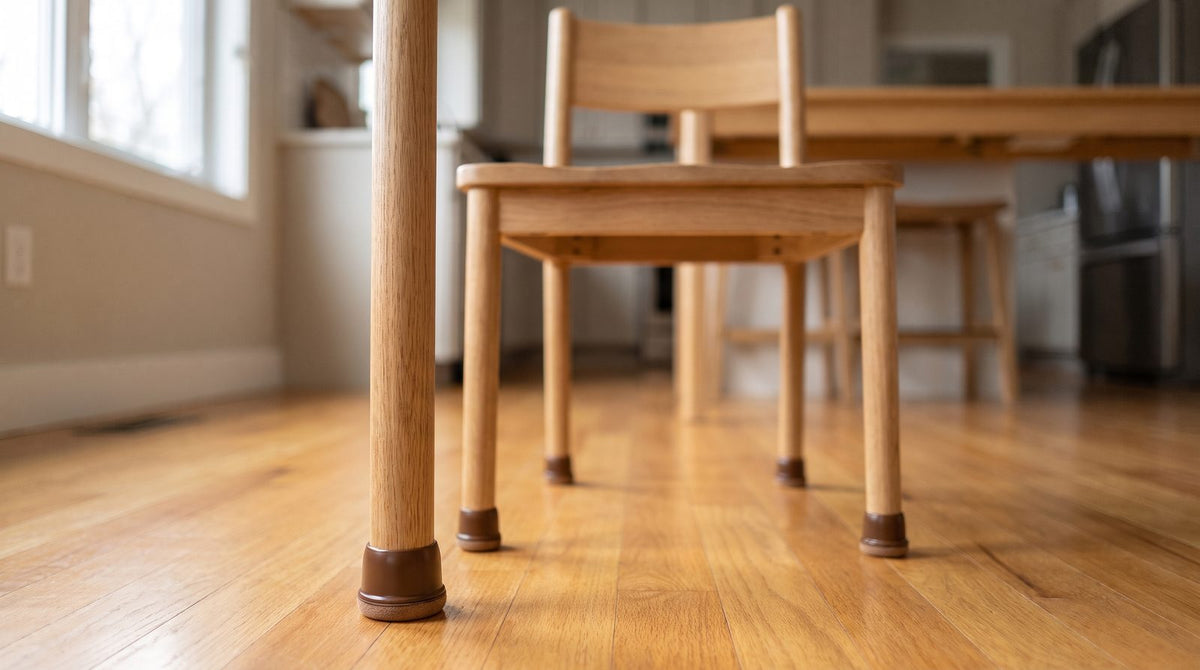
How to stop chairs from scratching floors: put a clean, soft layer such as felt between every chair foot and the floor, choose one that fits the leg so it stays on, and keep grit off it. Most scratches come from sand and dirt trapped under a bare or worn foot, not from the chair itself. Fix the feet, sweep the grit, and the scratching stops.
Start with what you can see. Turn one chair over and look at the bottom of a leg, then pick a protector made for that leg: our chair leg floor protectors collection has caps and covers for round and square legs; chair leg caps slip over round, square and angled legs; and chair glides nail on or slip on. Before you order, our guide on how to measure chair legs for protectors shows where to hold the ruler.
Why chairs scratch floors
Sand is harder than any floor finish. When a chair is dragged, anything hard under its feet acts like sandpaper. The usual causes:
- Grit under the foot. Sand, salt and crumbs collect under bare wood and old felt, then get dragged across the floor every time the chair moves.
- Worn or missing pads. Felt wears flat or falls off, leaving bare wood or the nail head of an old glide touching the floor.
- Hard glides. Bare metal and hard plastic glides leave fine scratches and gray marks, worst on soft wood such as pine.
- Open metal tubes. A steel leg that has lost its end cap scratches with its raw edge.
- Splayed legs. A leg that leans outward meets the floor on one edge, so a flat pad wears through there first.
Step 1: look at the bottom of the legs
Turn a chair over on a blanket or towel. What you find decides the fix.
| What you find | What it means | What to fit |
|---|---|---|
| Bare round wooden leg | Wood and grit touch the floor | Slip-on caps with a felt base, or nail-on felt glides |
| Old felt pad, flat, dark or peeling | Felt is full of grit or worn through | Peel it off, clean the leg, fit a new protector |
| Hard plastic or metal glide with a nail | Hard base on the floor | Pull it out and fit a felt glide or a felt-base cap |
| Threaded hole or stud in the leg end | The leg takes a screw-in glide | A screw-in glide, with a felt pad under it on wood |
| Round or square metal tube | Raw tube edge or a lost cap | A felt-lined cap sized to the tube |
| Leg that leans outward | Flat pads ride on one edge | An angled cap whose sole sits flat |
What to put on chair legs to protect floor
There are five common choices. They differ mostly in how they attach, and that decides how long they stay on a chair that moves every day.
| Option | Best for | Stays on | Watch out for |
|---|---|---|---|
| Slip-on caps and stretch covers with a felt base | Round or square legs of a known size | Well, if sized to the leg | Too big twists off; too small will not go on |
| Nail-on felt glides | Solid wooden legs with a flat end | Well; the nail holds it | Needs solid wood, not metal or plastic |
| Screw-in glides | Legs with a threaded hole | Well; turn one out to level a chair that rocks | Thread must match; hard base on wood |
| Stick-on felt pads | Legs that are rarely moved | Weak on chairs dragged daily | Peel and slide off, then bare wood scrapes |
| Knit chair leg socks | Quick cover, odd shapes, renters | Fair; socks can twist and slide down | Fabric holds hair and grit; wash often |
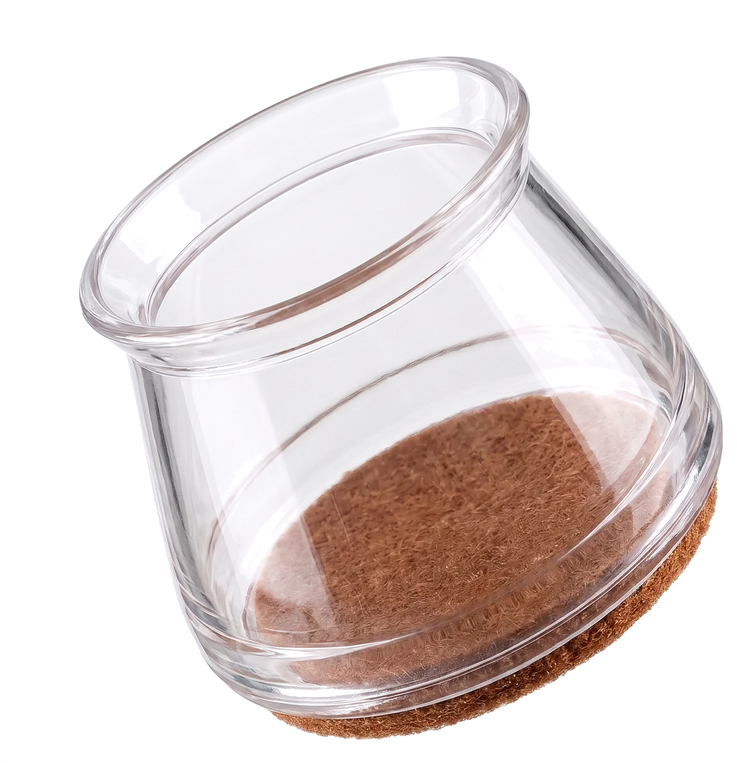
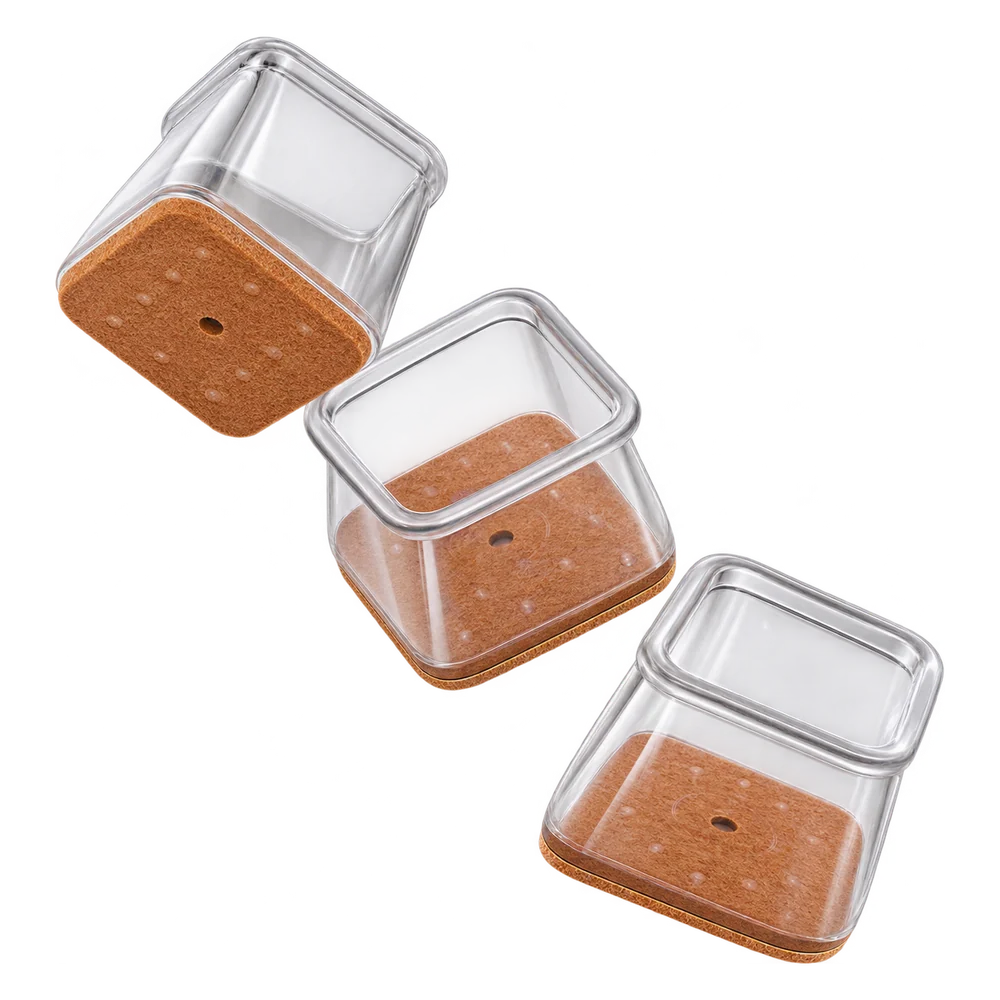
For round wooden legs, our round felt chair leg caps come in four sizes for legs 10 to 30 mm across, 16 to a pack. Chair Shoes are felt chair leg protectors that slip over round legs. For square legs, wear resistant chair leg caps come in square 19 to 25 and 35 to 45 mm as well as two round sizes, each with a tan base pad. Legs that lean out take angled chair leg floor protectors, with a sole set at 15 degrees.
On solid wooden legs, nail-on felt chair glides tap in with a hammer and cannot peel off. Legs with a threaded hole take a screw in glide with the same thread; unscrew the old one and measure it across the threads, since M6, M8 and inch threads do not swap. Metal tube chairs take felt lined metal chair leg caps, sized to fit over round 16, 19, 22 or 25 mm tubes or square 20 mm tubes. Stretch felt bottom chair leg covers pull over round legs 16 to 40 mm wide, and knit chair leg socks pull over the whole foot.
What to put on chair legs to protect hardwood floors
Felt is the standard for hardwood. It slides quietly and is softer than the finish, so it does not scratch a sealed floor as long as it is clean. Avoid bare metal, hard plastic and stiff rubber under chairs that are pushed in and out: rubber grips the floor, so the chair judders and gets yanked, which is hard on the legs and the joints.
Soft woods such as pine and fir dent more easily than oak or maple, so check the felt more often on them. Felt does not help office chairs on casters; our guide to the best chair mat for hardwood floor covers that case. For sofas, tables and beds as well as chairs, see how to protect hardwood floors from every kind of furniture.
Laminate, vinyl and tile
- Laminate and engineered wood: treat them like hardwood. Felt works well.
- Vinyl and LVP: felt works. Avoid black rubber feet, which can leave yellow or brown stains on vinyl. More in our guide on how to protect vinyl flooring from chair legs.
- Tile and stone: the tile rarely scratches, but grout lines catch and tear felt, and gritty felt can dull a polished stone. See how to protect tile floors from chairs.
- Carpet: felt does little here. Chairs on carpet need a mat or smooth hard glides.
Step 2: measure and fit
- Measure across the bottom of the leg where it touches the floor, in millimeters. Tapered legs are narrower there than higher up.
- On a square leg, measure from one flat side to the other, not corner to corner. On a metal tube, measure the outside of the tube.
- Pick the size whose range includes your number. If you sit on the line between two stretch sizes, the smaller one grips tighter.
- Clean the leg end and remove old pads, glue and nails before fitting anything new.
- Fit one protector, set the chair down and slide it. It should sit flat with felt touching the floor all round. Then do the other legs.
Count four per chair: a set of six dining chairs needs 24 protectors. The round felt-base caps, the wear resistant caps and the felt bottom covers come 16 to a pack (four chairs), and Chair Shoes also come in packs of 32 and 48. The angled caps come 8 to a pack (two chairs), and the nail-on felt glides 100 to a pack (25 chairs). Other packs vary, so check the count on each product page.
Step 3: keep grit off the felt
A protector only works while it is clean. Felt that has picked up sand scratches like the bare leg did.
- Sweep or vacuum under the table often, since that is where chairs move most.
- Every month or two, tip a chair and check the felt. Pick off hair and crumbs.
- Replace a protector when its felt is flat, hard, dark with dirt or worn through to the cap.
- Put a doormat at each outside door. Less grit comes in, so less ends up under the chairs.
- Lift chairs to move them a long way rather than dragging them across the room.
- Under a dining table, use an area rug that reaches about 24 in past the table edge on every side, so the chairs stay on the rug when they are pulled out.
Dining and kitchen chairs
Dining chairs move several times a day, so they are where stick-on pads fail first. Caps that grip the leg or glides that nail in hold up better. Our dining chair leg protectors collection groups the options that suit chairs used every day.
Honest limits
- No protector repairs scratches already in the floor. It stops new ones.
- Felt slides; it does not grip. It will not stop a chair from moving on a smooth floor.
- A cap only fits the size it is made for. Measure first.
- Nail-on glides need solid wood, and screw-in glides need a matching thread.
- Felt wears out. Expect to replace protectors on busy chairs.
Questions
What actually scratches the floor?
Grit trapped under a bare or worn chair foot, dragged across the floor. Bare metal or hard plastic glides and the raw edge of a metal tube leg scratch too.
What is the quickest fix?
Slip-on caps with a felt base, sized to the leg. They fit in seconds with no tools and stay on when the chair is dragged. Measure the leg first: see how to measure chair legs for protectors.
Do felt pads stop scratches?
Yes, while they stay on and stay clean. On chairs dragged every day, stick-on pads often peel off, so caps that grip the leg or nail-on glides last longer.
How do I stop scratches on tile?
Use PTFE glides, which cross grout lines without collecting grit, or keep felt protectors clean and replace them when the grout starts to tear the felt.
How often should I replace chair leg protectors?
Check them every month or two. Replace any whose felt is flat, hard, dark with dirt or worn through. Busy kitchen chairs wear them out first.
Will chair leg protectors fix scratches I already have?
No. They stop new scratches. Light marks in the finish can often be hidden with a wood touch-up marker; deep ones need refinishing.