Best Chair Mat for Hardwood Floor
Updated November 21, 2026

Best chair mat for hardwood floor: a smooth-backed polycarbonate mat no thicker than about 1/8 inch (3 mm), big enough that the casters never roll off its edge. PVC works if cost matters more than how long the mat lasts, and tempered glass suits you if you want a mat that never dents or curls. Whichever you pick, skip mats with a studded back, which are made to grip carpet and can mark wood.
A mat only covers the floor under your desk chair. Guest chairs, the desk and the bookcase still stand on bare wood, so this guide also points you to chair leg floor protectors for chairs without wheels, furniture pads for hardwood floors for the desk itself, and the full range of floor protectors sorted by floor type.
Quick picks by situation
| Your setup | Pick | Size to start from |
|---|---|---|
| Home office chair used every day | Smooth-backed polycarbonate, about 1/8 inch (3 mm) | 36 x 48 in; 46 x 60 in for an L-shaped desk |
| Desk with a kneehole you roll into | Lipped polycarbonate mat | A lip that fits inside the kneehole width |
| Light use, a rental or a short-term setup | PVC labeled safe for finished wood floors | 36 x 48 in |
| A desk that will stay put for years | Tempered glass | Measure your rolling area first |
| You do not want a mat at all | Soft casters made for hard floors | Match your chair's stem size |
Why a rolling chair wears hardwood
Most office chairs ship with hard nylon casters designed for carpet. On wood, each wheel touches the floor over a very small area, so the weight of the chair and the person in it presses into a few tiny points.
The wheels also pick up grit and roll it into the finish. Over a few months that leaves a dull, swirled patch where you roll, then a gray track where the finish has worn through. Softer woods such as pine can also dent.
A mat spreads that load over a large flat sheet and gives the grit something other than your floor to grind against.
Chair mat materials compared
| Material | How it feels | Watch out for | Good for |
|---|---|---|---|
| Polycarbonate | Stiff, clear, rolls easily | Costs more; fine scratches show over time | A chair used every day |
| PVC (vinyl) | Flexible and softer | Dents under casters, curls at the edges, can yellow | Light or occasional use |
| PET | Stiffer than PVC, clear | Sold by fewer brands, so fewer sizes and shapes | A step up from PVC when polycarbonate is over budget |
| Tempered glass | Rigid, never dents or curls | Heavy; costs the most | A desk that will not move for years |
| Fabric or felt top | Quiet, looks like a rug | Harder to roll on; holds dust | Rooms where looks come first |
For most home offices with hardwood, polycarbonate is the safest pick: it stays flat, the wheels roll freely, and you can see the wood through it. Choose PVC if the chair gets light use or the mat is temporary.
How to choose a chair mat, step by step
- Check the back. For hard floors you want a smooth or lightly textured underside. Studs (also called cleats or spikes) are there to bite into carpet pile; on wood they press small marks into the finish.
- Measure the rolling area. Sit at the desk, push back as far as you normally do and note where the rear casters stop. Measure from under the desk edge to that point, then across the width you roll and swivel. Add about 6 inches on each side so the wheels stay on the mat when you stand up. A 36 x 48 inch mat fits many small desks; L-shaped desks often need 46 x 60 inches or more.
- Pick the shape. A lipped mat has a tongue that reaches into the kneehole under the desk, so the front casters stay on the mat when you pull in. If your chair stops at the desk edge, a plain rectangle gives you more coverage for the same size.
- Keep it thin. Hard floors need roughly 1/16 to 1/8 inch (1.5 to 3 mm). Thicker mats are built to bridge carpet pile; on wood they only make a taller edge to trip on. A beveled edge helps the wheels roll on and off.
- Check that it is safe for finished wood. If you buy vinyl, look for a listing that says it is safe for finished wood floors. Plasticizers in some vinyl can react with some floor finishes and leave a hazy or yellow patch where the mat sat.
Setting up and caring for the mat
Flatten it first. Most mats arrive rolled and want to curl. Lay the mat curved side down in a warm room for 24 to 48 hours and put books on the corners. A mat that rocks or lifts at the edges lets grit slide underneath.
Clean under it. Grit trapped between mat and floor is the main way a mat damages hardwood, because every roll shifts the mat slightly and rubs that grit into the finish. Every few weeks, lift the mat, sweep or vacuum the floor, wipe the underside with a damp cloth and let both dry before you put it back.
Expect a color difference. Wood changes shade with light. If you remove a mat that has sat in one place for a long time, the wood under it may look a little different from the rest of the room. The difference usually fades as that patch gets light again.
Know when to replace it. Cracks, edges that will not lie flat, or dents deep enough to catch the wheels mean the mat is no longer spreading the load.
When a mat is not the right answer
Some people do not want a sheet of plastic on a good floor. There are three other options, and each solves a different problem.
- Soft casters. Swap the hard nylon wheels for soft rubber or polyurethane casters made for hard floors. The chair then rolls on bare wood. Most office chairs use a push-in stem, and most of those stems are 7/16 inch (11 mm) across, but measure yours before you order. Keep the floor swept, because soft wheels still pick up grit.
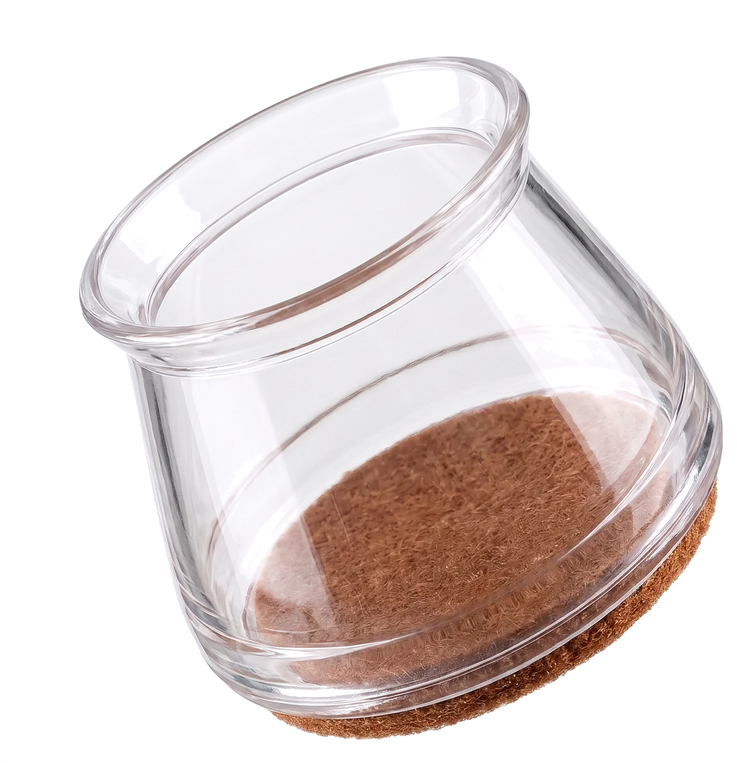
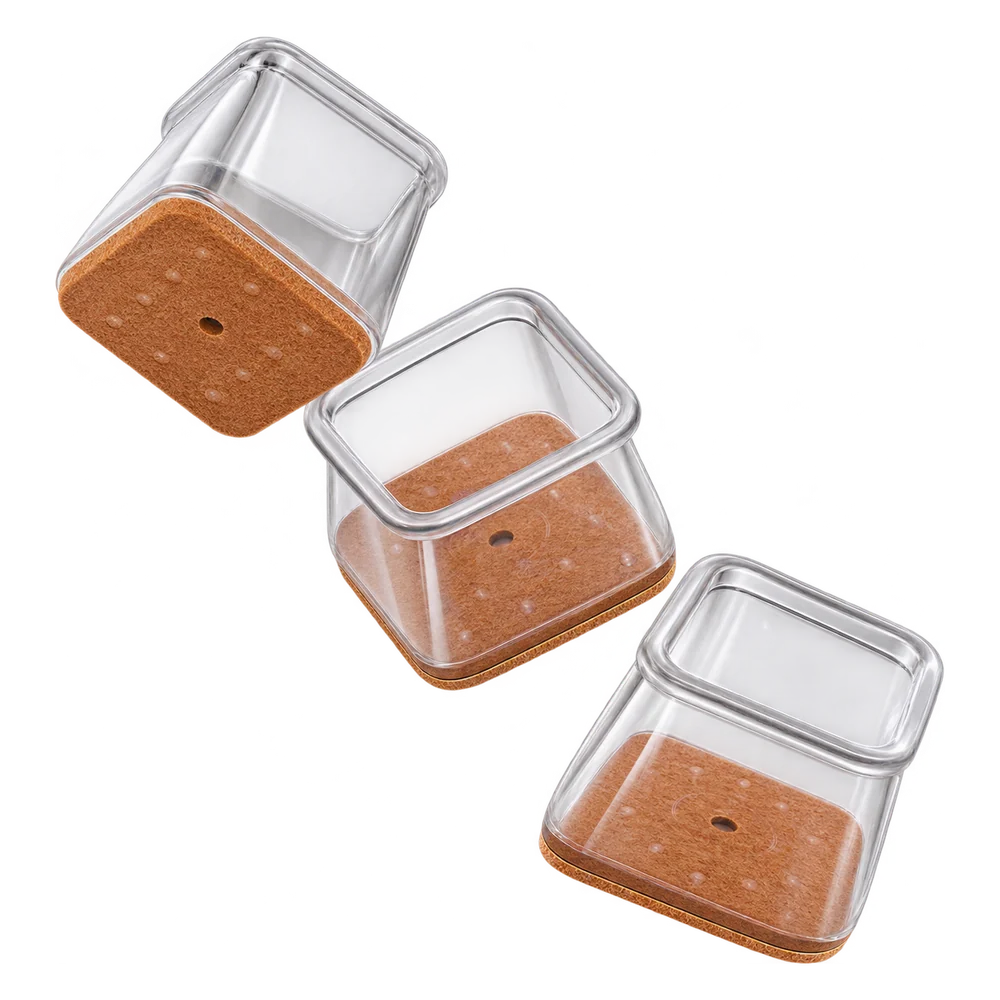
- Caster cups. A cup under each wheel stops the chair rolling at all. They suit a guest chair or a chair at a dining table, not a desk chair you move around.
- Felt glides instead of wheels. Some chairs accept glides that fit the caster sockets, so the chair slides on felt rather than rolling. This works when you only shift the chair a little.
Not sure which suits your chair? Our guide to protecting hardwood floors from office chairs compares a mat, soft casters and wheel stoppers (caster cups that hold each wheel) side by side.
Protect the rest of the room
The mat handles the desk chair. Everything else needs its own protection, and the fix depends on the furniture.
- Chairs without wheels. Dining and guest chairs get dragged more than any other furniture. Caps that slip over the foot of the leg, such as our round felt chair leg caps or felt chair leg protectors, put felt between the leg and the floor and stay on better than stick-on dots.
- Wooden legs you can nail into. Our nail-on felt chair glides fix to the bottom of the leg with a nail, so they cannot peel off. See all chair glides by how they attach.
- The desk and cabinets. Stick felt pads under each foot so the desk does not scrape when you shift it to clean behind it.
Before you buy caps or covers, read how to measure chair legs for protectors. For a room-by-room plan, see how to protect hardwood floors from every piece of furniture.
Questions
PVC or polycarbonate?
PVC costs less and is fine for light use, but it is softer, so it dents under casters and can curl. Polycarbonate is stiffer, stays flat longer and rolls more easily, which suits a chair you use every day.
Does a mat need a lip?
Only if your desk has a kneehole you roll into. The lip keeps the front casters and your feet on the mat when you pull in. If the chair stops at the desk edge, a plain rectangle covers more floor.
Can chair mats damage hardwood?
Yes, if grit gets trapped underneath, because the mat shifts slightly as you roll and rubs it into the finish. Lift the mat and clean underneath every few weeks, and avoid studded mats, which are made for carpet.
Is there an alternative to a mat?
Caster cups stop a chair rolling. Soft rubber or polyurethane casters let it roll on bare wood, and replacing the wheels with felt glides lets it slide instead of roll.
What size chair mat do I need?
Measure from under the desk edge to where your rear casters stop when you push back, and across the width you roll, then add about 6 inches each way. A 36 x 48 inch mat fits many small desks.
Why is my new chair mat curling?
It was rolled for shipping. Lay it flat, curved side down, in a warm room for 24 to 48 hours with weights on the corners.