Felt vs Rubber Chair Leg Caps
Updated November 20, 2026
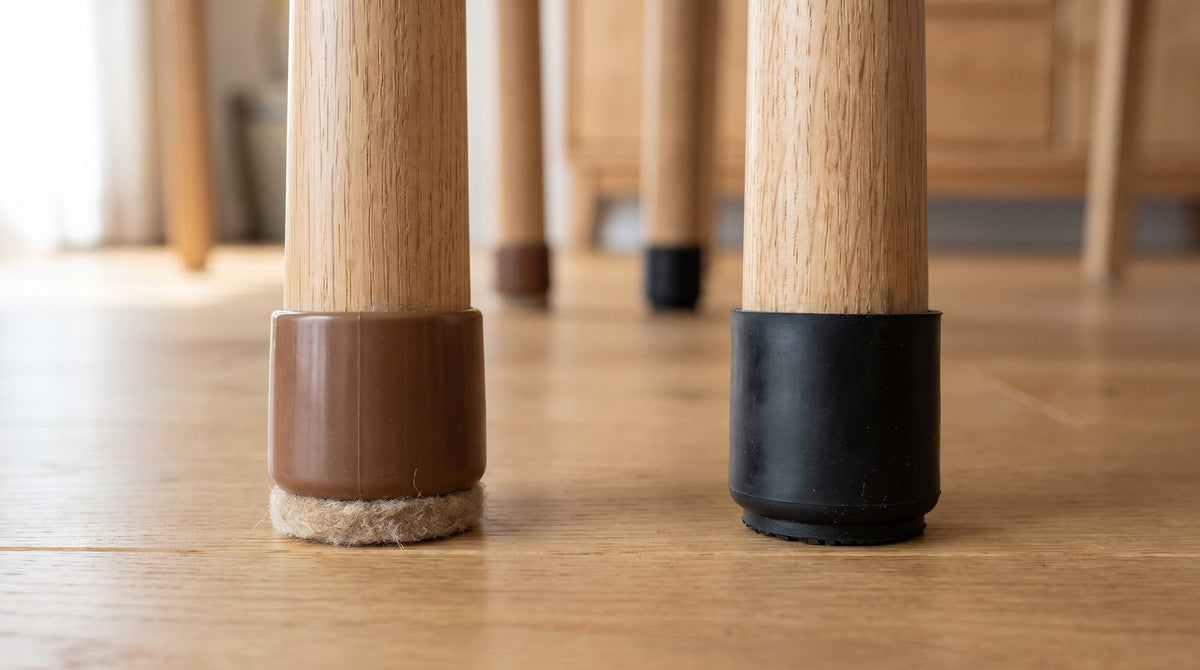
Felt vs rubber chair leg caps: the choice comes down to one question, should the chair slide or stay put? Felt slides, so it suits dining and kitchen chairs on hardwood, laminate and luxury vinyl plank (LVP). Rubber and silicone grip, so they suit chairs that creep, skid or live outdoors, and black rubber should stay off vinyl floors.
If your chairs should slide, browse our chair leg caps: every one has a felt base, sorted by leg shape. To see felt caps that slide next to silicone ones that grip, open chair leg bumpers. If the chair should not move at all, go straight to silicone chair leg protectors. Stick-on and nail-on felt options are under felt chair pads.
Felt vs rubber at a glance
| Question | Felt | Rubber or silicone |
|---|---|---|
| On the floor | Slides with a light push | Grips; the chair stays where you set it |
| Best floors | Hardwood, engineered wood, laminate, LVP; glazed tile if the chair should slide | Tile, stone and concrete if the chair should stay put; patio; clear silicone on vinyl |
| Moving the chair | Pull it out with one hand | Lift it, or it drags and judders |
| Marks | Felt itself does not mark; trapped grit can scratch | Black rubber can stain vinyl and scuff light floors |
| Wear | Flattens and fills with grit; replace when worn through | Lasts longer; rubber hardens and cracks with age and sun |
| Good for | Chairs pulled out many times a day | Stools, chairs that creep back, outdoor chairs |
Rubber and silicone behave much the same on the floor. The difference is marking: black rubber is the one that stains vinyl, while clear silicone is far less likely to leave a mark.
Why felt slides and rubber grips
Felt is a mat of pressed wool or polyester fibers. On a smooth, hard floor the fibers skim the surface, so the chair moves with little force and the floor only ever touches something soft.
Rubber and silicone are soft and tacky. They press into the floor and hold it, which is what stops a chair from creeping. That same grip is why a rubber-capped chair judders or squeaks when you drag it instead of lifting it.
Neither one is better in general. They solve opposite problems, so start with the problem you have.
Which to pick for your floor
| Floor | Pick | Why |
|---|---|---|
| Hardwood, engineered wood | Felt | Slides without scuffing the finish; rubber can leave scuffs when dragged |
| Laminate | Felt | Same as hardwood; keep the felt free of grit |
| Vinyl plank (LVP), sheet vinyl | Felt, or clear silicone if it must grip | Black rubber can leave a yellow or brown stain that does not wash out |
| Ceramic, porcelain tile | Either | Felt slides on glazed tile but wears faster on grout lines; silicone holds the chair still |
| Stone, polished concrete | Either | Grit is the real risk on both; sweep and wipe the caps often |
| Patio, deck | Silicone or rubber | Felt soaks up rain and stays wet |
| Carpet | Neither | Both are made for hard floors and do little on carpet |
On vinyl, test any grip cap on one leg in a spot you cannot see for a week before fitting the whole set. Our guide on how to protect vinyl flooring from chair legs covers vinyl in more detail.
When rubber or silicone is the better choice
- A chair that slides back on its own when someone sits down, which happens often on smooth tile.
- A bar or counter stool that people climb onto. A stool that slides as you climb is a fall risk.
- A desk chair with legs, not casters, that should stay put while you work.
- Outdoor and patio chairs, where felt would stay damp.
- A table that shifts when someone leans on it.
For grip, these silicone options cover most legs. Silicone chair leg covers stretch over slim round legs. Cat paw chair leg covers fit round legs of 25 to 35 mm. Tube leg caps fit round and square metal tube, and the patio chair leg caps rectangular fit rectangular tube on patio chairs. None of them has felt, so lift the chair to move it.
When felt is the better choice
- Dining and kitchen chairs that are pulled out and pushed in many times a day.
- Any chair on hardwood, laminate or LVP.
- Homes where children or older relatives find a gripping chair hard to move.
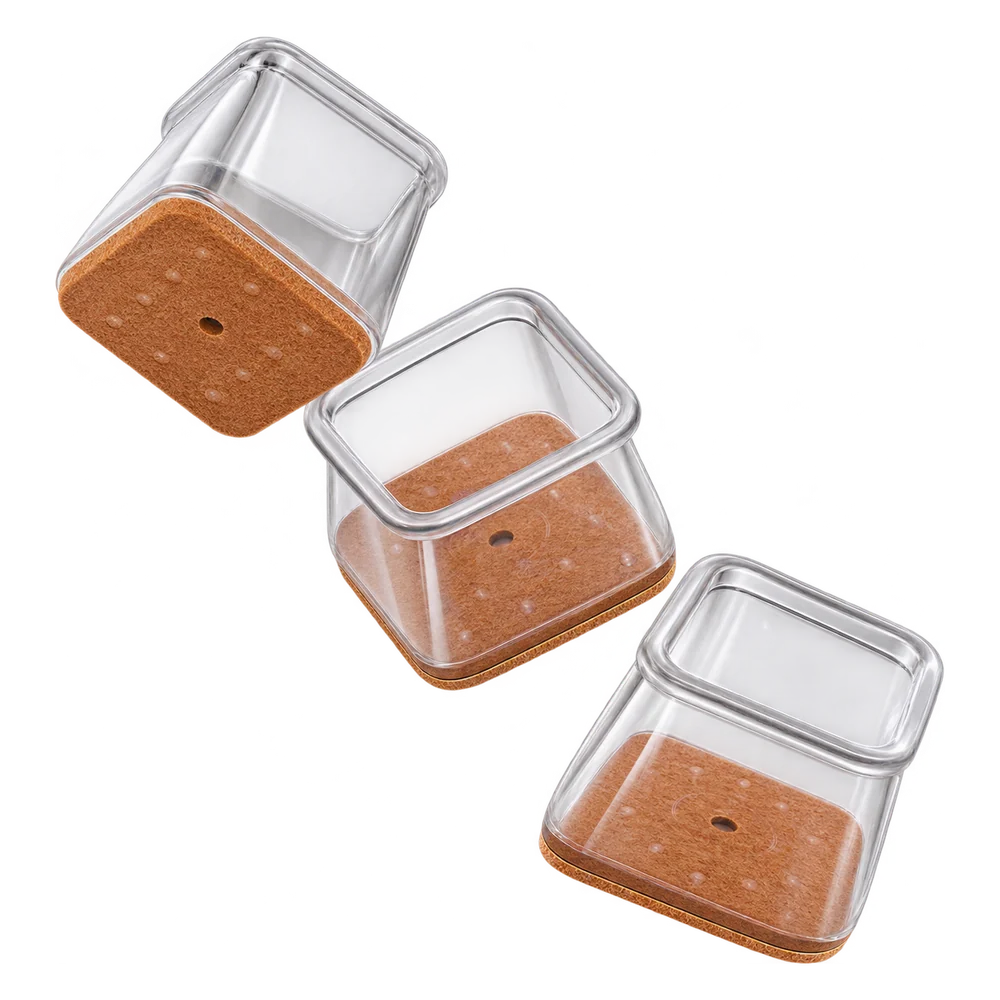
Felt comes as stick-on pads, nail-on glides and caps that slip over the leg. On a chair that is dragged daily, stick-on pads tend to peel off, so caps are the better fit. For round wooden legs, start with round felt chair leg caps (10 to 30 mm) or Chair Shoes, our felt chair leg protectors (16 to 40 mm). The wear resistant chair leg caps fit round and square legs and slide on a tan base pad, the felt lined metal chair leg caps fit metal tube, and the angled chair leg floor protectors fit legs that splay outward at about 15 degrees.
Can you get grip and slide in one cap?
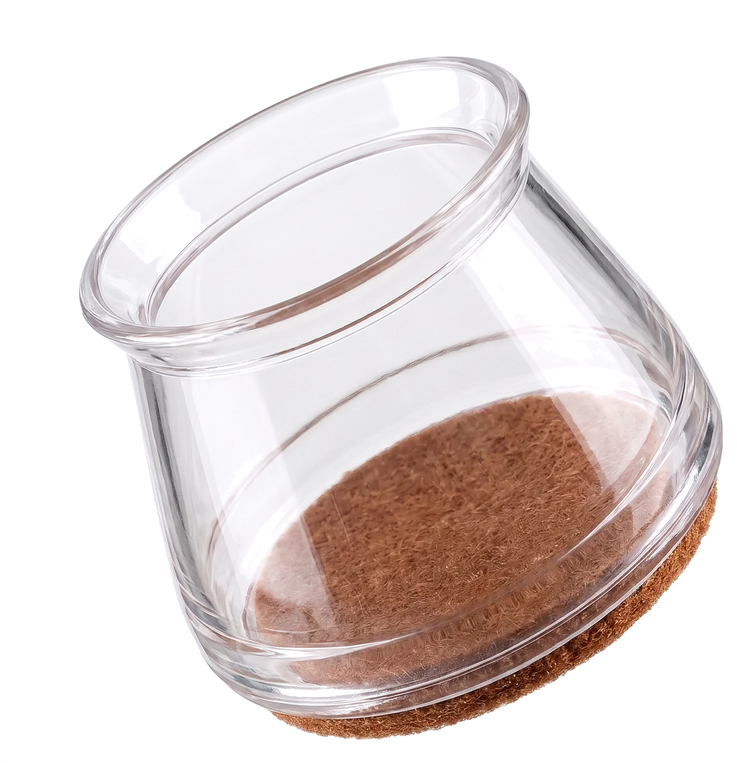
Not on the floor. A cap either slides or grips, because the floor touches only one material. What you can get is a cap whose body grips the leg while a felt base slides on the floor. That fixes the main weakness of plain felt pads, which is falling off, while the floor still only meets felt. Every cap in our chair leg caps collection works this way.
How to choose in four steps
- Slide or stay. If the chair moves many times a day, choose felt. If it creeps or should not move, choose silicone or rubber.
- Check the floor. On vinyl or LVP, skip black rubber. On a patio, skip felt.
- Look at the leg end. Round wood, square wood, metal tube and splayed legs each need a cap made for that shape.
- Measure. Tip the chair over and measure across the bottom of the leg, where it touches the floor. Our sizes are in mm; 25 mm is about 1 inch. Legs often taper, so this is narrower than higher up. Our guide on how to measure chair legs for protectors shows each step.
Care and when to replace
Felt: on chairs used every day, look at the felt once a month. Pull out hair and pick out grit. Replace the cap when the felt is flat and hard, gray with embedded grit, or worn through to the cap. Felt full of sand scratches like fine sandpaper.
Rubber and silicone: wipe the bases now and then, since grit under a grip cap still scratches when the chair is dragged. Replace a cap that has cracked, split, gone hard or started to slip off the leg.
Honest limits
- Neither material does much on carpet.
- Felt wears fastest on tile with deep grout lines and on chairs dragged all day.
- A grip cap does not make a chair safe to drag. Lift it.
- A cap that is too big falls off, and one that is too small will not go on. Measure first.
- Caps fit the end of a leg that stands on the floor. They do not fit sled bases or runners that lie along the floor.
For more ways to save a floor, read how to stop chairs from scratching floors, and for tile in particular, how to protect tile floors from chairs.
Questions
Which is better for hardwood floors, felt or rubber?
Felt. It slides without scuffing the finish, as long as you keep it free of grit. Rubber grips and can leave scuff marks when the chair is dragged.
When is rubber better than felt?
When the chair should not move: a chair that creeps back on smooth tile, a stool people climb onto, or a chair outdoors. Rubber and silicone hold the floor; felt lets the chair slide.
Does rubber mark vinyl or LVP?
Black rubber can leave a yellow or brown stain on vinyl and LVP that does not wash out. Use felt, or clear silicone if the chair must grip, and test one leg in a hidden spot first.
Is silicone the same as rubber?
No, but they behave alike on the floor: both grip, so the chair stays put. Silicone is usually clear or colored and is far less likely to stain vinyl than black rubber. See our silicone chair leg protectors.
Can I get both grip and slide?
Not on the floor itself. You can get a cap that grips the leg with a felt base that slides, so it stays on and the floor only meets the pad. Our chair leg caps work this way: most have a felt base, and the wear resistant caps have a tan base pad.
How often should I replace felt caps?
On chairs used every day, check monthly and replace when the felt is flat, hard with grit, or worn through to the cap. Chairs used now and then last much longer.