How to Protect Laminate Floors from Furniture
Updated November 21, 2026

How to protect laminate floors from furniture: put felt under every leg that moves, spread the weight of heavy pieces over a wider base, and keep grit and standing water off the planks. Chairs need felt that is not held on by glue, such as slip-on caps or nail-on glides, and office chairs on wheels need a chair mat, because felt cannot go on a caster. Laminate cannot be sanded and refinished like wood, so stopping the damage is cheaper than fixing it.
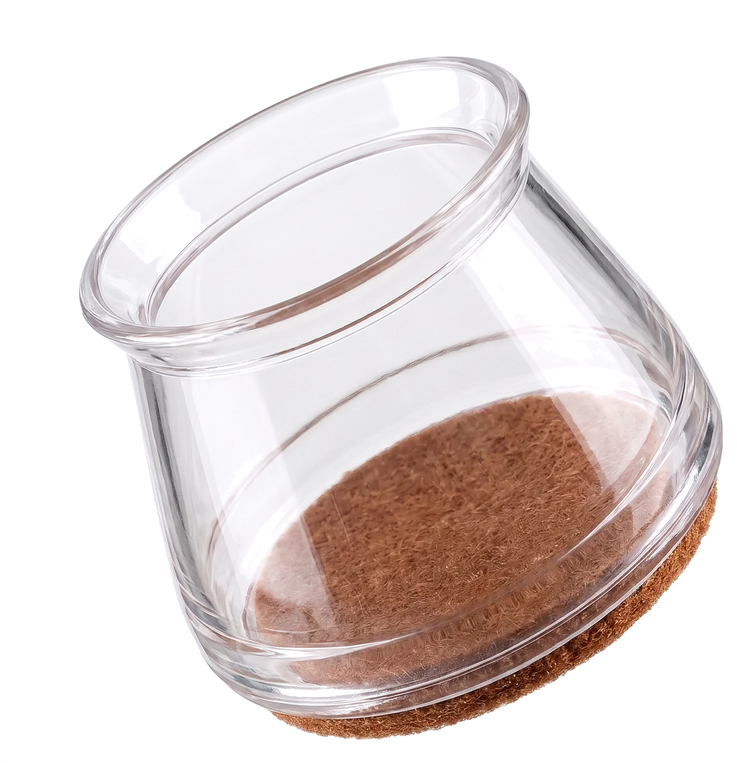
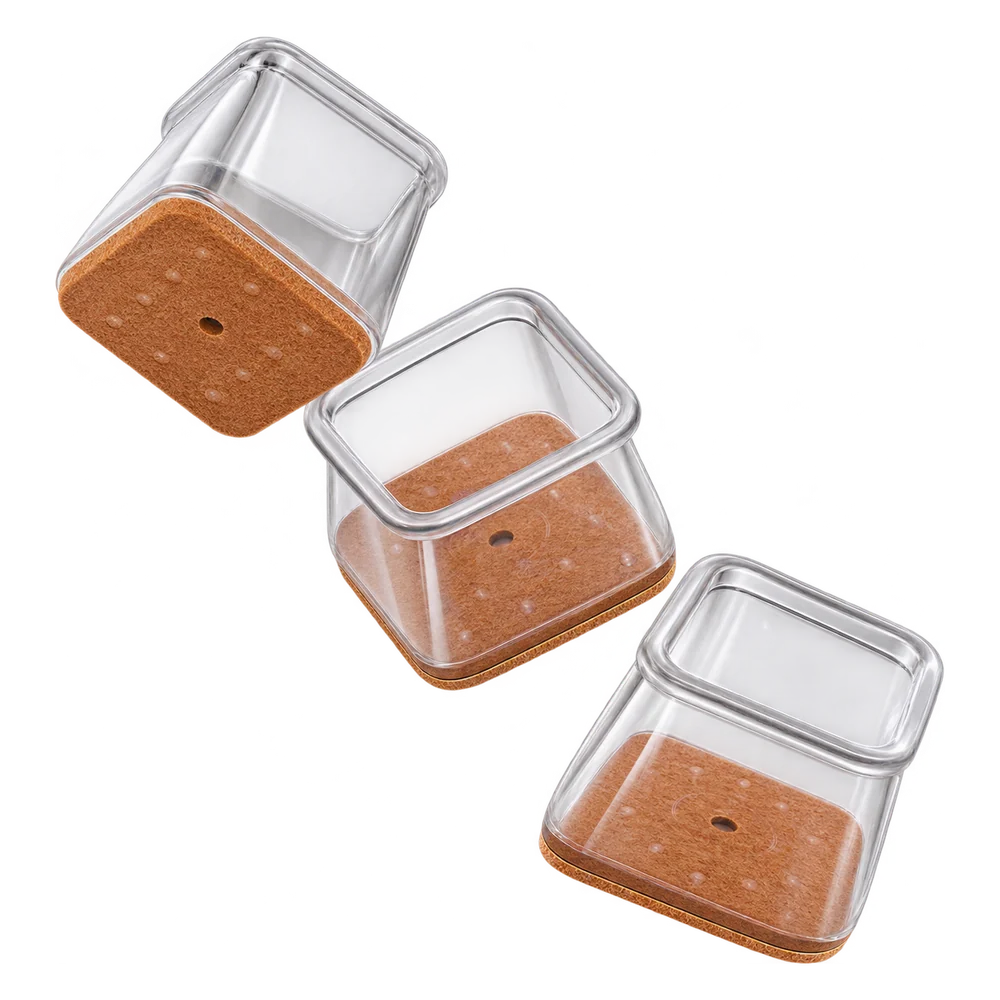
This guide covers what actually harms laminate under furniture, which protector suits each piece, and how to fit it so it stays on. If you only need to sort out dining chairs, start with our slip-on chair leg floor protectors, which put felt on the floor and grip the leg instead of relying on glue.
Anything that slips over a leg has to fit it. Our guide on how to measure chair legs for protectors shows where to hold the ruler; it takes a couple of minutes.
Will chairs scratch laminate?
Yes, they can. Laminate has a hard, clear wear layer over a printed photo of wood, on a fiberboard core. That top layer resists scratches better than most wood finishes, but a chair dragged on a bare leg end, a worn-through glide or a grain of grit still leaves fine lines and dull trails.
Scratches show most on dark, glossy and plain-colored planks. Many planks carry an AC rating for wear, where a higher number means a tougher surface, but no rating stops a chair from dragging sand across it.
The bigger problem is repair. You cannot sand laminate, because under the thin wear layer is the printed image. A light scratch can be hidden with a filler or touch-up kit; a deep one means taking up the floor to replace the plank.
What damages laminate under furniture
| Damage | Usual cause | What prevents it |
|---|---|---|
| Fine scratches and dull trails | Bare leg ends, worn glides or grit dragged as chairs move | Clean felt on every leg that moves |
| Dents and dips | A heavy piece standing on small leg ends | A wider pad or a furniture cup |
| Swollen, raised edges at seams | Spills, wet mopping or wet felt sitting on a joint | Wipe spills fast; keep felt dry |
| Worn tracks under a desk | Office chair casters rolling over one spot | A chair mat over the area |
How to protect laminate floor from chairs
Dining and kitchen chairs do most of the damage, because they are dragged in and out many times a day. Fix them first.
- Turn each chair over. Pull off old pads that are flat, torn or packed with grit, and any worn plastic glide. Wipe the leg ends clean.
- Measure the bottom of one leg. Measure where it meets the floor, since many legs taper. Note whether it is round or square, and whether the leg leans outward.
- Pick a protector that holds on by itself. On round wooden legs 10 to 30 mm (0.4 to 1.2 in) across, round felt chair leg caps slip over the end and put felt on the floor. On solid wooden legs with a flat end at least 20 mm (about 3/4 in) wide, nail-on felt chair glides cannot peel off; on hard wood, drill a small pilot hole first. If the leg leans outward, a flat cap or glide touches the floor only at its edge, so use an angled cap with a sloped sole instead.
- Fit and test. Stand the chair up and slide it. It should move quietly, with no click of wood or plastic on the floor, and it should not rock.
- Sweep under the table weekly. Grit trapped in felt is what scratches, so keep the floor and the felt clean.
Stick-on felt pads are the cheapest fix, but on chairs that move all day they tend to slide off. A bare leg then drags on the floor until someone notices.
Furniture pads for laminate floors, piece by piece
Felt is the right face for laminate: it slides without scratching, as long as it stays clean. What changes from piece to piece is how the felt is held on and how wide it is.
| Furniture | What to use | Why |
|---|---|---|
| Dining and kitchen chairs | Slip-on felt caps or nail-on felt glides | They stay on under daily dragging |
| Side tables, desks, TV stands | Stick-on felt pads the size of the leg end | Moved now and then, so glue holds |
| Sofas, beds, dressers with wide feet | Large square or rectangular felt pads | Covers the whole foot, so no hard edge touches; use grippers instead if it creeps |
| Heavy cabinets and appliances | A furniture cup under each foot | Spreads the weight so the floor dents less |
| Office chairs on casters | A chair mat made for hard floors | Felt cannot go on a wheel |
For tables and sofas, our round and square felt pads come one size per pack: 27 or 40 mm rounds, 40 x 28 or 84 x 42 mm rectangles, or 85 x 85 mm squares. Pick the one closest to the foot. A pad much wider than the foot can catch on a rug edge and peel.
How to stop heavy furniture denting laminate
A leg presses the whole weight of the piece into a small spot, and the fiberboard core and the foam underlayment below it slowly give way. Pressure falls fast as the contact area grows: a base twice as wide covers four times the area, so the floor takes about a quarter of the pressure.
That is why heavy pieces belong in furniture cups. Each cup has an 85 mm (3.35 in) base and takes round feet up to 50 mm (1.97 in) across. They are made to stay put, so never use them under chairs that slide.
A bookcase or wardrobe on a flat plinth already spreads its weight over a long base. Put the large felt rectangles above under the plinth so its edge cannot scrape when you move it. Check under heavy pieces once a year for dips.
Office chairs on laminate
Hard plastic casters roll over the same strip of floor all day and can wear a dull track into it. Felt cannot help here. A clear PVC chair mat goes under the desk chair so the wheels roll on the mat instead: ours is 90 x 120 cm (35.4 x 47.2 in), 2 mm thick, with a flat underside and no studs, and is made for hard floors including laminate.
The whole area the chair covers as you roll has to fit on the mat, or the casters run off the edge. Sweep before you lay it down, because grit under a mat can mark the floor. The mat is smooth on one side and textured on the other; on smooth laminate the supplier says to put the textured side down.
Keep water and grit off laminate
- Wipe spills under legs straight away. Laminate swells if water gets into the seams, and swollen edges rarely go back down. Wet felt also picks up dirt fast.
- Clean with a dry or barely damp mop. Avoid soaking the floor. Check your flooring maker's care guide before using a steam mop.
- Put mats at outside doors. Less sand on the floor means less sand in the felt.
- Lift, do not drag. When you move a heavy piece, lift it with a helper or put sliders under it, and sweep the path first, as our guide to moving heavy furniture without scratching floors explains step by step.
Honest limits
- Felt makes furniture slide more easily. On a sofa or bed that creeps, use non slip furniture grippers instead.
- Caps fit only legs of the right size and shape. Measure first.
- No pad hides or repairs scratches already in the floor, and none stops dents from dropped objects or pet claws.
- Felt wears. Check chair felt every few months and replace it once it is flat, thin or full of grit you cannot brush out.
Questions
Will chairs scratch laminate floors?
They can. The wear layer on laminate resists scratches better than most wood finishes, but bare leg ends, worn glides and grit dragged under a chair still leave fine lines. Clean felt on every chair leg prevents most of it.
What furniture pads work best on laminate floors?
Felt. It slides without scratching. Use felt held on by a cap or a nail for chairs, stick-on felt pads for furniture that rarely moves, and wide pads or furniture cups under heavy pieces.
Do I need a chair mat on laminate?
For an office chair on casters, yes, unless you change to soft wheels made for hard floors. Felt cannot go on a wheel. Dining chairs do not need a mat; felt on each leg is enough.
Can scratches in laminate be sanded out?
No. Under the thin wear layer is a printed image of wood, so sanding removes the pattern. Light scratches can be hidden with a touch-up kit; deep ones mean replacing the plank.
How do I keep furniture from sliding on laminate?
Do not use felt on pieces that should stay put. Clear silicone grippers under the legs hold a sofa or bed in place on a smooth floor. Grippers and wheel stoppers suit laminate as well as hardwood; our guide on keeping furniture from sliding on hardwood floors matches the fix to each piece.
How often should I replace felt pads on laminate?
Check chair pads every few months and other furniture once or twice a year. Replace any pad that is flat, worn through or holding grit you cannot brush out, because dirty felt scratches.