How to Keep Furniture from Sliding on Hardwood Floors
Updated November 21, 2026
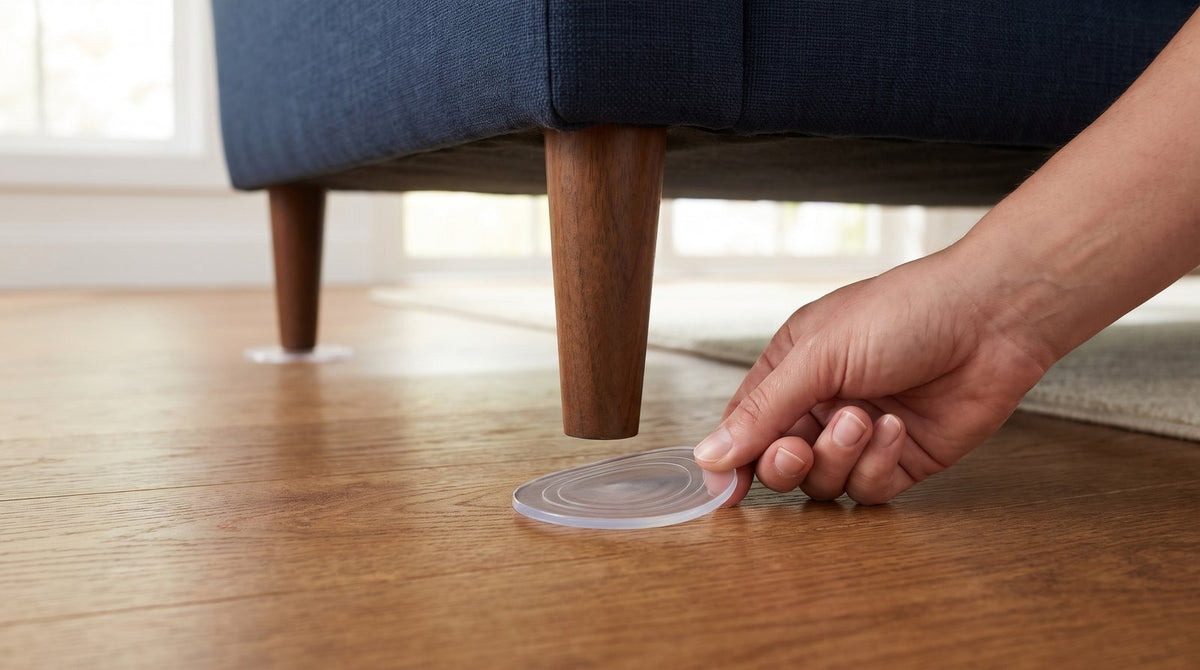
How to keep furniture from sliding on hardwood floors: put something that grips between each leg and the wood, and take off any felt pads under pieces that should stay put. Clear silicone grippers keep couches, tables and dressers from creeping, a cup under each small round foot keeps a bed frame from sliding, and stretch-on wheel stoppers keep an office chair from rolling away.
Hardwood is smooth and hard, so a couch on small legs gets pushed back a little every time someone drops onto it. To shop as you read, start with our chair stoppers: grippers, cups and wheel stoppers made to stop movement rather than ease it.
Why furniture slides on hardwood floors
A finished wood floor has a smooth, hard surface with little grip. A bare wooden leg or a hard plastic foot has little grip either, so a sideways push moves the piece instead of being held by the floor.
Three things make it worse. Felt pads, which are made to let furniture slide, turn a heavy sofa into one that moves with a nudge. Dust under the legs and polish on the floor both cut the grip further.
The push usually comes from people. Sitting down hard on a couch, leaning back or climbing into bed shoves the piece a fraction of an inch, and over a few weeks it creeps across the room or knocks into the wall.
How to stop furniture from sliding: match the fix to the piece
Start with how the piece touches the floor: flat leg ends, small round feet or wheels. Then pick the fix that holds that kind of contact.
| Furniture | Why it moves | What to use |
|---|---|---|
| Couch, sofa or loveseat on legs | Pushed back when people sit or lean | Non slip furniture grippers under each leg, sized to the leg base |
| Bed frame with small round feet | Shoved when you climb in or sit on the edge | Bed leg protectors: each foot sits in a cup |
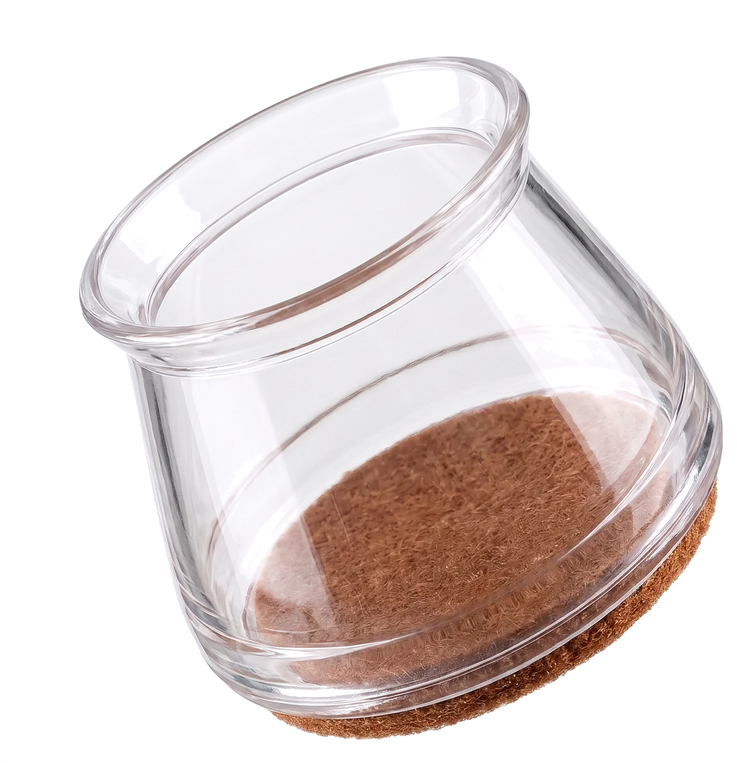
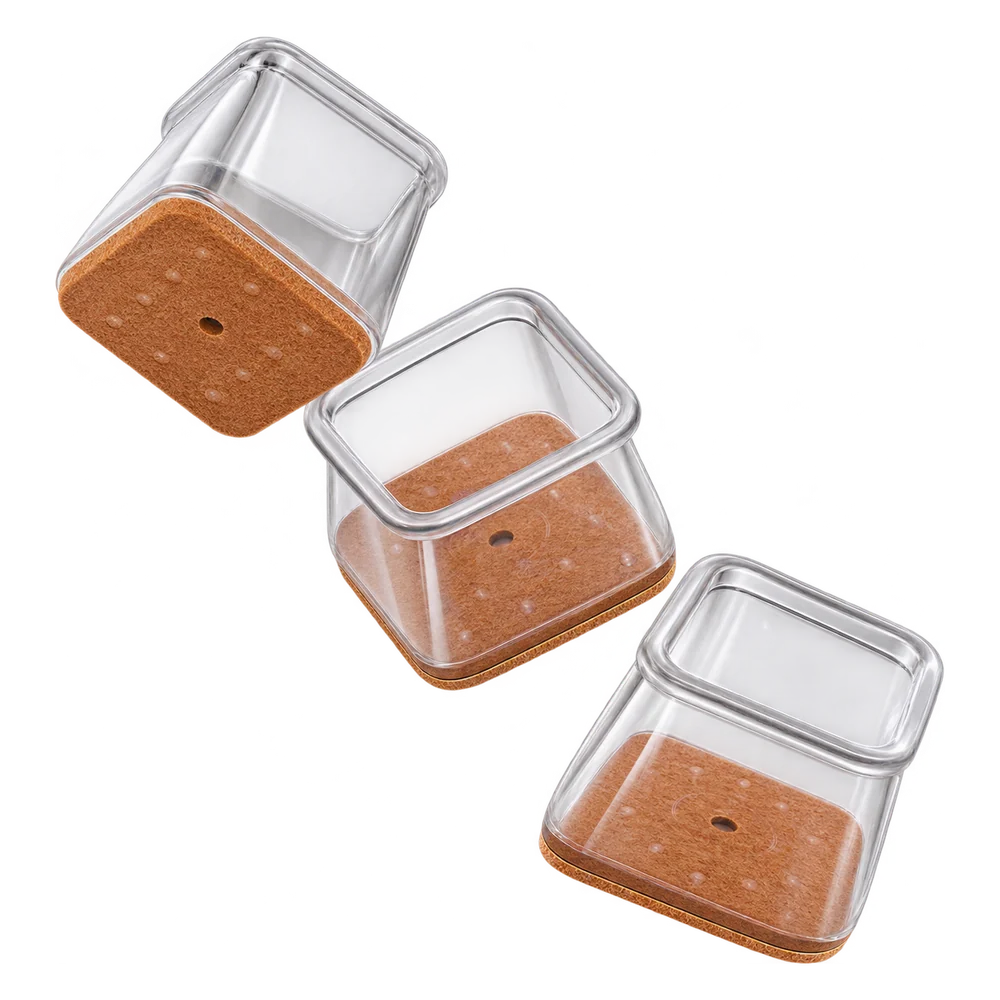
| Desk, cabinet or appliance with round feet up to 50 mm (1.97 in) | Bumped, or a washing machine walking as it spins | Raised furniture cups that each foot stands in |
| Office chair on casters | The wheels roll on a smooth floor | Office chair wheel stoppers over each caster |
| Dining and kitchen chairs | They should slide | Keep felt caps or glides, not grippers |
How to keep a couch from sliding on hardwood
- Measure the bottom of one leg. Measure where the leg touches the floor, not halfway up, because many sofa legs taper. Our guide on how to measure chair legs for protectors shows where.
- Pick the size and shape. Our grippers come in 60 mm (2.36 in) for leg bases up to about 55 mm (2.2 in) and 80 mm (3.15 in) for bases up to about 75 mm (3 in). Choose round for round legs and square for square legs, so the whole base sits on silicone.
- Count the legs. Each pack holds four pads, so a sofa with six or eight legs needs two packs.
- When the grippers arrive, take off any felt pads. Tip the couch onto its back on a blanket, pull off the old felt and scrape away the adhesive. Felt is made to slide, so leaving it on works against any gripper.
- Clean the leg ends and the floor. Wipe both with a damp cloth and let them dry fully. Dust under a pad reduces its grip.
- Fit them. Peel the thin clear film off each pad and press it onto the clean bottom of the leg, or lay it on the floor and lower the leg onto its center.
For a sectional, fit every leg of every section. If the sections still drift apart, look underneath for the connector brackets many sectionals come with: grippers stop sliding on the floor, but they do not hold two sections together.
If your couch has no legs and its base sits on the floor, grippers and cups will not fit it. An area rug on a pad sold as safe for finished wood gives it something to grip.
How to stop a bed from sliding on a wood floor
A bed frame often stands on a few small feet, so a push as you climb in can move it and knock the headboard into the wall. Set each foot in one of our bed leg protectors: four black cups, each with a round recess in the middle and a raised collar around it that keeps the foot from sliding out sideways.
The supplier does not list the recess size, so these suit small round feet only and we cannot promise a fit. If your bed's feet are round and up to 50 mm (1.97 in) across, our raised furniture cups are the surer choice, because their well size is listed. Flat leg bases do better on grippers.
A pack holds four cups, so count every foot, including any center supports, before you order. If your frame rolls on small wheels, lock them if they have locks; our bed leg protectors are made for feet, not wheels.
How to stop an office chair from rolling on hardwood
Casters are built to roll, so on a smooth wood floor a desk chair moves every time you sit down or stand up. Our office chair wheel stoppers are black stretch-on boots that wrap each caster, so a felt base touches the floor instead of the wheel. One pack of five covers a chair with five wheels.
They do not lock the chair: push it hard and it slides on the felt. The supplier lists an applicable range of 4.5 to 5.5 cm (1.8 to 2.2 in) without saying which part it measures, so measure one wheel across first. If you want the chair to keep rolling and only need to protect the floor, a chair mat is the better fit.
Furniture grippers vs other non slip furniture pads
Non slip furniture pads come in a few forms, and each suits different pieces.
- Silicone grippers sit flat under a leg. Clear ones let the floor show through, and they suit any leg with a flat base that fits on the pad.
- Cups hold a foot in a recess or well. They suit round feet, and their wide base spreads the load over more of the floor than a bare foot.
- Rubber caps and tips grip the floor, so they suit chairs that should stay put but not chairs you slide in and out.
- Rug pads keep an area rug from creeping, and furniture standing on the rug moves with it. Choose one sold as safe for finished wood floors, because some rubber and vinyl backings can stick to or discolor a finish over time.
- Shelf liner and tape are quick fixes. Test shelf liner in a hidden spot for the same reason, and keep double-sided tape off the floor, because it can leave adhesive on the finish.
Which furniture should not have grippers
Dining and kitchen chairs are pulled out and pushed in at every meal. A chair that grips is hard to pull out, so people end up dragging or lifting it. Keep felt on these chairs instead, in caps that stay on when the chair is dragged.
Pieces you move to clean under also do better on felt. When you do need to move a heavy piece that stands on grippers, lift it rather than drag it, so the pads stay centered under the legs.
What grippers and cups cannot do
- They make furniture much less likely to creep, but they do not fix it in place. A hard shove can still move it.
- They need clean surfaces. Wipe the floor around each leg when you clean, because dust under a pad cuts its grip and trapped grit can scratch the wood.
- A leg base wider than about 75 mm (3 in) leaves almost no margin on our 80 mm (3.15 in) pad, and one wider than 80 mm hangs over the edge, so these grippers are too small for it.
- Our bed cups are black, and our raised cups stand on a black ring the supplier calls rubber. As with a rug pad, test one in a hidden spot first, because some dark rubbers and soft plastics can discolor a floor finish.
- The suppliers list no load rating for the grippers, cups or boots, so we do not quote one.
Questions
Why does my couch keep sliding on hardwood floors?
Hardwood is smooth, the couch stands on a few small leg ends, and every time someone sits down or leans back it gets a small push. Felt pads under the legs make it worse, because felt is made to slide. Swap them for non slip furniture grippers.
Do felt pads stop furniture from sliding?
No. Felt protects the floor from scratches and lets furniture slide more easily. Use felt on chairs you move every day, and grippers or cups on pieces that should stay put.
What are furniture grippers?
Pads that go under furniture legs and grip the floor instead of sliding on it. Ours are clear silicone, 3 mm thick, round or square, 60 or 80 mm wide, with four in a pack.
Will grippers mark hardwood floors?
The supplier makes no non-marking claim, so we do not promise one. Wipe grit off the floor and the leg before you fit them, because grit trapped under any pad can scratch the wood. On an oiled or soft finish, try one pad in a hidden spot for a week first.
How do I keep a bed from sliding on a wood floor?
Set each foot in a cup with a recess, such as our bed leg protectors, whose raised collar keeps the foot from sliding sideways. They suit small round feet, so measure first. Flat leg bases do better on grippers.
How do I stop an office chair from rolling on hardwood?
Fit office chair wheel stoppers over the casters: each boot wraps one caster, so a felt base touches the floor instead of the wheel. The chair stays put when you sit down, but it still slides if you push it hard.