How to Protect Tile Floors from Chairs
Updated November 20, 2026

How to protect tile floors from chairs comes down to three things: what touches the tile, how wide it is compared with your grout lines, and how clean you keep it. Glazed tile is hard, so a chair leg rarely scratches it on its own. The damage comes from grit trapped under a hard foot, gray metal marks, chipped tile edges and worn grout.
Short answer: put a smooth glide under every leg, at least three times as wide as your grout joints, so it rides over each joint instead of dropping in. Use felt on glossy glazed tile and soft stone, where it is quietest, and a hard plastic or resin face on textured tile and wide grout, where felt wears out fast. Sweep often, because grit under any glide is what scratches.
Start with the leg: browse chair glides by how they attach, see every kind of chair leg floor protectors, or pick slip-on chair leg caps by leg shape. Read how to measure chair legs for protectors before you order, because a glide smaller than the leg end leaves a hard edge on the tile.
What actually damages tile under a chair
Most floor tile is harder than the chair standing on it. Ceramic and porcelain glazes rate about 5 to 7 on the Mohs hardness scale, and aluminum and ordinary steel legs are softer. Sand is the problem: quartz grains rate about 7, as hard as the glaze, and a leg dragged over them works like sandpaper.
- Scratches and dull paths. Grit caught under a hard foot, or packed into old felt, scratches glossy glaze and wears a dull track where chairs are pulled out every day.
- Gray metal marks. Bare aluminum or steel legs leave gray streaks on matte and light tile. This is metal rubbed onto the surface, not a scratch, and it usually cleans off.
- Chipped edges. A narrow leg end drops into a grout line and catches the next tile, worst where one tile sits a little higher than its neighbor. A chip cannot be polished out.
- Worn grout and noise. Legs dragged across grout grind it down, and hard feet scrape loudly on tile every time a chair moves.
Check your tile first
The right glide face depends on the tile surface. Look at it in low side light and run a hand over it.
| Tile surface | Main risk | Best glide face |
|---|---|---|
| Glossy glazed ceramic or porcelain | Grit scratches and a dull path | Felt kept clean, or a smooth hard glide |
| Matte or unglazed porcelain | Gray metal marks | Felt, or any cap that covers the metal |
| Marble, travertine, limestone | Soft stone (about 3 to 4 on the Mohs scale) that scratches easily | Felt, checked and changed often |
| Slate, quarry tile, textured or outdoor tile | Rough surface wears felt out fast | Hard plastic or resin with a wide base |
| Polished concrete | Grit scratches, as on glossy tile | Felt or a smooth hard glide |
If you still have the tile box, look for its PEI class, a number from 1 to 5. It measures how well the glaze resists wear. PEI 3 or higher is the usual choice for floors, and a lower class will show a dull chair path sooner, so it needs clean glides even more.
Felt or hard glides on tile
Each glide face trades quiet against wear. On tile, wear matters more than on wood, because grout lines and grit work on the glide every time the chair moves.
| Glide face | On tile | Watch out for |
|---|---|---|
| Felt | Slides, and is the quietest choice | Collects grit and catches on grout; replace when worn flat or dirty |
| Hard plastic or resin | Slides easily and rides over grout lines | Louder than felt; can drag grit across glossy tile |
| Rubber or silicone | Grips, so the chair stays put | Chairs judder when pulled out; dark rubber can scuff light tile |
| Knit sock | Slides and is quiet | Holds grit and hair; wash often |
For more on the two most common materials, read felt vs rubber chair leg caps.
Size the glide to your grout lines
Grout joints on floor tile run from about 1/16 in (1.5 mm) on rectified porcelain to 1/2 in (13 mm) or more on handmade terracotta. Grout usually sits a little below the tile face, so a small foot dips in at every joint and knocks the tile edge on the way out.
A good rule of thumb: choose a glide base at least three times as wide as the grout joint, with a rounded or beveled edge. Measure one joint with a ruler and compare.
| Grout joint | Glide base at least | What fits |
|---|---|---|
| 1/16 to 1/8 in (1.5 to 3 mm) | About 10 mm (3/8 in) | Almost any glide or cap |
| 3/16 to 1/4 in (5 to 6 mm) | 20 mm (3/4 in) | 20 mm glides and most caps |
| 3/8 to 1/2 in (10 to 13 mm) | 40 mm (1.6 in) | Only wide bases with a rounded edge |
A bare, open metal tube is the worst case. Its cut edge is only a millimeter or two thick, so it catches every joint and scrapes like a blade. Cap it or plug it before anything else.
Match the glide to the leg
Turn one chair over. What is at the bottom of the leg decides what will stay on.
| Leg end | What fits | Face on the tile |
|---|---|---|
| Solid wood, flat end 20 mm or wider | Nail-on felt chair glides, 20 mm | Felt |
| Threaded hole or insert | A threaded leveling glide with the same thread and a wide base | Usually hard plastic |
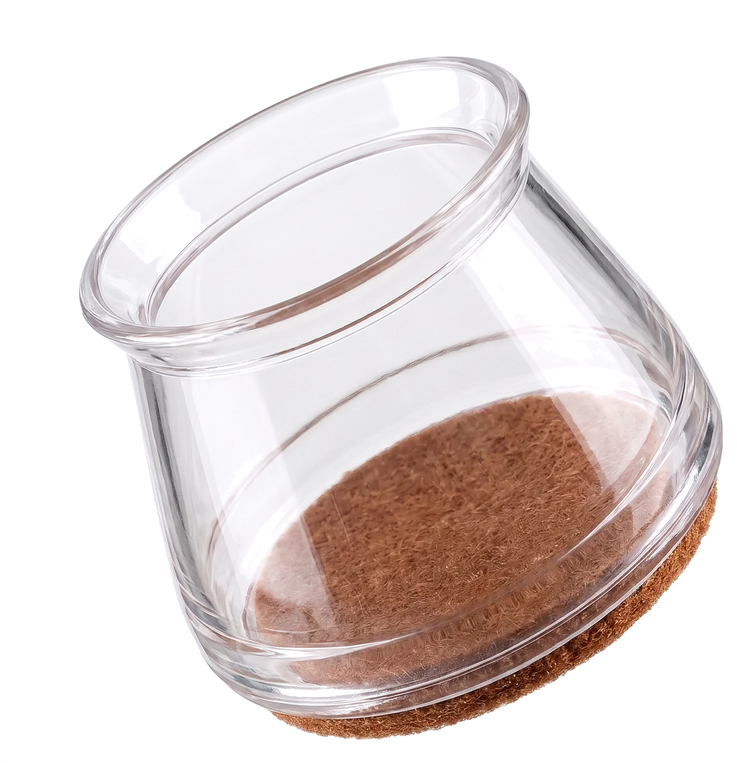
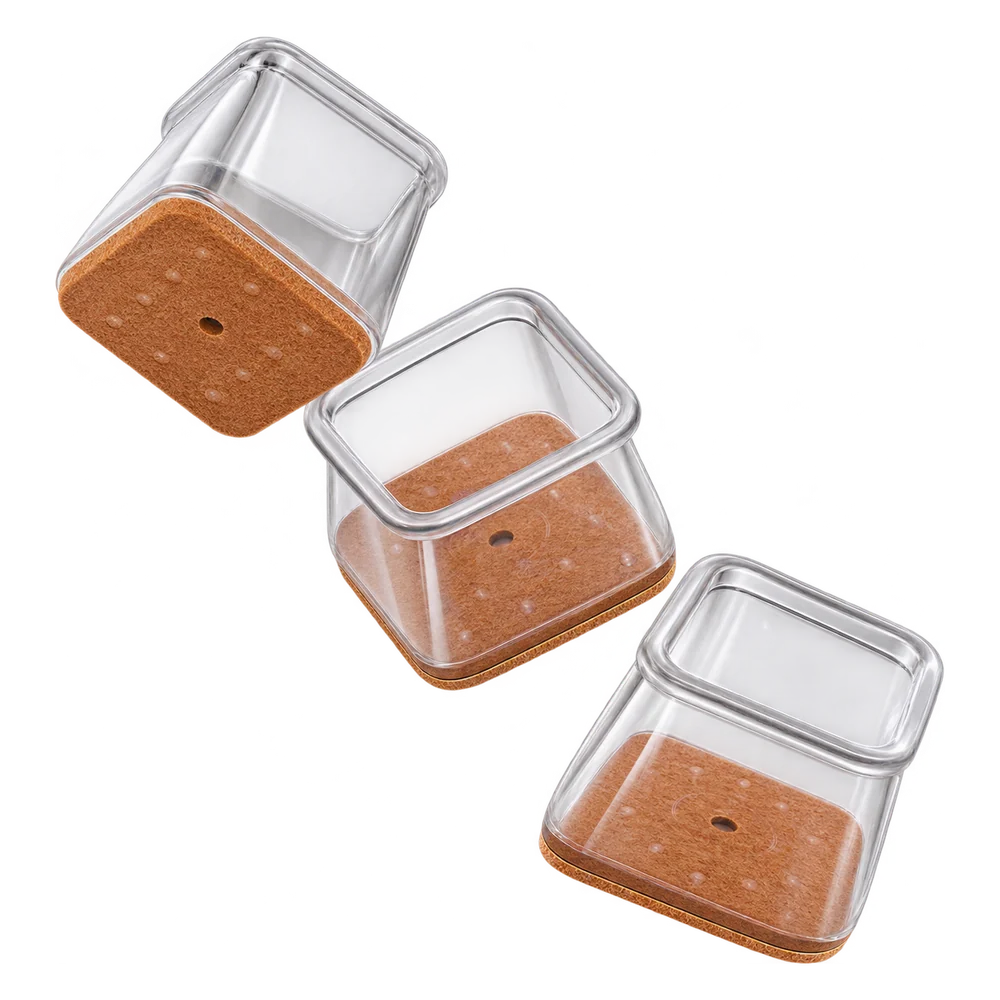
| Round leg 19 to 25 or 30 to 40 mm; square leg 19 to 25 or 35 to 45 mm | Slip-on wear resistant chair leg caps | Tan base pad; the supplier does not name the material |
| Slim round leg, 10 to 30 mm | round felt chair leg caps | Felt |
| Metal tube: round 16, 19, 22 or 25 mm, or square 20 mm | felt lined metal chair leg caps | Felt |
| Open round metal tube, 8 sizes from 16 to 38 mm | chair leg plugs | Plastic head |
| Splayed leg, 20 to 35 mm across | angled chair leg floor protectors | Felt, set at 15 degrees |
| Flat leg base, 40 mm or wider | self adhesive chair sliders | Smooth resin |
On textured tile, lean toward a hard face, such as the resin face of the self adhesive chair sliders on a flat leg base. On wide grout, pick the widest base the leg end can take and check it against the grout table above. On glossy tile and stone, lean toward felt. For more tube sizes and caps that grip, see all metal chair leg caps.
Some pieces should not move at all, such as a table that creeps every time someone leans on it. Clear non slip furniture grippers hold it in place; they are part of our chair stoppers range and are not made for chairs you pull in and out.
Fit, then keep it clean
- Sweep or vacuum the floor, then wipe each leg end clean and dry.
- Measure across the very bottom of one leg, and across one grout joint.
- Fit a glide to every leg. One bare leg still scrapes.
- Stand the chair on the tile and press each corner. If it rocks, one leg grinds in place every time someone sits; a threaded leveling glide can be turned out to level it, or see how to fix a wobbly chair for other fixes.
- Sweep the grout lines at least once a week where chairs move. That is where grit collects.
- Check glides every month or two. Replace felt that is flat, torn or gray with packed grit, and any cap worn through.
To lift gray metal marks, rub them with a damp melamine sponge or a non-abrasive cleaner that contains oxalic acid, and test a hidden spot first. Never use acid cleaners on marble, travertine or limestone, because acid etches those stones.
What glides cannot do
- They do not repair a chip or a scratch already in the glaze. A chipped tile has to be filled or replaced.
- Felt on slate, quarry tile or textured outdoor tile wears out fast. Expect to replace it often, or choose a hard face.
- Stick-on pads and sliders need a flat, clean leg end. On a narrow or rounded end they peel off when the chair is dragged.
- Nail-on glides need solid wood, and threaded glides need a threaded hole. Check the leg before you order.
- No glide makes a chair silent on tile. Felt comes closest.
Protecting a different floor? Read how to stop chairs from scratching floors for every floor type, or how to protect vinyl flooring from chair legs for LVP and sheet vinyl.
Questions
Can chairs scratch tile?
Glazed tile resists scratches from the leg itself, because most glazes are harder than aluminum and steel. Grit trapped under a bare or hard foot can scratch it, bare metal can leave gray marks on matte tile, and a narrow leg can chip a tile edge at a grout line.
Felt or PTFE on tile?
PTFE wears better on tile and across grout lines, and it slides very easily. Felt works on smooth glazed tile and is quieter, but it collects grit at grout lines and needs replacing more often. For a hard face from our range, the self adhesive chair sliders have a smooth resin face and stick to flat leg bases 40 mm or wider.
What about stone?
The same advice applies to stone and polished concrete, with more care. Marble, travertine and limestone are much softer than porcelain, so keep felt clean and change it often. Slate and other textured stone wear felt out quickly, so a wide, hard glide lasts longer.
How do I stop the scraping noise?
Any soft face between leg and tile cuts the noise; felt is the quietest. Cover every leg, choose glides at least three times as wide as your grout joints so they do not click at each joint, and replace felt once it has worn hard.
How do I remove gray marks chair legs left on tile?
Those are metal rubbed onto the tile, not scratches. Rub them with a damp melamine sponge or a non-abrasive cleaner that contains oxalic acid, after testing a hidden spot. Do not use acid on marble, travertine or limestone. Then cover the metal feet so the marks do not come back.
Should chairs on tile slide or grip?
Dining and kitchen chairs pulled out many times a day should slide, on felt or a smooth hard glide. Rubber caps make them judder and catch on grout. Grip suits furniture that should stay where it is.