How to Protect Vinyl Flooring from Chair Legs
Updated November 20, 2026

How to protect vinyl flooring from chair legs comes down to three habits: put felt, never black rubber, between each leg and the floor; spread heavy legs over a wider pad; and keep the felt clean so it cannot drag grit across the surface. That works the same on sheet vinyl and luxury vinyl plank (LVP).
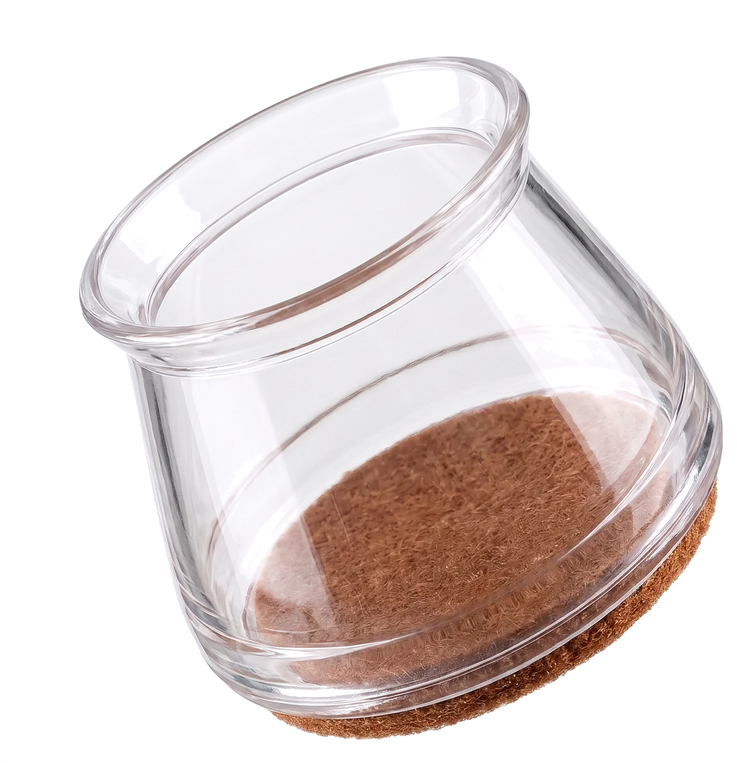
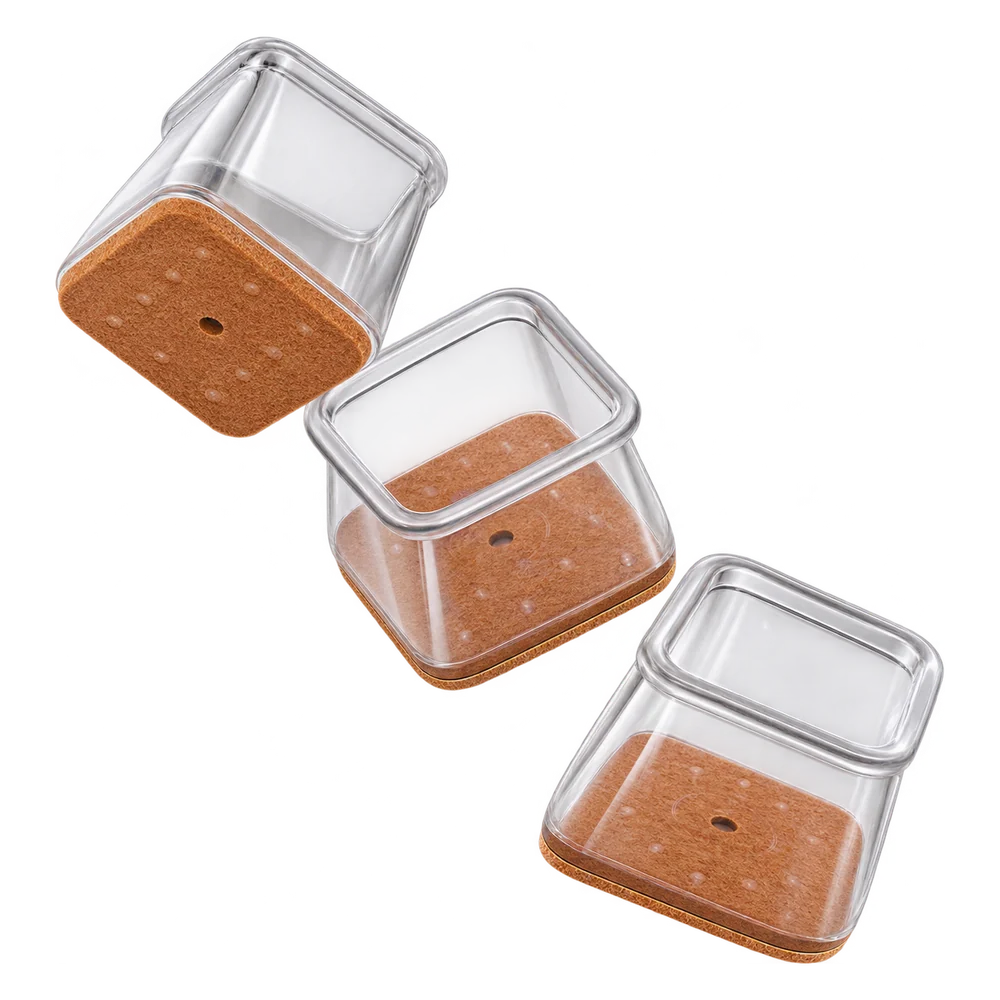
The quickest fix for dining and kitchen chairs is a cap that slips over the leg and puts felt on the floor. Our furniture pads for LVP flooring are all felt on the floor side, with no black rubber feet. For every style in one place, see all chair leg floor protectors, or sort by leg shape in chair leg caps.
Caps only work if they fit, so measure before you buy. Our guide on how to measure chair legs for protectors shows where to measure; you need a ruler and two minutes.
What chair legs do to vinyl
Vinyl fails in different ways from hardwood. LVP has a clear wear layer on top, usually 6 to 20 mil thick in homes (a mil is a thousandth of an inch). Under that layer is a printed photo of wood or stone. Once a scratch cuts through the wear layer, it cannot be sanded out like wood, so prevention matters more.
| Damage | Cause | Prevention |
|---|---|---|
| Fine scratches and dull trails | Bare wood or grit dragged as the chair moves | Clean felt on every leg |
| Yellow or brown spots | Black rubber feet, mats or rug backing | Felt or clear silicone instead |
| Small dents | Weight on a narrow leg end | A wider pad or cap |
| Gouges | Open metal tube ends or a lost glide nail | A cap over the whole tube end |
Step by step: protect vinyl under dining chairs
- Check what is on the legs now. Turn each chair over. Remove black rubber tips, worn plastic glides and any felt that is flat, hard or gray with dirt.
- Look at the floor under the old feet. A yellow ring under a rubber foot is a stain, not dirt. It will not wash off, but changing the foot stops it from spreading.
- Measure the bottom of the leg. Measure where the leg meets the floor, not higher up, because many legs taper. For square legs, measure one side.
- Pick the protector by leg type using the table below.
- Fit and test. Push the cap fully on, stand the chair upright and slide it. It should glide quietly with no click of wood or plastic on the floor.
- Clean and check. Sweep under the table weekly and check the felt every two to three months.
Which protector suits which leg
| Your leg | Use | Why it suits vinyl |
|---|---|---|
| Round wood leg, 10 to 30 mm | Round felt chair leg caps | Felt base wraps up the sides; four sizes |
| Round leg, 16 to 40 mm | Felt bottom chair leg covers | Stretch cup with a felt disc across the base |
| Square leg, 19 to 25 or 35 to 45 mm | Wear resistant chair leg caps | Tan base pad on every cap; also in round sizes |
| Metal tube, round 16, 19, 22 or 25 mm, or square 20 mm | Felt lined metal chair leg caps | Sized to the tube, so it covers the sharp rim; felt pad underneath |
| Splayed leg, 20 to 35 mm | Angled chair leg floor protectors | Felt sole set at 15 degrees sits flat |
| Flat foot on a table, sofa or cabinet | Self adhesive furniture pads | Felt rounds and squares up to 45 mm, plus a 150 x 97 mm sheet to cut |
Splayed legs are easy to miss. A flat pad on a leg that leans outward touches the floor only on one edge, so all the weight sits on a thin line. An angled sole puts the whole pad down.
Stick-on pads are fine under furniture that rarely moves. On chairs pulled out several times a day, the glue tends to let go, and a pad that slides off leaves bare wood on the floor. Caps and covers are held by the leg itself, not by glue.
Why black rubber feet stain vinyl
Many rubber parts contain chemicals added to stop the rubber cracking as it ages. Vinyl contains softeners called plasticizers. Where the two touch, those chemicals can move into the vinyl and react, leaving a yellow or brown mark. The stain sits inside the vinyl, not on top, so cleaners do not lift it. It can take weeks to show, which is why people rarely link it to the chair.
The same thing happens under rubber-backed rugs, door mats and some caster wheels. Several vinyl makers warn against rubber in their care guides for this reason. You cannot tell by looking which rubber will stain, so the simple rule on vinyl is no black rubber at all.
Safe choices are felt, clear silicone and products sold as non-staining. Clear silicone grips rather than slides, so it suits chairs you want to stay put. If you want that, pick a clear cap from our silicone chair leg protectors, and test it on one leg in a hidden spot first. For a full comparison of materials, read felt vs rubber chair leg caps.
How to stop dents under heavy legs
Vinyl gives a little under pressure. A chair with a person in it, standing on four narrow legs, presses hard on four small spots. Sheet vinyl and flexible LVP dent more easily than rigid core plank.
- Go wider. Several vinyl makers ask for protectors at least 1 inch (25 mm) across under chair and furniture legs, and wider ones under heavy pieces. Check your own floor's care guide.
- Match the pad to the foot. Use the largest pad that fits without sticking out past the edge. For odd shapes, cut one from a felt sheet.
- Lift, do not drag. To move a heavy table or cabinet, lift it or use furniture sliders. Sweep first, because grit under any slider scratches.
Rolling office chairs on vinyl
Caps and felt pads do not fit wheels. For a desk chair on casters, you have two good options. A chair mat with no rubber backing, such as clear PVC or polycarbonate, keeps the wheels off the floor entirely. Or swap hard plastic casters for soft polyurethane wheels sold for hard floors. Avoid rubber-tread wheels on vinyl for the same staining reason as rubber feet.
Keep the protection working
- Sweep or vacuum under chairs weekly with the brush roll off. Grit is what turns felt into sandpaper.
- Replace felt when it is pressed flat, hard or gray. On busy kitchen chairs, check every two months.
- Wipe spills under chair legs right away, so wet felt does not hold dirt against the floor.
- Keep the same felt on every leg of a chair, so it does not rock.
Our guide on how to stop chairs from scratching floors covers the same habits for hardwood, laminate and tile.
Honest limits
- Felt does not remove stains, scratches or dents that are already there. It stops new ones.
- Felt only protects while it is clean. Dirty felt can scratch LVP as easily as a bare leg.
- Each cap fits a set range of leg sizes. If your leg falls outside every range, a cap will be loose or will not go on, so measure first.
- Nothing here fits wheels or protects against very heavy fixed loads such as appliances. For those, follow your floor maker's guidance.
Questions
Why does vinyl stain under chair legs?
Chemicals in some black rubber react with vinyl and leave yellow or brown marks. The stain forms inside the vinyl, so cleaners do not remove it. Swap rubber feet for felt or clear silicone to stop new marks.
What is safe on LVP?
Felt, clear silicone and other non-marking materials. Felt slides, so it suits chairs that move every day. Clear silicone grips, so it suits pieces you want to stay put; test one leg in a hidden spot first.
Do heavy legs dent vinyl?
They can. A wide pad or cup spreads the weight. Use the largest felt pad that fits the foot, and check your floor maker's care guide for the minimum width it asks for.
Are chair mats needed on LVP?
For rolling office chairs, yes, or a change of wheels. Caps and felt pads do not fit wheels, so use a chair mat with no rubber backing, such as clear PVC or polycarbonate, or swap to soft polyurethane casters made for hard floors. For dining chairs, felt caps are enough.
Will stick-on felt pads stay on dining chairs?
Often not for long. Chairs pulled out several times a day can peel the glue off. A cap or cover that slips over the leg stays on because the leg holds it, not glue.
How often should I replace felt on vinyl floors?
Check it every two to three months, and every two months on busy kitchen chairs. Replace it when it is pressed flat, hard or gray with dirt, because dirty felt can scratch.