How to Keep Couch from Sliding: Fixes for Every Floor
Updated November 25, 2026
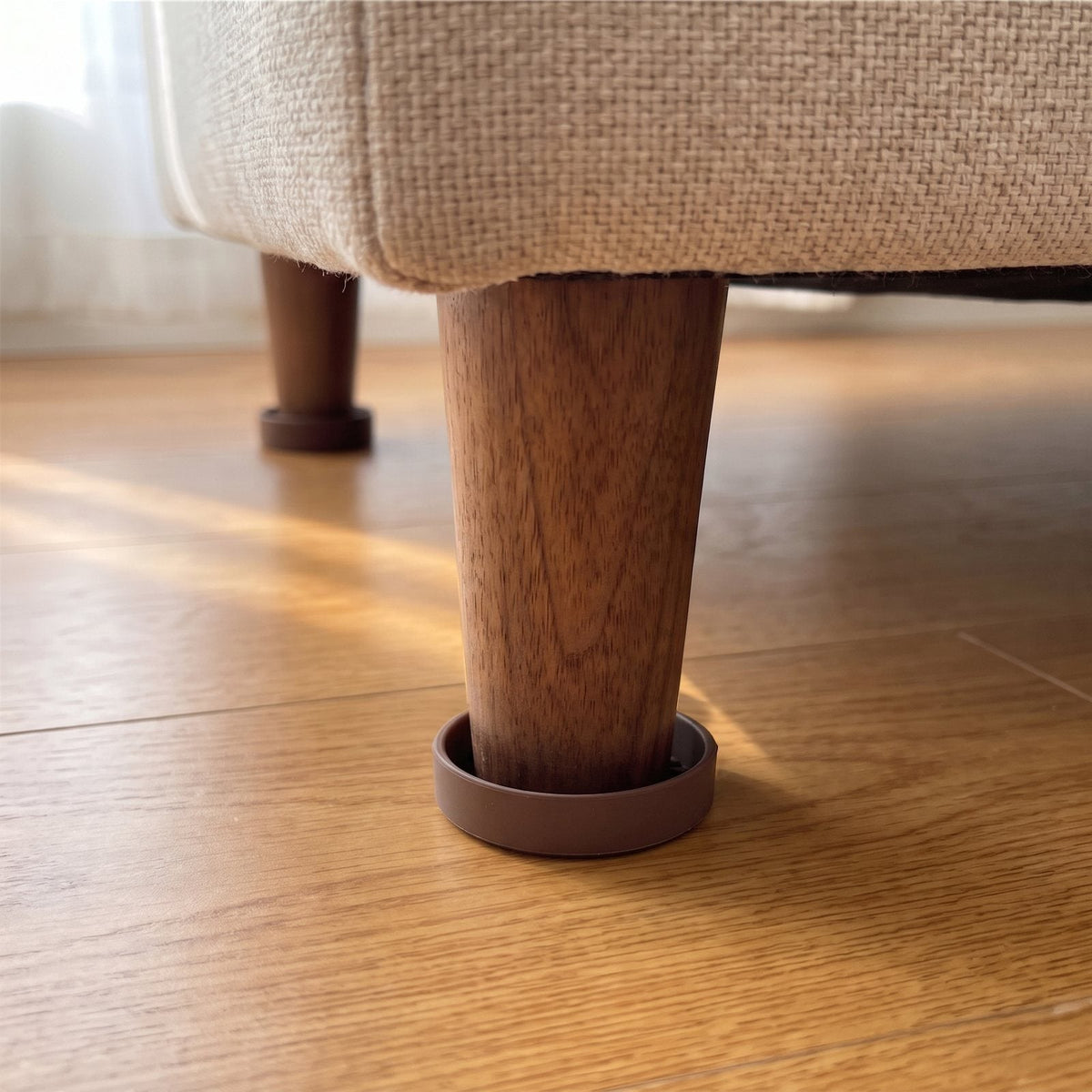
How to keep couch from sliding comes down to friction at the feet: put a rubber cup under every foot so the foot sits inside a lip and grippy rubber, not felt or bare wood, touches the floor. If the couch has felt pads on its feet, take them off first, because felt is made to slide.
Short answer: lift each corner, peel off any felt pads, and set a rubber cup under every foot, including center legs. On hard floors that stops the everyday creep when people drop onto the seat. If the feet are too wide for a cup, stand the front legs on a rug with a non-slip rug pad under it, or push the back of the couch against the wall.
A couch slides because people sit down with a backward push. Each push moves a light couch a fraction of an inch, and over a week it ends up a foot from the wall. The fixes below run from the simplest to the most involved.
Why your couch keeps sliding
- Felt pads. Felt protects floors by letting furniture glide. Under a couch you want to stay put, it does the opposite of what you need.
- Hard, smooth floors. Hardwood, tile, laminate and vinyl plank give a hard foot almost nothing to hold.
- Light frames. Loveseats, futons and modern couches on slim legs weigh less, so each push moves them further.
- How it is used. Kids jumping on, a dog leaping off the back, or one person who always sits hard all add up.
How to stop a couch from sliding, step by step
- Count the feet. Many three-seat couches and most sectionals have a center leg or two under the frame. Every foot that touches the floor needs the same fix, or the couch pivots on the one that is left.
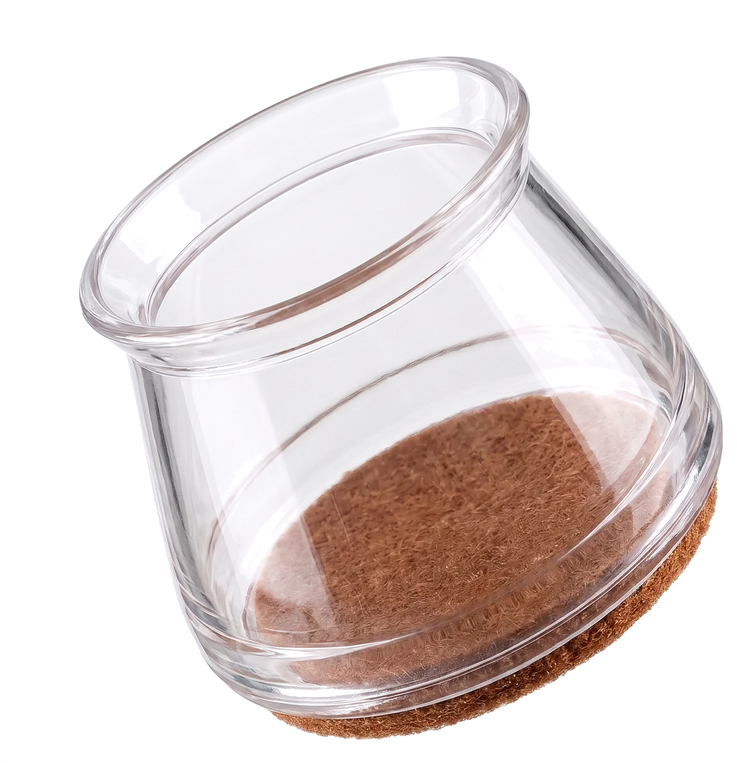
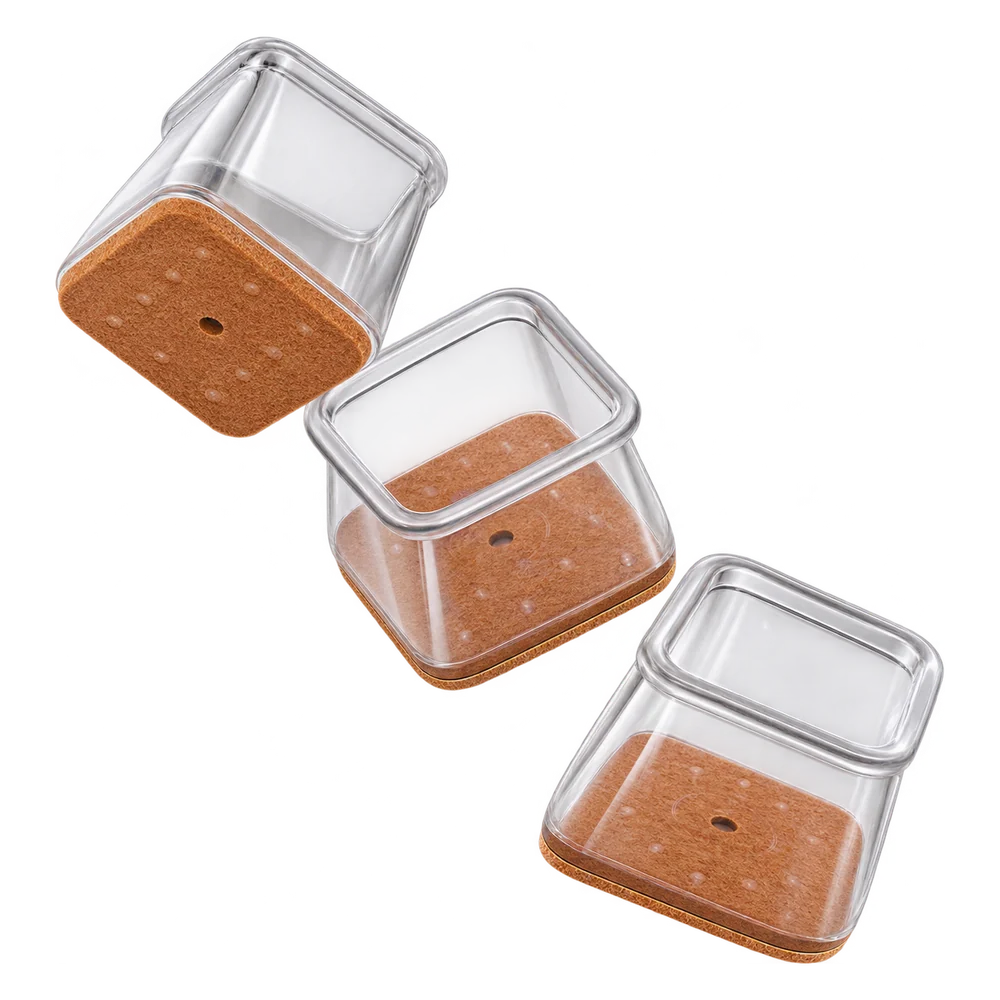
- Tip the couch back or lift one end with a helper, and check each foot. Peel off old felt pads and wipe off dust and wax.
- Measure across the bottom of one foot, where it touches the floor. On a tapered leg that is the narrow end.
- Pick a cup whose inside is a little wider than the foot, about 1/8 in (3 mm) of room, so the foot drops in instead of sitting on the lip.
- Set a cup on the floor, open side up, and lower the foot into it. Do the other feet the same way.
- Sit down hard a few times and check that nothing has moved. Wipe the floor under any cup that shifts: dust cuts grip.
Our non slip furniture grippers are solid rubber cups with a low lip and a grooved underside, in four sizes. The size is the inside width, so match it to your foot like this:
| Bottom of the foot | Cup to choose | Inside width |
|---|---|---|
| Round, up to about 1 7/8 in (48 mm) | 2 in round | 2 in (51 mm) |
| Round, up to about 2 7/8 in (73 mm) | 3 in round | 3 in (76 mm) |
| Square, up to about 2 3/8 in (60 mm) a side | 2.5 in square | 2.5 in (64 mm) |
| Square, up to about 2 7/8 in (73 mm) a side | 3 in square | 3 in (76 mm) |
| Wider than 2 7/8 in (73 mm), or a solid base with no legs | No cup fits: use a rug and rug pad | None |
A round foot fits a square cup too. A square foot needs a square cup so the corners sit inside the lip. On a rectangular foot, measure the longer side.
How to stop a couch from sliding on wood floors and other hard floors
| Floor | What works | Watch out for |
|---|---|---|
| Hardwood | Rubber cups under every foot, felt removed | Grit under a cup can mark the finish, so wipe the floor first |
| Tile | Rubber cups, which grip glazed tile well | Clean the grout lines under each cup |
| Vinyl plank (LVP) and sheet vinyl | Rubber cups, after a spot test | Some rubber can stain vinyl: try one cup in a hidden spot for a few days |
| Laminate | Rubber cups | Wipe the floor first: grit under a cup marks laminate too |
| Carpet | Couches rarely slide on carpet; if it walks, the cause is usually a loose rug on top | Put a rug pad under that rug |
For fixes for tables, dressers and beds as well, see how to keep furniture from sliding on hardwood floors.
No cups? Other ways to keep a couch in place
- Put the front legs on a rug. A rug that runs under the front feet holds the couch through its own weight, as long as the rug has a non-slip rug pad under it. Without the pad, rug and couch slide together.
- Push it against the wall. The wall stops the backward slide. A small felt pad or rubber bumper on the back of the frame keeps it from rubbing the paint.
- Cut rubber rug pad squares. A square of rubber rug pad under each foot works for a while on a light couch, but the foot can still skate off a flat pad. A cup with a lip holds better.
- Add weight low down. A storage ottoman against the front, or a console table behind the couch, adds friction where you need it.
How to keep a recliner from sliding on a wood floor
Recliners and reclining couches move more than plain couches, because the back pushes down and back every time someone leans into it. Fit a rubber cup under each fixed foot in the same way. Check underneath first: some recliners rest on a metal base or a wide plinth instead of separate feet, and a cup will not fit those. For those, a rug with a non-slip pad under the whole base is the better fix. Leave the space the maker asks for behind a reclining back, so do not fix the slide by jamming it against the wall.
How to keep sectional pieces together
Sectionals have a second problem: the pieces drift apart and a gap opens between the seats. Cups under every foot slow the drift, because each piece has to slide to separate. To hold the pieces to each other, most sectionals come with metal connector clips on the frame underneath. If yours are missing, replacement sectional connector brackets screw onto the frames of the two pieces. Scuffo does not sell connector brackets, so that part is outside our range.
What not to do
- Do not glue or screw anything to the floor. It damages the finish, and you will need to move the couch to clean.
- Do not use felt pads or furniture sliders under a couch that should stay put. They are made to move.
- Do not leave a cup on a foot it does not fit. A foot balanced on the lip can slip off and drop onto the floor.
- Do not drag the couch with the cups on. Lift it to move it, then set it back in its cups.
If you want the couch to slide easily when you clean under it, felt is the right choice; see furniture pads for hardwood floors. For more cups and stoppers for furniture that should not move, see chair stoppers.
Honest limits
- A cup is not a lock. It stops the everyday creep from sitting down, but a hard shove can still move a light couch.
- Our cups fit fixed feet only, not casters. A couch on wheels needs locking casters or a cup made for wheels.
- Feet wider than 2 7/8 in (73 mm) do not fit any cup we stock.
Questions
What can I put under my couch to keep it from sliding?
A rubber cup under each foot works best on hard floors, because the foot sits inside a lip and the rubber grips the floor. Rug pad squares, or a rug with a non-slip pad under the front legs, also help.
How do I stop my couch from sliding on a hardwood floor?
Take off any felt pads, wipe the floor, and set a rubber cup under every foot, including center legs. The foot should drop inside the cup, not sit on its lip.
Why does my couch keep moving back?
People sit down with a backward push, and a couch on felt or bare feet on a smooth floor moves a little each time. Rubber under the feet, a rug pad or the wall behind it stops the creep.
Do furniture grippers damage hardwood floors?
Clean rubber cups protect hardwood, because they keep a hard foot off the finish. Wipe the floor before fitting them so no grit is trapped underneath, and test first on vinyl, where some rubber can stain.
How do I keep my sectional from separating?
Use the connector clips under the frame if your sectional has them, or fit replacement connector brackets. Rubber cups under every foot also slow the pieces drifting apart.