Chair Mats for Hardwood Floors: Clear Mat or Wheel Stoppers
Chair mats for hardwood floors need a smooth underside with no studs, and they need to be big enough that every caster stays on the mat while you roll, turn and stand up. Hard nylon casters press the weight of the chair and the person into a few small points and roll grit into the finish, which wears a dull patch under the desk. A mat takes that wear instead of the wood.
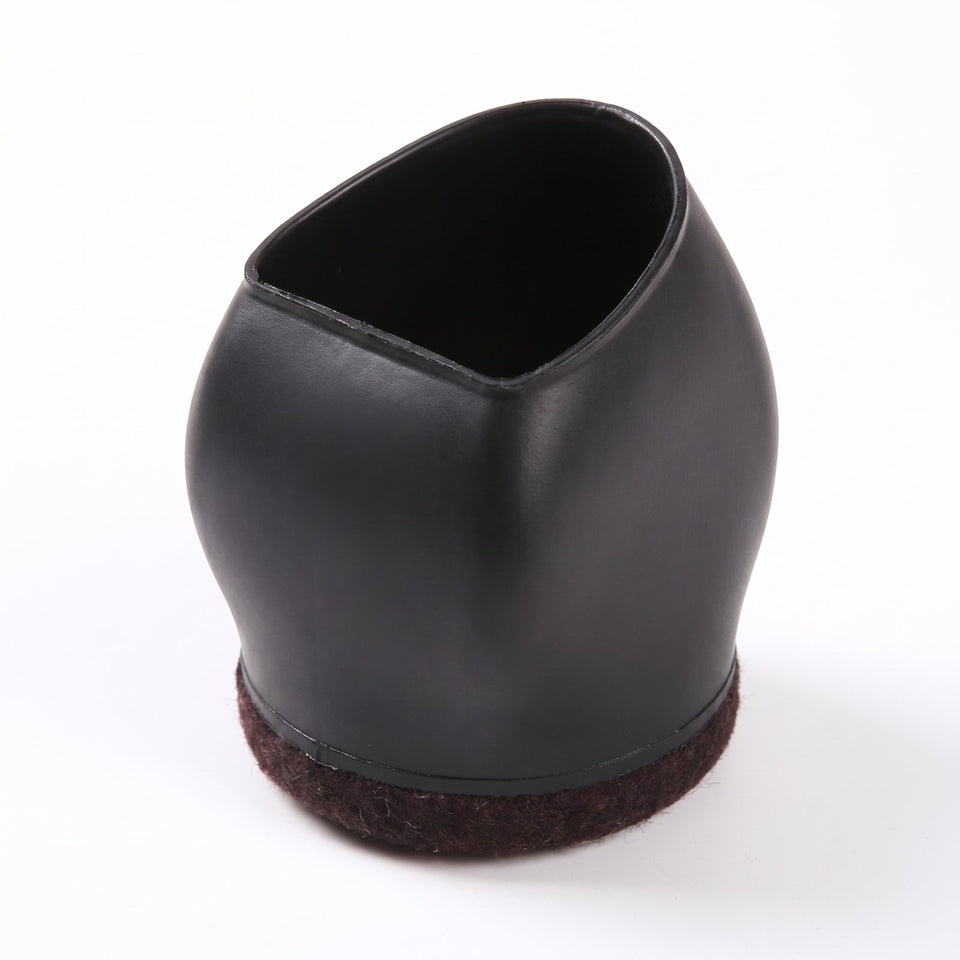
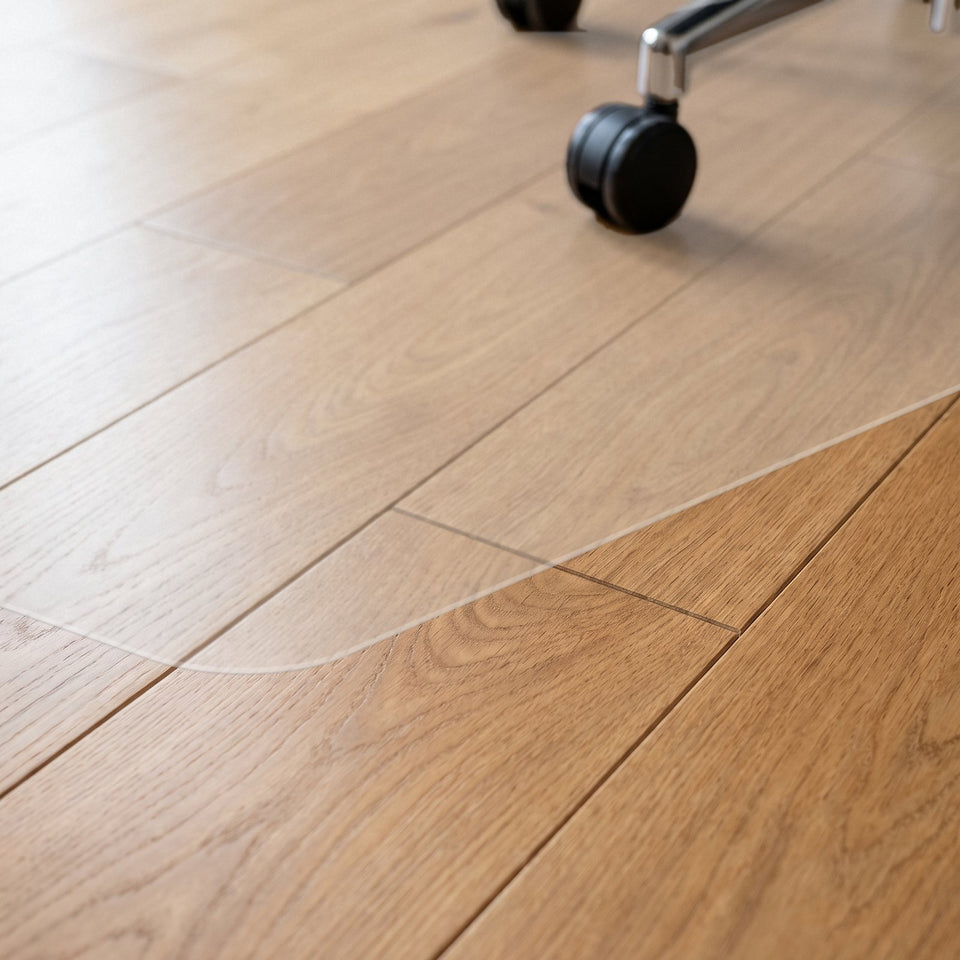
We stock one mat: a clear PVC chair mat for hardwood floors, 35.4 x 47.2 in (90 x 120 cm) and 0.08 in (2 mm) thick, with a frosted finish so the wood grain shows through. If you would rather the chair not roll at all, office chair wheel stoppers stretch over each caster so a felt base touches the floor. For a full buying guide that compares polycarbonate, PVC, PET and glass mats, read best chair mat for hardwood floor.
Chair mat or wheel stoppers: which one fits your desk
Both protect the floor under a desk chair. They differ in whether the chair still rolls.
| Clear PVC chair mat | Office chair wheel stoppers | Leg caps (chairs without wheels) | |
|---|---|---|---|
| What it protects | The area under the desk, 35.4 x 47.2 in (90 x 120 cm) | The floor under each of 5 casters | The floor under each leg |
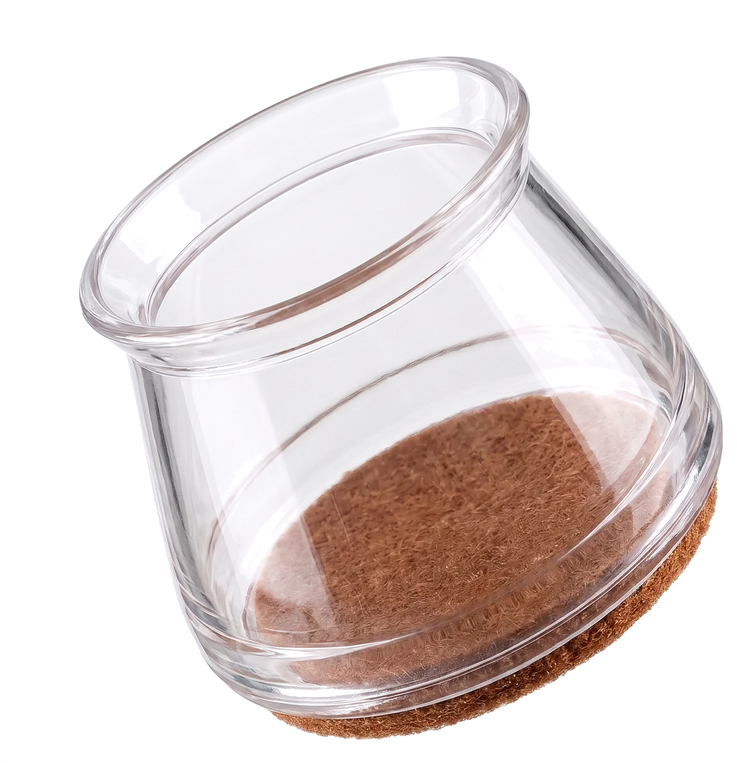
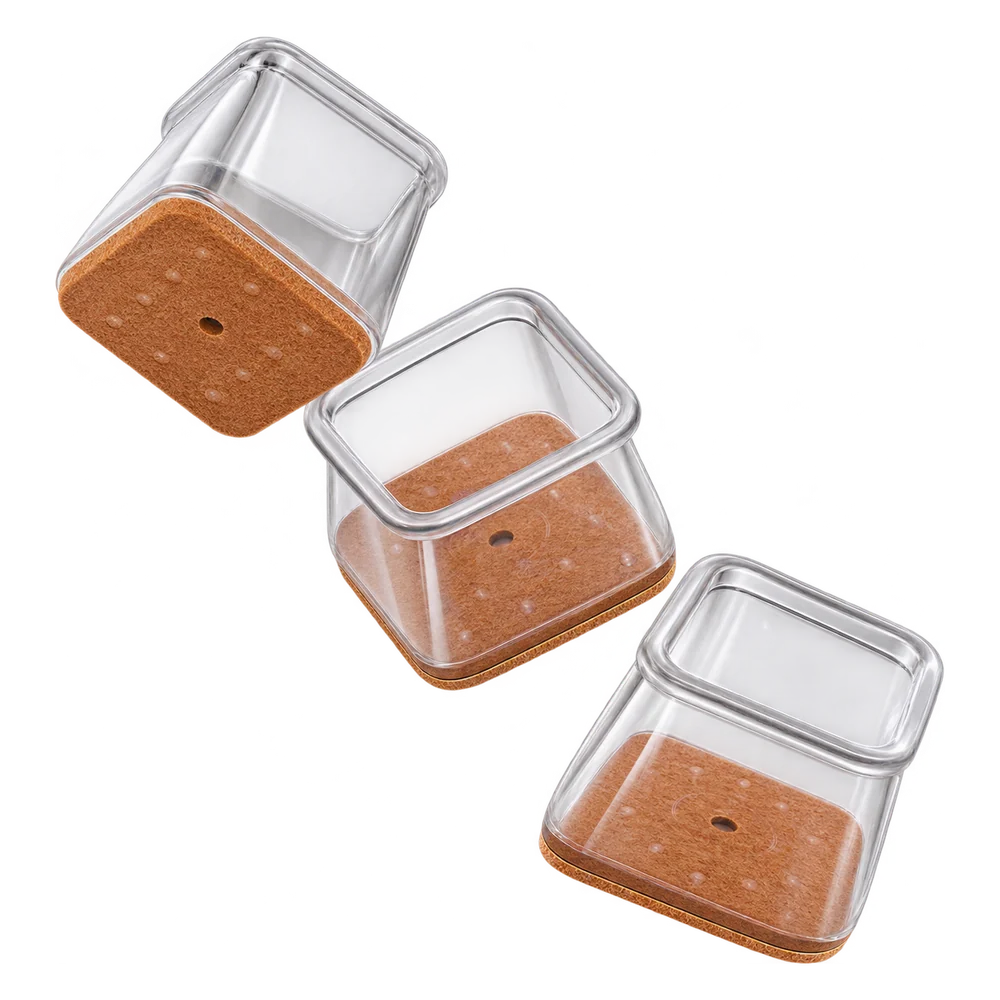
| Does the chair roll? | Yes, on the mat | No, it slides on felt when pushed | No wheels; felt caps slide, silicone caps grip |
| Fits | Any caster chair whose rolling area fits the mat | Casters in the supplier's range of 1.8 to 2.2 in (4.5 to 5.5 cm) | Round or square legs, by leg size |
| Covers | One spot only | Goes wherever the chair goes | Goes wherever the chair goes |
| Fitting | Lay flat; may need 3 to 5 days under weight to flatten | Stretch over each caster, no tools | Slip over each leg end |
Office chair mat for hardwood floors: what to check
- The underside. Studs (also called cleats) are made to bite into carpet pile. On wood they press marks into the finish, so a hard floor needs a flat back. Ours has no studs.
- The size. Sit at the desk, push back as far as you normally do and measure from the desk edge to where the rear casters stop, then across the width you roll and swivel. The whole area the chair base covers has to fit inside the mat, not just the distance you move. Our mat is a little smaller than a 36 x 48 in mat, because the supplier sizes it in centimeters.
- The shape. Ours is a plain rectangle with rounded corners, with no lip for a kneehole. If your chair rolls deep under the desk, lay the long side going away from the desk.
- The thickness. Hard floors need a thin mat. Thick mats are built to bridge carpet pile and only add an edge to trip on over wood. Ours is 0.08 in (2 mm).
How to lay a desk chair mat on wood floors
Sweep or vacuum first, because grit trapped under a mat is the main way a mat marks a floor: every roll shifts the mat a little and rubs the grit into the finish. The mat is smooth on one side and textured on the other, and the supplier says to put the textured side down on a smooth floor. It ships rolled, so it may curl at first; the supplier advises warming it and pressing it flat under heavy objects, such as books, for 3 to 5 days. Every few weeks, lift the mat, clean the floor and wipe the underside before putting it back.
Honest limits
- PVC is softer than polycarbonate. Casters wear any plastic mat over time, and a busy chair can dent PVC. For a chair used all day, our guide explains when polycarbonate is worth more.
- The mat is made for hard floors: hardwood, laminate, vinyl and tile. It is not made for pile carpet, where a flat mat can creep.
- A mat protects one spot. Guest chairs and dining chairs that move around the room need protectors on each leg: see chair leg floor protectors.
- Wheel stoppers do not lock the chair. Pushed hard, it slides on its felt bases. Large 2.56 or 2.95 in (65 or 75 mm) wheels are outside the supplier's range.
- Wood changes color with light, so the floor under a mat that has sat in one place for a long time may look a little different when you move it.
Chair Mats for Hardwood Floors: Clear Mat or Wheel Stoppers: questions and answers
What kind of chair mat is best for hardwood floors?
A mat with a smooth, stud-free underside, thin enough not to leave a tall edge, and large enough that the casters never roll off. Our <a href="/blogs/guides/best-chair-mat-for-hardwood-floor">chair mat buying guide</a> compares polycarbonate, PVC, PET and glass.
Can a chair mat damage a hardwood floor?
The usual cause is grit trapped underneath, which the mat rubs into the finish as it shifts. Lift the mat every few weeks, clean the floor and the underside, and avoid studded mats, which are made for carpet.
What size chair mat do I need for a desk?
Measure from the desk edge to where your rear casters stop when you push back, and across the width you roll. Our mat is 35.4 x 47.2 in (90 x 120 cm), a little smaller than a 36 x 48 in mat.
Which side of the chair mat goes down?
The supplier says to put the textured side down on a smooth floor such as hardwood, and the smooth side down on a textured floor.
Can I use this mat on carpet?
Not on pile carpet. It has a flat back with no studs, so it can creep on carpet; the supplier lists hard floors and carpet tiles.
Is there an alternative to a chair mat on wood floors?
Yes. <a href="/products/office-chair-wheel-stoppers">Office chair wheel stoppers</a> stretch over each caster so felt touches the floor, which protects the wood anywhere the chair goes but stops it rolling. Our guide on <a href="/blogs/guides/how-to-protect-hardwood-floors-from-office-chairs">protecting hardwood floors from office chairs</a> also covers soft casters.