How to Remove Scuff Marks from Hardwood Floors, Gentlest First
Updated November 26, 2026
How to remove scuff marks from hardwood floors: begin with the gentlest thing that works, a dry microfiber cloth or a clean tennis ball rubbed firmly over the mark, because most scuffs are rubber or dirt sitting on top of the finish. Only if that fails, step up to a cleaner made for wood floors, then a soft paste of baking soda and water.
Short answer: rub the scuff with a dry microfiber cloth, a clean sock or a tennis ball. If it stays, spray a little hardwood floor cleaner on a damp microfiber cloth and rub again. For a stubborn mark, rub gently with a paste of baking soda and water on a soft cloth, then wipe and dry. Avoid steel wool, scouring pads, steam mops and strong chemicals, and if the mark is a groove rather than a smear, it is a scratch, not a scuff.
Scuff or scratch? Check before you rub
A scuff is something left on the floor: a dark smear of rubber from a shoe sole, a black line from a chair foot, a gray film from a dragged box. Run a finger over it: you feel nothing, or a slight film. A scratch is something taken away: a groove in the finish or the wood, often white or pale, that your fingernail can catch. Scuffs come off with cleaning. Scratches need a repair, which our guide on how to fix scratches on hardwood floors covers.
How to get scuff marks off wood floors, gentlest first
- Dry microfiber or a clean sock. Buff the mark firmly. Fresh rubber scuffs often lift in seconds.
- A tennis ball. The felt cover grips rubber without cutting the finish. To save bending, cut a small cross in a ball and push it onto the end of a broom handle, then rub the marks while standing.
- A plain white pencil eraser. Good for small marks. Colored erasers can leave their own mark.
- Hardwood floor cleaner. Spray it onto a damp, well wrung microfiber cloth, not onto the floor, and rub. Dry the spot afterward.
- Baking soda paste. Mix a little baking soda with water into a soft paste, rub it over the mark with a soft cloth using light pressure, then wipe it off with a damp cloth and dry. It is a mild abrasive, so test it out of sight first.
- A melamine sponge, with care. These are very fine abrasives. Used damp with light pressure they lift stubborn scuffs, but scrubbing can dull a satin or matte finish. Test it first and stop as soon as the mark goes.
What to avoid on finished wood
| Avoid | Why |
|---|---|
| Steel wool and scouring pads | They scratch the finish and leave a dull patch bigger than the scuff |
| Vinegar, ammonia and bleach | Many floor makers advise against them because they can dull or etch the finish over time |
| Steam mops | Heat and moisture can push water into the seams and cloud the finish |
| Wax or oil soap on a polyurethane floor | They leave a slippery film and can stop a future recoat from bonding |
| Soaking the floor | Standing water swells wood at the seams; use a damp cloth, then dry |
When the floor maker publishes care instructions, follow them over any general advice, including ours.
How to remove scuff marks from other floors
- Engineered hardwood has a real wood surface, so treat it exactly like solid hardwood above.
- Vinyl plank (LVP) and sheet vinyl take the same gentle start: dry cloth, tennis ball, then a vinyl floor cleaner. Avoid solvents, which can soften the wear layer.
- Laminate has a hard printed top layer. Scuffs usually lift with a dry cloth or a laminate cleaner on a damp cloth; never wet mop it, because water swells the core at the joints.
- Tile is the most forgiving. Scuffs on glazed tile come off with a damp cloth and mild cleaner, and gray lines in grout from chair legs lift with a soft brush.
After you clean a spot, wipe a wider area round it the same way. A freshly cleaned patch on a dull floor can look like a mark of its own.
Where scuff marks come from
- Rubber shoe soles, especially black ones, dragged or turned on the spot.
- Chair and stool legs with bare rubber or plastic feet, or felt worn through to its hard base. These leave the black lines that follow a chair's path; see why chair legs leave black marks.
- Furniture, boxes and bags dragged across the floor.
- Pet toys, strollers and luggage wheels.
How to stop scuff marks coming back
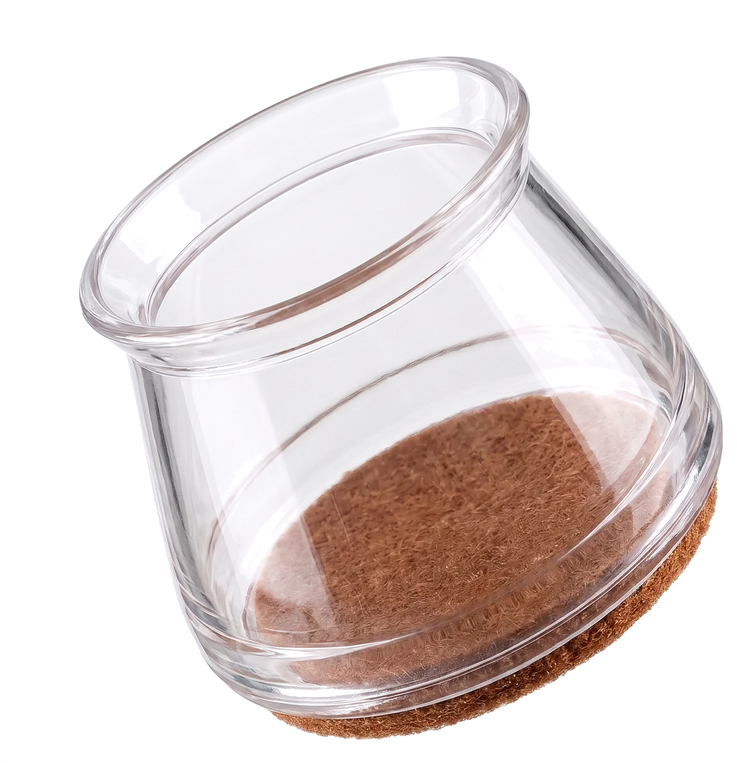
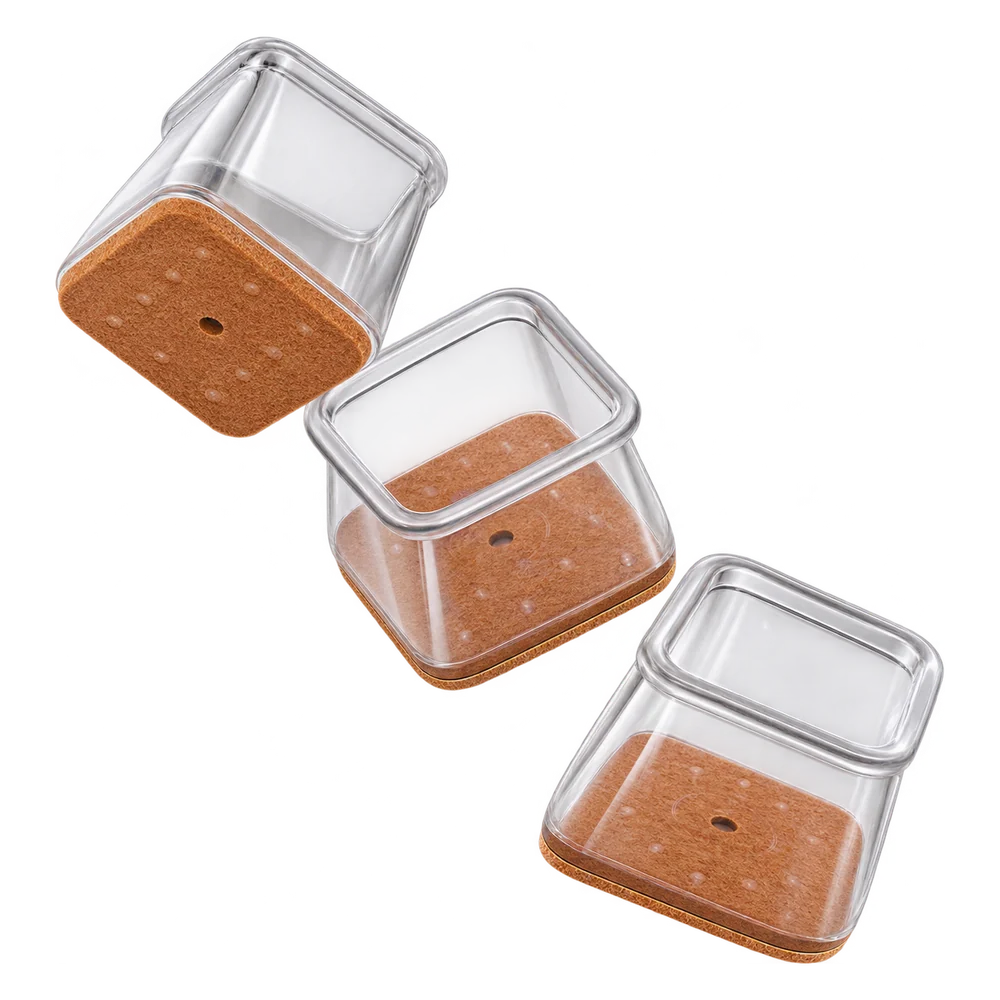
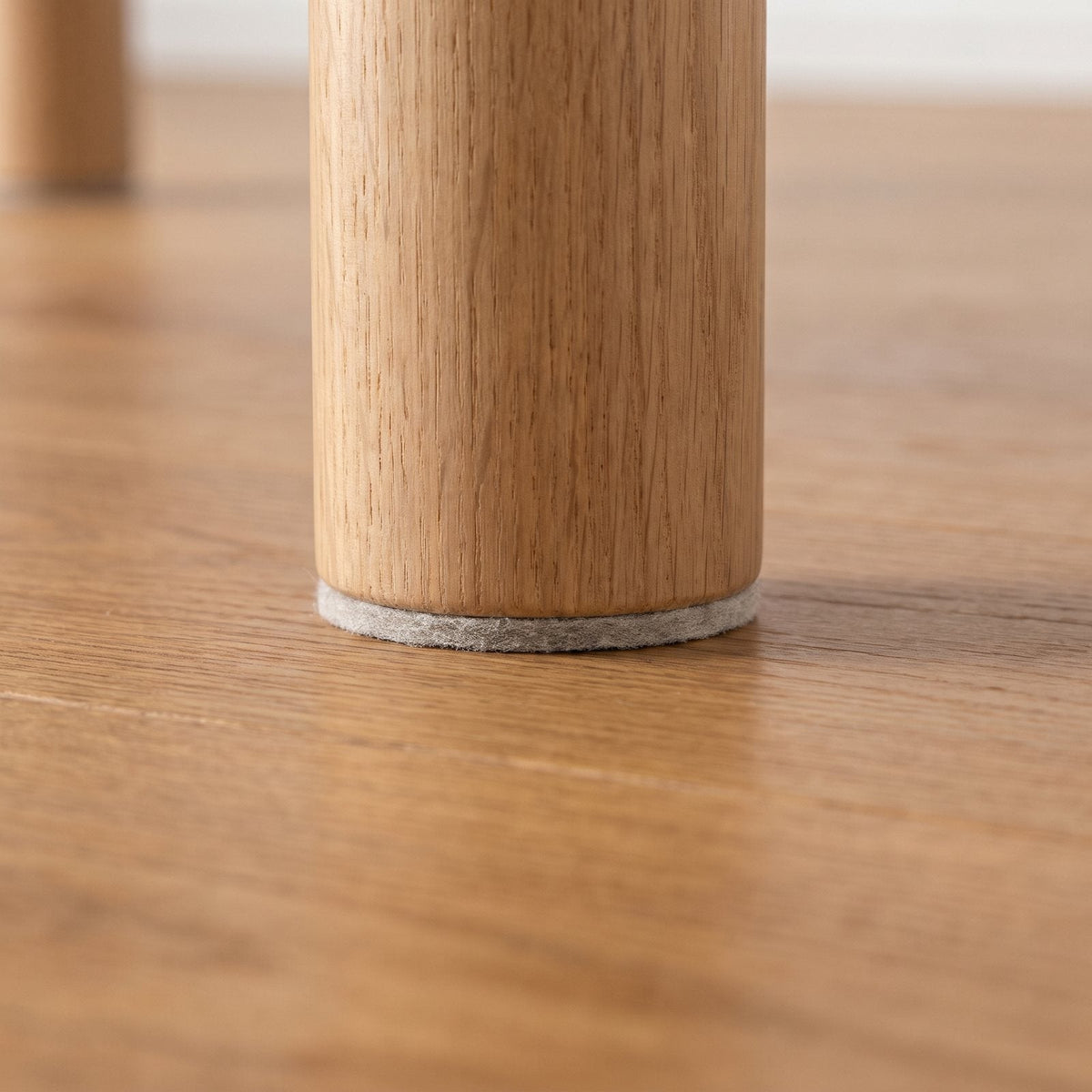
Cleaning removes the mark; changing what touches the floor stops the next one. Put clean felt under every leg that moves. For chairs pulled in and out every day, slip-on felt chair leg caps fit round legs from 3/8 to 1 3/16 in (10 to 30 mm) across and cannot peel off. For tables, sofas and cabinets, stick-on round and square felt pads come one size per pack, from 1.06 in (27 mm) rounds to 3.35 x 3.35 in (85 x 85 mm) squares. Check felt every few months and replace any that look gray, flat or worn through, since worn felt is a common source of new marks.
- Put mats inside and outside each door to catch grit and wet soles.
- Take shoes off indoors, or keep a pair of soft-soled house shoes by the door.
- Lift chairs rather than dragging them where you can, and use sliders when you move furniture.
Honest limits
If a mark stays after cleaner and is white, gray or pale, the finish itself is worn or scratched, and no amount of rubbing will fix it. Floors finished with wax or oil need the care products made for them, not the steps for polyurethane above.
Questions
What removes scuff marks from hardwood floors?
For most marks, a dry microfiber cloth or a clean tennis ball rubbed firmly over the scuff. Stubborn ones come off with hardwood floor cleaner, or a soft paste of baking soda and water.
Does a magic eraser damage hardwood floors?
It can. A melamine sponge is a very fine abrasive, so scrubbing can dull a satin or matte finish. Use it damp with light pressure, and test it out of sight first.
Can I use vinegar to clean scuff marks off hardwood?
Many floor makers advise against vinegar, because its acid can dull the finish over time. Use a cleaner made for finished wood floors instead.
Why do chair legs leave black scuff marks?
Bare rubber or plastic feet, and felt worn through to its hard base, rub dark lines onto the floor as the chair is dragged. Fitting clean felt stops new marks.
How do I get scuff marks off floors quickly?
Rub a tennis ball over the mark, or pull a clean sock over your hand and buff. Most fresh rubber scuffs lift in seconds.